![Gossip Lanka News [English]](https://blogger.googleusercontent.com/img/a/AVvXsEhYm2aFFq-bIW1nWX-RrqnPFoIsVos6_VCVz8BpLt0QJi55GNXHXC2fugeRvL0qUStEuCfs7Sfu6ZiSlhrkldxfGuE_wzy5gitY6rMZ2KSi8VBbGvkgXLks37RwZV-4-HKbWiNLRxB8C_r1e4z3mpxFTMPDJPEADoG8E-bZteWFipeD5KNGbjvCfqEfKw=s300 "Gossip Lanka News [English]")
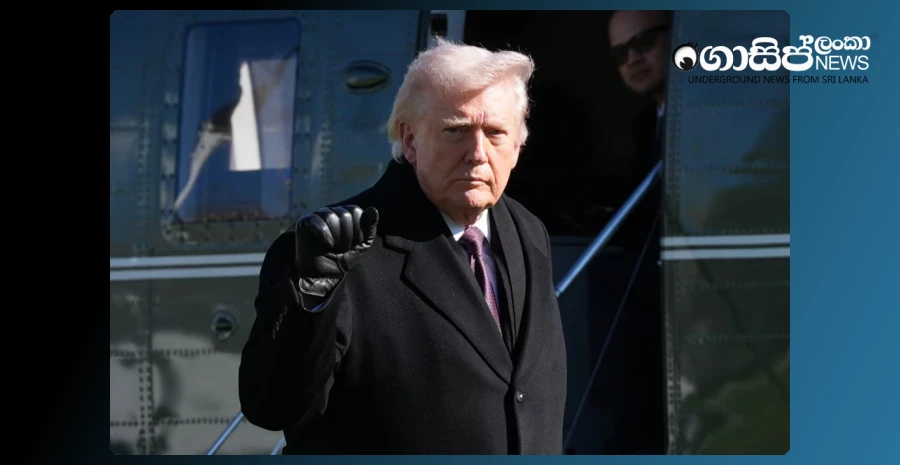
The North Atlantic Treaty Organization (NATO) is currently facing a severe crisis due to the controversial statements and actions of US President Donald Trump. With America's recent threat to acquire Greenland, a territory belonging to an allied country, serious doubts have arisen among many member states regarding the future of NATO.
Meanwhile, Canada is facing a different kind of problem. Professor Aurel Braun of the University of Toronto, specializing in International Relations and Political Science, points out that while political alliances and governments may change, the geographical factors and location between America and Canada can never be altered.
In 1949, twelve countries, including Canada, signed the NATO treaty in Washington with the aim of establishing collective security against potential threats from the Soviet Union. Currently comprising 32 member states, it is considered the oldest security organization in world history. Its Article 5, which states that all members must respond collectively to an attack on one member, has only been invoked once in history by the United States after the September 11, 2001 terrorist attacks.
Even against such a backdrop, Trump has stated on several occasions that he does not believe NATO members would provide support if America faced another urgent need. He has even disparaged the service of soldiers from allied countries who fought and died for Americans. His social media posts have hinted that the joint military operation by America and Israel against Iran is a moment that tests NATO's commitment.
The President stated in a lengthy social media post that while many NATO allies verbally agreed to the American mission to prevent Iran from developing nuclear weapons, they expressed reluctance to intervene directly. He accused them of doing nothing for America in its time of need, despite America protecting them.
Meanwhile, Canada, the United Kingdom, France, Germany, Italy, the Netherlands, and Japan have issued a joint statement against Iran's blocking of the Strait of Hormuz. These countries confirmed in their statement that they would provide the necessary contribution to ensure maritime security and navigation in the region.
Professor Braun points out that NATO has been severely undermined due to Trump's selfish and vindictive statements. His provocative behavior has created anger and frustration among allied countries, hindering attention to real international issues. After the start of air strikes against Iran, many European leaders stated that this war by the American president was not a European war.
However, Assistant Professor Erwan Lagadec of George Washington University believes that America's future within NATO remains somewhat stable. The reason is that the US Congress has taken steps to legislate laws that prevent the unilateral reduction of American troops stationed in Europe and maintain the American role within NATO's command structure. Furthermore, Matthew Whitaker, the US Ambassador to NATO, assured last February that America remains committed to Article 5.
But Canada knows from experience that congressional laws alone cannot control a president's snap decisions. Even the US-Canada-Mexico Free Trade Agreement, signed during Trump's first term, is now at risk due to his unexpected tariff policies. He has also threatened Canada's sovereignty and has resorted to insulting its current and former prime ministers by calling them "governors".
In the face of this instability created by the Trump administration, Europe is attempting to strengthen its military capabilities. International commentators point out that Canada is also currently taking steps to significantly increase its defense spending in response to the American president's threats.