![Gossip Lanka News [English]](https://blogger.googleusercontent.com/img/a/AVvXsEhYm2aFFq-bIW1nWX-RrqnPFoIsVos6_VCVz8BpLt0QJi55GNXHXC2fugeRvL0qUStEuCfs7Sfu6ZiSlhrkldxfGuE_wzy5gitY6rMZ2KSi8VBbGvkgXLks37RwZV-4-HKbWiNLRxB8C_r1e4z3mpxFTMPDJPEADoG8E-bZteWFipeD5KNGbjvCfqEfKw=s300 "Gossip Lanka News [English]")
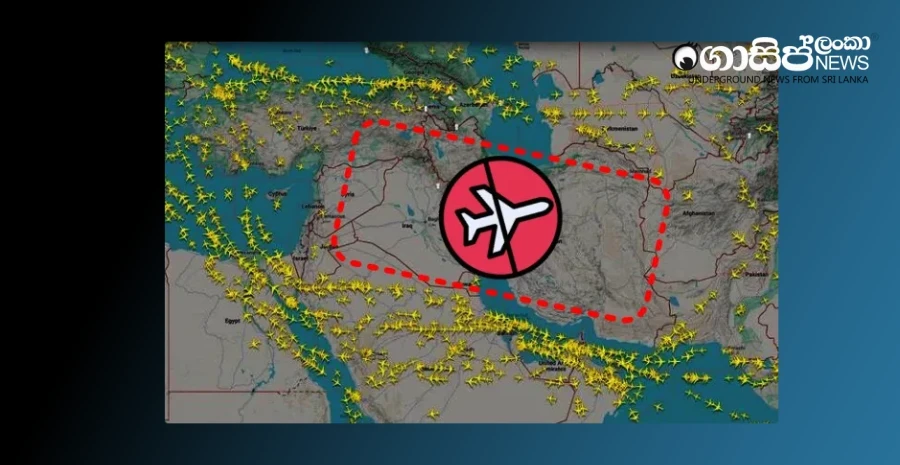
Amidst the escalating series of air strikes launched by American and Israeli forces against Iran, the aviation industry has been severely impacted. With no end in sight, this conflict has disrupted flights for the third consecutive day, and experts and analysts in the insurance sector point out that insurance companies are not obligated to provide coverage for the resulting loss of income.
This situation has led to the closure of major Middle Eastern aviation hubs, disrupting thousands of flights worldwide, while fuel prices have also risen sharply. Concurrently, the stock prices of travel-related companies from Asia to New York have fallen, resulting in billions of dollars in market value losses for these companies.
Analysts at Jefferies state that such war-related risks are often not covered by commercial property insurance policies. Unlike marine and aviation insurance, obtaining separate war coverage for commercial properties is not easy, posing a risk that even damage to iconic locations like Palm Jumeirah in Dubai might not be covered by insurance. While airlines typically have war risk coverage for their aircraft and liabilities, insurance industry sources confirm that income losses due to flight disruptions fall under general business interruption policies and are therefore not compensated under war conditions. However, aviation insurers are accustomed to dealing with such situations, and no notices of coverage cancellation have been issued to date.
Morningstar DBRS rating agency points out that this conflict has created significant challenges for the marine, aviation, property, travel, and supply chain insurance sectors. Insurers must pay close attention to potential large damages and claims for aircraft due to missile attacks or air defense systems. If the conflict further escalates in the Gulf region, prices in the terrorism and political violence insurance market could rise, and its capacity could decrease. Already, the cost of insuring cargo shipments through the Middle East Gulf region has increased fivefold in the past 48 hours, and many insurers are reportedly withdrawing from providing coverage for ships sailing through the Strait of Hormuz. (Based on Reuters news)