![Gossip Lanka News [English]](https://blogger.googleusercontent.com/img/a/AVvXsEhYm2aFFq-bIW1nWX-RrqnPFoIsVos6_VCVz8BpLt0QJi55GNXHXC2fugeRvL0qUStEuCfs7Sfu6ZiSlhrkldxfGuE_wzy5gitY6rMZ2KSi8VBbGvkgXLks37RwZV-4-HKbWiNLRxB8C_r1e4z3mpxFTMPDJPEADoG8E-bZteWFipeD5KNGbjvCfqEfKw=s300 "Gossip Lanka News [English]")
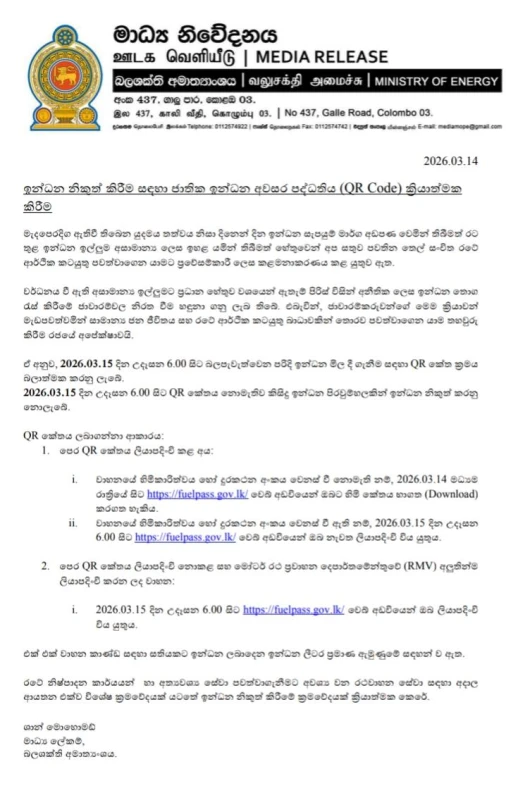
Due to the ongoing war in the Middle East, which has caused disruptions to fuel supply lines in the country, and with the aim of controlling illegal fuel hoarding by certain individuals, the Ministry of Power and Energy has taken steps to re-implement the National Fuel Pass, also known as the QR code system, starting today (March 15, 2026) at 6:00 AM. According to a statement issued by the Ministry's Media Secretary, Mr. Shan Mohamed, no fuel will be issued from any filling station without a QR code after 6:00 AM today.
The government states that this decision was made to safely manage the existing limited oil reserves and to ensure that public life and economic activities continue without any disruption.Under this new system, the public can use the website https://fuelpass.gov.lk/ to obtain the QR code. Individuals who were previously registered in this system but whose vehicle ownership or phone number has not changed were given the opportunity to download their code starting from midnight yesterday (14th). However, those who were previously registered but whose ownership or phone number has changed, those who have never registered before, and owners of newly registered vehicles with the Department of Motor Traffic must complete a new registration via the relevant website starting from 6:00 AM today. Additionally, the Ministry states that a separate special fuel issuance mechanism has been prepared in collaboration with relevant institutions for vehicles required to maintain the country's production activities and essential services.
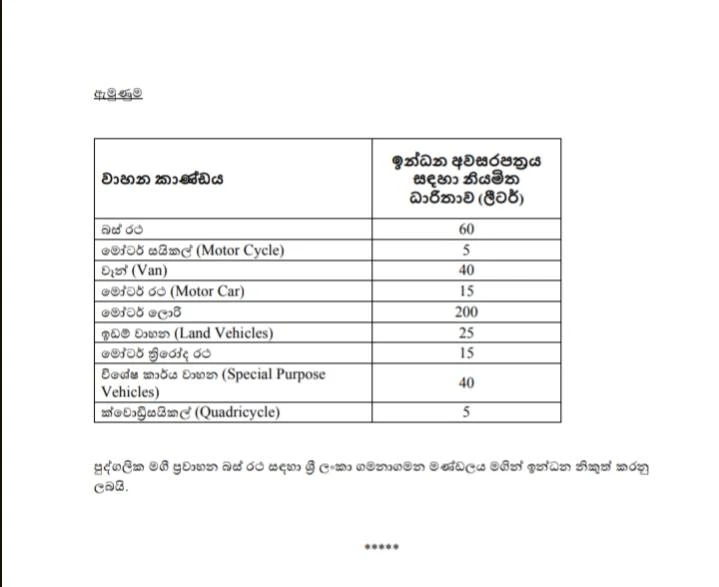
Under the new QR system, the weekly fuel quantities issued for each vehicle category have also been officially announced. Accordingly, motorcycles and quadricycles will receive 5 liters of fuel per week, while three-wheelers and motor cars will receive 15 liters. A quota of 25 liters has been allocated for land vehicles, and vans and special purpose vehicles will receive 40 liters of fuel weekly. Buses have been allocated 60 liters, and motor lorries have been given a maximum fuel capacity of 200 liters. However, fuel issuance for private passenger transport buses will be handled separately by the Sri Lanka Transport Board.