![Gossip Lanka News [English]](https://blogger.googleusercontent.com/img/a/AVvXsEhYm2aFFq-bIW1nWX-RrqnPFoIsVos6_VCVz8BpLt0QJi55GNXHXC2fugeRvL0qUStEuCfs7Sfu6ZiSlhrkldxfGuE_wzy5gitY6rMZ2KSi8VBbGvkgXLks37RwZV-4-HKbWiNLRxB8C_r1e4z3mpxFTMPDJPEADoG8E-bZteWFipeD5KNGbjvCfqEfKw=s300 "Gossip Lanka News [English]")
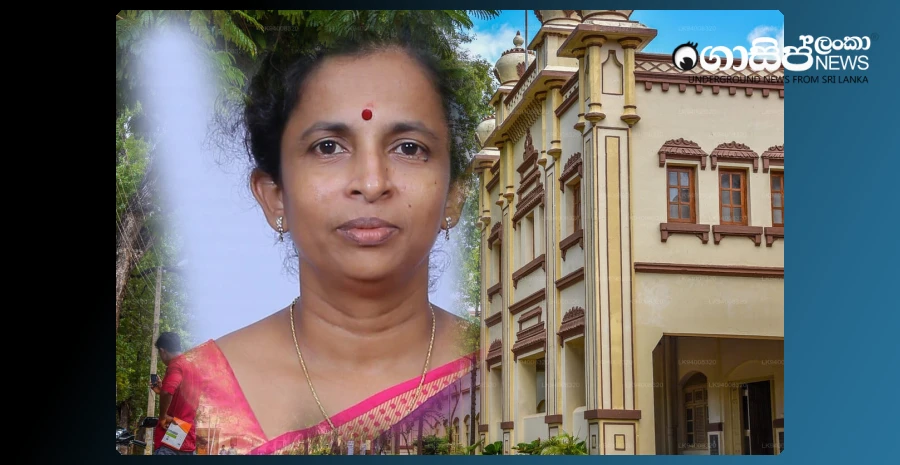
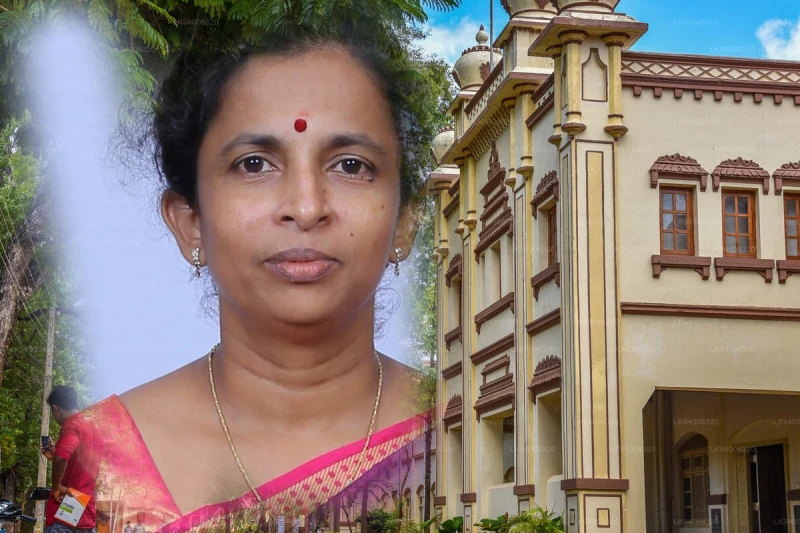
News of the extremely brutal murder of Mrs. Dileepan Dayalini, a fifty-four-year-old senior lecturer who served in the Faculty of Siddha Medicine at the University of Jaffna, by her own nineteen-year-old daughter and twenty-one-year-old son-in-law, is being reported these days from the Northern Province as well as across the entire island. Extensive information regarding the family disputes behind this incident, which deeply shocked both the academic community and the general public, and the attempts made to cover up the crime, has now been revealed through police investigations.This lecturer, who resided in the Pandiyanthalvu area near Ariyalai, Jaffna, was a scholar highly respected by everyone in the region, possessing extensive knowledge of traditional medicine.
The primary cause of this tragedy was a severe crisis that had persisted within the family for a long time. The marriage between the murdered lecturer's son and his wife had broken down, and a divorce case between them is currently being heard in court. Against this backdrop, it is reported that a constant atmosphere of conflict had been created within the home. Amidst this situation, on the nineteenth of last month, the lecturer's son went to the Jaffna Police Station and filed a serious complaint. In his complaint, he informed the police that he suspected his mother and his nineteen-year-old sister had been forcibly abducted by his sister's husband.
Understanding the seriousness of this complaint, investigating officers from the Jaffna Police immediately went to the relevant house in the Pandiyanthalvu area and commenced preliminary investigations. There, officers observed that someone had removed tiles from the house's roof. Furthermore, the police noticed a rope hanging at the scene, suspected to have been used for escape or entry into the house. In addition, a lock of cut hair was found inside the house by criminal investigation officers as evidence. All these unusual pieces of evidence provided a clear indication to the police that a serious crime or struggle had occurred within the house.
Subsequently, the police launched a massive operation to locate the missing persons and suspects. Modern technology and digital evidence played a crucial role in this. Firstly, the police managed to confirm through bank data that the suspects had withdrawn money from an Automated Teller Machine (ATM) in the Paranthan area. Based on this information, officers concluded that the suspects had left the Jaffna Peninsula. Subsequently, investigations into the vehicle they used revealed that fuel had been obtained from a filling station in the Trincomalee area, which investigators were able to accurately confirm through the QR code data system of the National Fuel Pass.
Following this information, police teams further proceeded to the relevant filling station in Trincomalee and meticulously examined the installed security camera (CCTV) footage. The footage clearly identified the twenty-one-year-old suspect son-in-law and his nineteen-year-old wife. Accordingly, the police immediately acted, arresting this young couple who were hiding in the Trincomalee area, and brought them to the Jaffna Police Station under special police protection for further questioning.
At the Jaffna Police Station, the suspects were subjected to several hours of extensive questioning. Unable to conceal the facts any longer during these interrogations, the twenty-one-year-old main suspect son-in-law confessed to the police about all the crimes. He admitted that after a serious dispute at home escalated, he severely assaulted his fifty-four-year-old mother-in-law and strangled her to death. Information was revealed that the suspect's wife, who is the daughter of the murdered woman, was also involved in or abetted this heinous act at the time it occurred.
After the murder, the two suspects had planned to remove the body from the house and hide it, with the aim of avoiding capture by the police. Accordingly, they secretly transported the lecturer's lifeless body to the Chavakachcheri area. According to the suspect's confession, they abandoned the body in an area called Aruguveli, which belongs to the Thanankilappu Grama Niladhari Division, located about two or three kilometers from Chavakachcheri town. This area is typically a very quiet, sparsely populated village where agricultural activities are prevalent. The suspects had deliberately chosen such an isolated, bushy, and forested area to dispose of the body.
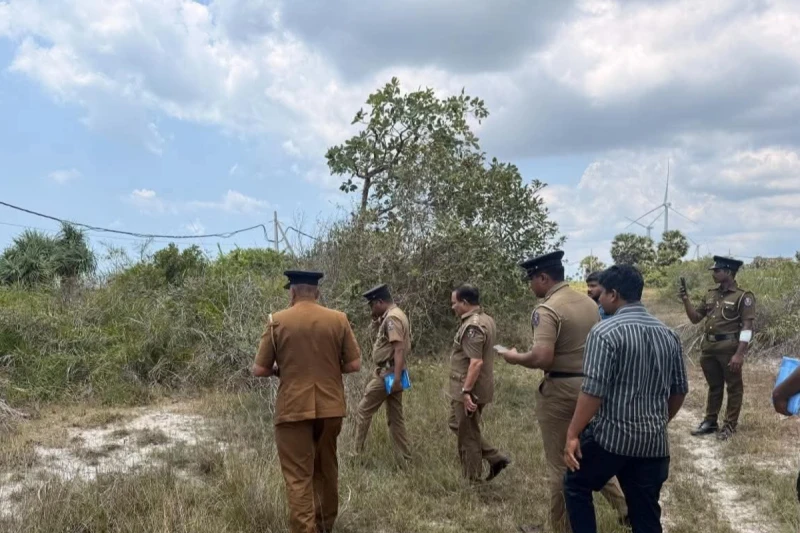
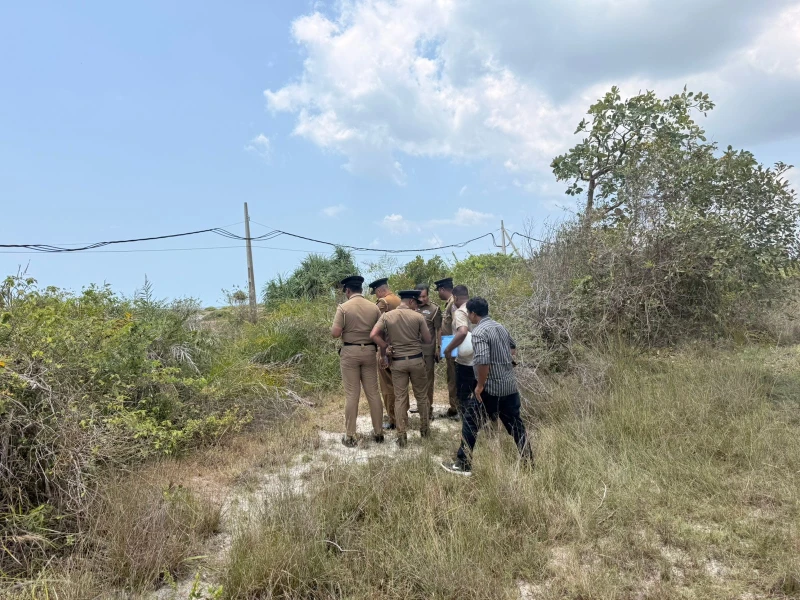
Based on the specific geographical information provided by the suspect, officers from the Jaffna and Chavakachcheri Police Stations jointly launched an extensive search operation in the Thanankilappu, Aruguveli area. After arduous searching, investigating officers were able to locate the lecturer's body hidden amidst dense bushy jungle. Police reports stated that due to several days having passed, the body was severely decomposed and disfigured to an extent that made identification difficult at that time.
Since the area where the body was found falls under the jurisdiction of the Chavakachcheri Magistrate's Court, the police reported the matter to the court. Subsequently, the acting Magistrate visited the scene where the crime occurred and the body was abandoned, conducting a preliminary magisterial inquiry. The Magistrate observed all physical evidence found at the scene and the condition of the body. Following legal procedures, arrangements were made to transport the murdered lecturer's body to the Jaffna Teaching Hospital for a full post-mortem examination and a forensic medical officer's report.