![Gossip Lanka News [English]](https://blogger.googleusercontent.com/img/a/AVvXsEhYm2aFFq-bIW1nWX-RrqnPFoIsVos6_VCVz8BpLt0QJi55GNXHXC2fugeRvL0qUStEuCfs7Sfu6ZiSlhrkldxfGuE_wzy5gitY6rMZ2KSi8VBbGvkgXLks37RwZV-4-HKbWiNLRxB8C_r1e4z3mpxFTMPDJPEADoG8E-bZteWFipeD5KNGbjvCfqEfKw=s300 "Gossip Lanka News [English]")
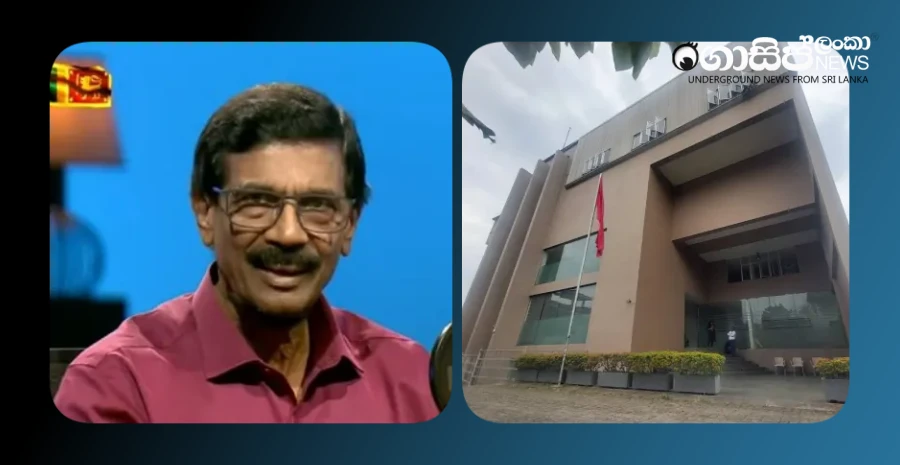
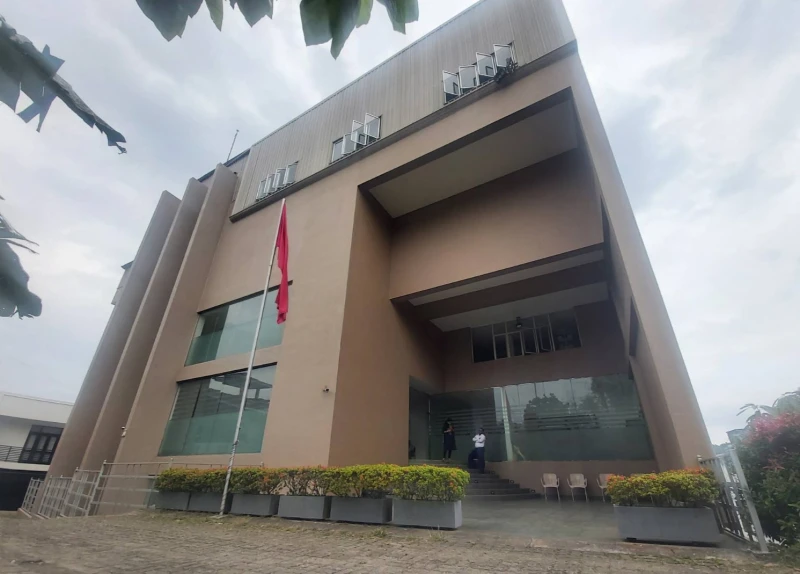
JVP General Secretary Tilvin Silva has clarified matters regarding the government being run from Pelawatte, participating in the 'On Air Politics' interview on Independent Television.
Question: What is this story about a National People's Power (NPP) leader running the government from Pelawatte?
Answer: Comrade Anura is the leader of the National People's Power and also the leader of the country. Now, before forming the government, we formulated policies. All these decisions were made. We met in Pelawatte. Our lives revolve around meeting in Pelawatte. As an organization, as the primary organizations of the JVP, we do meet in Pelawatte. Right, even after the government was formed, we know that government decisions are made by the President and the Cabinet from their respective places. However, when the government formulates some of its policies,
when proposals are submitted, we meet as the operational committee of the National People's Power. Along with that, the Central Committee of the Janatha Vimukthi Peramuna also meets to gather proposals, ideas, and to achieve some alignment. So, it is true that we support the government according to these, and that the government leads the country. That government is led by a political movement. That political movement meets in Pelawatte. So, if taken in an indirect sense, yes, he is connected to Pelawatte, to the government. But that's not what is being said. Some people say that there is someone in Pelawatte, sitting there and giving 'Orders'. We don't have such a thing.
Question: Isn't that a story targeting you?
Answer: That's what I said. I only intervene if I have to. But I intervene for the organization, not for governance.
Question: Some people refer to you as the 'unofficial president'?
Answer: No... I am not such a person. I work as the General Secretary of the party. I have said this before, I have never even made a phone call to any state official in our country. I have not yet made a phone call to the Inspector General of Police. I don't tell the IGP 'do this, don't do that', nor do I speak to the Army Commander, or any Ministry Secretary. That is not my job. Right? There are relevant ministers to do that. However, I speak with the President as a comrade.
Question: Is this the first time you are participating in this program for Independent Television Service?
Answer: Yes, for Independent Television Service. For the things that happen here, have I ever, even through a conversation, called the Chairman or the newsroom and given instructions like 'put out some news, say this and make people attack me'? Never. We don't interfere with this. However, we do have ideas, we have proposals.
We see problems. When we see them, we need to solve them. So, if I see any problem, it's my right to talk to the relevant person I know. If we tell a minister about something, and if we treat him very cordially as a 'comrade', then to exchange ideas between him and us, we, as an organization, need to set aside time and discuss. So, in that sense, he works with us in Pelawatte as our headquarters.
The NPP (National People's Power) governing is not really about individuals, that's what I was going to say. Other political parties cannot understand us. That's what has happened. In every other political party, there is a leader, and he sits and does everything. Others have to say "Yes Sir". It's like that in every party, and it's still like that. No one can go above him. He makes the decisions. But it's not like that in Pelawatte.
Question: Can even two people democratically oppose decisions?
Answer: Anyone can present ideas, bring proposals, object, or express dissenting opinions. But in the end, we agree on a common idea. Society and the Prime Minister also agree on that common idea. Because, now, when we bring an idea, if the majority holds a different opinion from yours, we all know what you have to do. You have to agree with the opinion held by the majority and set aside your own view to act. I might hold an idea. If the majority holds a different idea from mine,
I don't withdraw saying 'Oh, I can't, my idea wasn't accepted'. While keeping my idea, I work according to the majority's idea. If we were a party that didn't make democratic decisions and act democratically, we couldn't win. Similarly, this government cannot function if everyone in the cabinet doesn't unite. That's how we are. Those who don't have such a political culture cannot understand us. They think that one person does these kinds of things. No, there is no single person in our party. In our party, even the party leader, the President, does not work based on individual decisions.
You can ask Comrade Anura how he speaks when you talk to him. We discuss it more than I tell you, don't we? "Let's do this..." As a government... Because we don't have an 'I' person. Within 'we', an 'I' person doesn't stand out. It's not 'mine'. So, I don't claim to be a big shot. What we have is a job done by all of us together. It's a group working as one here. We need such a society. Any institution is like that, if people don't come together, you can't do it alone. There's an assigned task. We do that task.
Question: The next question is, "Who are we?" A characteristic of previous governments was that the country was governed by a few people, including the President?
Answer: We have official organizations. If we take it, we have an Executive Council of the National People's Power. Subsequently, many from it are in the government. We have an operational committee of the National People's Power, with about twenty to twenty-five people in it. We meet monthly. That's why we say that ideas from the people can flow into it. Central committees meet. That's what we mean. We, as district organizations, gather them. Such ideas come to us. Our grassroots organizations, divisional councils, they gather. They send those ideas to us. We send ideas there. Therefore, we exchange ideas from bottom to top.
While there are shortcomings, what I say might sometimes be an idea that comes late. There can be shortcomings everywhere. But as a mechanism, we are an organization because we centralize from the grassroots level, take ideas coming from below to the top, and can convey decisions made from above down to the bottom. We are not a single individual, a small group, or a clique. Before, cliques ruled the country. There's a leader, and below him are four or five others. Those around them, who benefit from them, make all the decisions. Then the others are probably there to do the 'sir's' work. It's not like that for us. We work together as a team, and that's how we achieved victory.