![Gossip Lanka News [English]](https://blogger.googleusercontent.com/img/a/AVvXsEhYm2aFFq-bIW1nWX-RrqnPFoIsVos6_VCVz8BpLt0QJi55GNXHXC2fugeRvL0qUStEuCfs7Sfu6ZiSlhrkldxfGuE_wzy5gitY6rMZ2KSi8VBbGvkgXLks37RwZV-4-HKbWiNLRxB8C_r1e4z3mpxFTMPDJPEADoG8E-bZteWFipeD5KNGbjvCfqEfKw=s300 "Gossip Lanka News [English]")
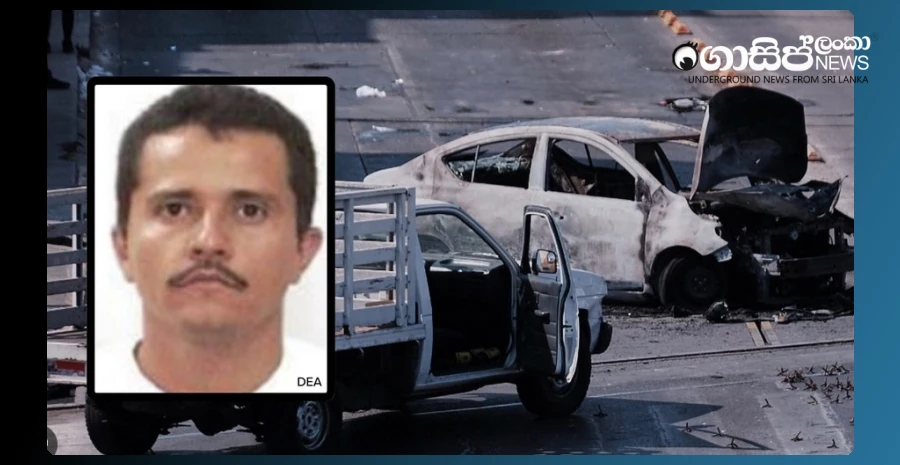
Nemecio Oseguera Cervantes, also known as "El Mencho," the 59-year-old leader of the fearsome Jalisco New Generation (CJNG) drug cartel and Mexico's most wanted criminal, has been killed in a special military operation launched to apprehend him. The country's Ministry of Defense confirmed that the former police officer died on Sunday while being transported to Mexico City after sustaining serious injuries in fierce clashes between his supporters and the military.
Aircraft from the Mexican Air Force and National Guard were used in this operation, planned and launched by the Mexican special task force, with critical intelligence provided by the United States. During the operation in Tapalpa, a town in the western state of Jalisco, four members of the CJNG cartel were killed, and three military personnel were injured. Additionally, a cache of weapons, including armored vehicles and rocket launchers, was seized by the military.
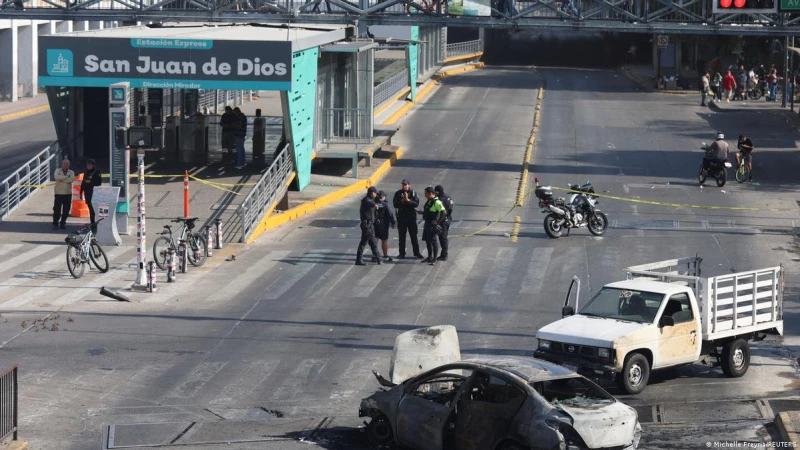
In response to El Mencho's death, his drug cartel launched attacks on security forces across eight states, setting vehicles on fire and erecting roadblocks, creating a highly chaotic situation. Eyewitnesses reported seeing plumes of smoke rising from burning vehicles in several cities, including Guadalajara, which will host the upcoming FIFA World Cup. Thousands of tourists are reportedly stranded in Puerto Vallarta, a popular tourist area on the Jalisco coast, due to the unrest.
In light of this dangerous situation, Jalisco Governor Pablo Lemus Navarro issued a red alert via social media, urging people to stay indoors and announcing that public transport services in the state have been completely suspended. Furthermore, the U.S. State Department warned American citizens in Jalisco, Tamaulipas, Michoacán, Guerrero, and Nuevo León to remain in safe locations. Considering the security situation, United, American, and Air Canada airlines have canceled their flights, while a Delta Airlines flight was diverted to another destination. However, Mexican President Claudia Sheinbaum Pardo urged the public to remain calm and stated that daily activities are proceeding normally in most parts of the country.
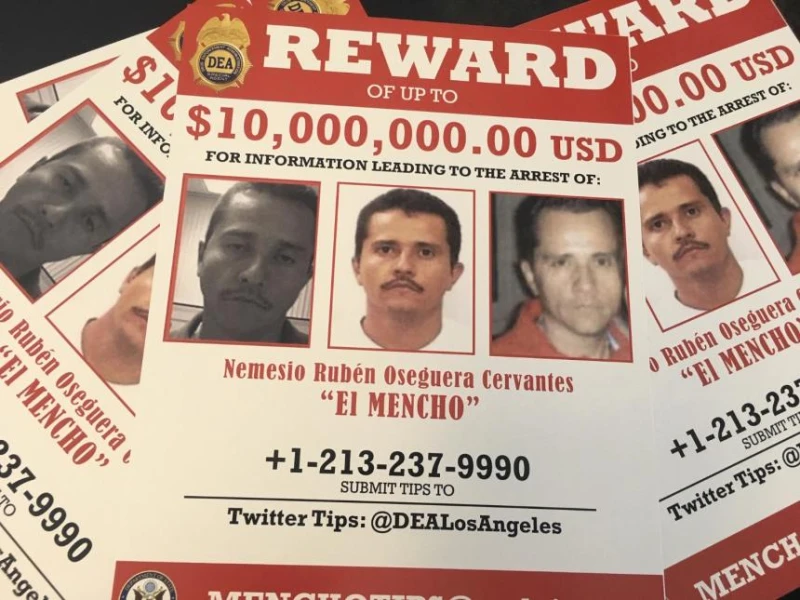
The U.S. State Department had previously offered a reward of $15 million (£11.1 million) for information leading to the capture of the leader of this cartel, which transported large quantities of drugs such as cocaine, methamphetamine, and fentanyl to the United States. Former U.S. Deputy Secretary of State and former Ambassador to Mexico, Christopher Landau, stated that El Mencho was one of the most ruthless and bloodthirsty drug traffickers in the world. Mike Vigil, former Chief of International Operations for the U.S. Drug Enforcement Administration (DEA), also highlighted this operation as one of the most significant actions taken in the history of drug trafficking.
This killing is considered a significant victory in the Mexican President's fight against drug cartels. The President had strongly responded to former U.S. President Donald Trump's statement last January that drug cartels control Mexico and that steps would be taken to suppress them within Mexican territory, by asserting that deploying American troops to its border was absolutely unacceptable. While this victory could strengthen relations between the two countries, there is also a risk that the government's success could be overshadowed if security forces fail to quickly control the cartel's violent reactions.
The CJNG cartel, which began expanding its power from Jalisco state in 2010, is now a network operating throughout Mexico and in all 50 U.S. states, posing a significant challenge to the powerful Sinaloa cartel. They are notorious for shooting down security forces' helicopters with rocket attacks and intimidating rivals by killing dozens of government officials and hanging their bodies from bridges. This cartel generates billions in revenue from fentanyl production. According to U.S. Customs and Border Protection data released in June 2025, 96% of the 9,200 pounds (4,182 kg) of fentanyl seized in the U.S. since October 2024 came through the Mexico Southwest border, while less than 1% was seized from the Canadian border. The remainder was brought in via sea routes or other checkpoints.