![Gossip Lanka News [English]](https://blogger.googleusercontent.com/img/a/AVvXsEhYm2aFFq-bIW1nWX-RrqnPFoIsVos6_VCVz8BpLt0QJi55GNXHXC2fugeRvL0qUStEuCfs7Sfu6ZiSlhrkldxfGuE_wzy5gitY6rMZ2KSi8VBbGvkgXLks37RwZV-4-HKbWiNLRxB8C_r1e4z3mpxFTMPDJPEADoG8E-bZteWFipeD5KNGbjvCfqEfKw=s300 "Gossip Lanka News [English]")
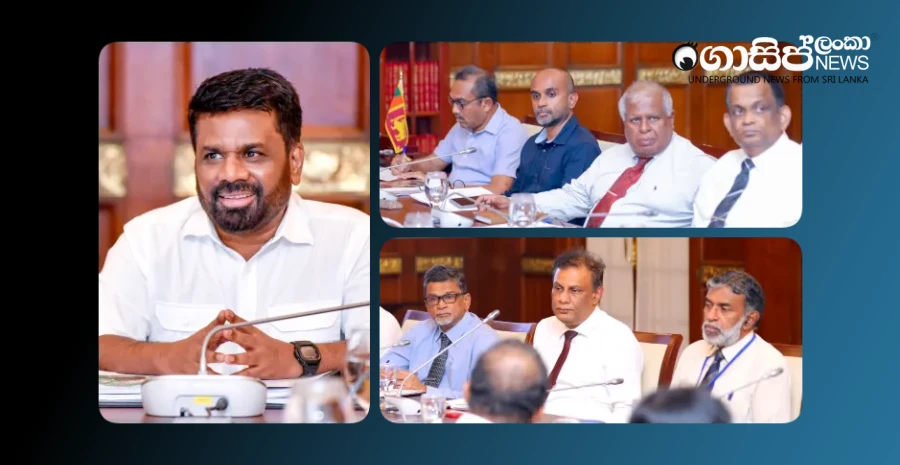
President Anura Kumara Dissanayake emphasizes the need for a rapid transformation of the entire transport system in the country to provide a dignified and reliable service to the general public. The President stated this during a discussion held today (12) at the Presidential Secretariat with officials from the Ministry of Highways and Urban Development. During the discussion, a strategic plan was presented to bring about a renaissance in the transport sector, based on five pillars: economic competitiveness, environmental sustainability, digital transformation, social equality, and safety.
The 'Lanka Metro Transit' bus service is set to be introduced with the aim of controlling severe traffic congestion in Colombo city, and the relevant buses are planned to be imported into the country by August this year. It is expected that this will be implemented as a pilot project centered around six main roads in and around Colombo, and the service will be expanded to eight major cities, including Kandy and Galle, within the next three years, attracting passengers towards public transport.
The President highlighted the importance of establishing a system of transport companies or clusters instead of the existing scattered bus service, stating that government support could be provided if a profit issue arises, and that what the people need is a good transport service, regardless of the system. The President also expressed the view that continuous service can be ensured through agreements between bus owners and relevant companies, as well as between the government and companies.
It was discussed that when designing multi-modal transport hubs, other transport services should be integrated around the railway service, and the modernization of the Kelani Valley railway line and the introduction of electronic payment systems for expressways were also discussed. Furthermore, the President emphasized the need to streamline welfare activities, including providing formal appointment letters to private sector transport employees.
It was revealed that although a chip has been issued for driver's licenses for ten years, a software system for implementing the demerit point system had not been developed, and efforts will be made to properly establish this system through Gov.pay within the next few months. The government's attention has also been drawn to introducing a new system for regulating three-wheelers and school vans, and to expanding the 'Sisu Sariya' service by effectively utilizing allocated funds to provide direct benefits to students.