![Gossip Lanka News [English]](https://blogger.googleusercontent.com/img/a/AVvXsEhYm2aFFq-bIW1nWX-RrqnPFoIsVos6_VCVz8BpLt0QJi55GNXHXC2fugeRvL0qUStEuCfs7Sfu6ZiSlhrkldxfGuE_wzy5gitY6rMZ2KSi8VBbGvkgXLks37RwZV-4-HKbWiNLRxB8C_r1e4z3mpxFTMPDJPEADoG8E-bZteWFipeD5KNGbjvCfqEfKw=s300 "Gossip Lanka News [English]")
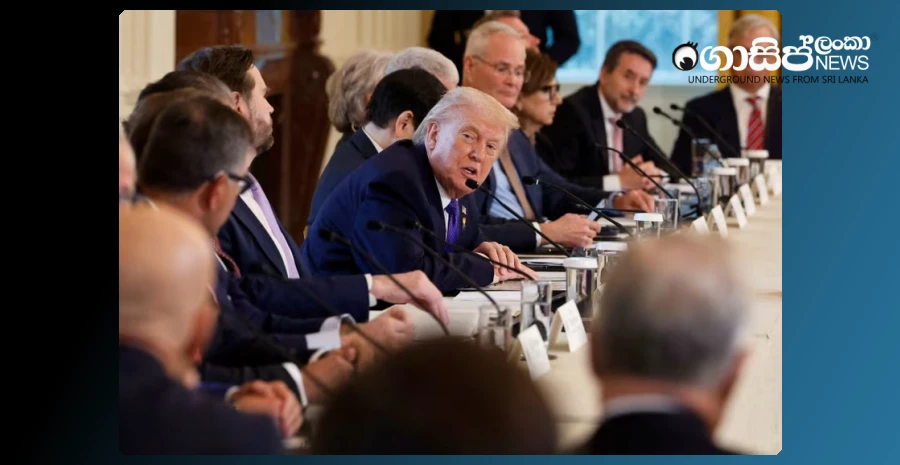
Foreign media has reported that the United States may allow India to purchase crude oil from Venezuela, and this information has been confirmed by a senior official of the Donald Trump administration. Trump discussed this during a meeting with top officials from leading global oil companies at the White House last Friday, where a plan to invest nearly 9 billion Indian rupees in Venezuela's oil sector was also considered.
Although this will provide an opportunity to resume trade activities that were suspended due to US sanctions to some extent, all such activities will take place under the full supervision and strict conditions of the United States.Trump emphasized that the United States will decide which companies can enter and invest in Venezuela, and among the companies that attended the meeting, such as ExxonMobil, ConocoPhillips, and Chevron, Chevron expressed its willingness to invest there. However, ExxonMobil CEO Darren Woods stated that Venezuela is not suitable for investment under the current circumstances, as its assets were confiscated twice before, and reconsideration would only be possible if the Trump administration and the Venezuelan government together bring about significant change. Trump also mentioned that the profits generated after companies quickly recover their investments would be shared among Venezuela, the United States, and the respective companies, and that he has a specific formula for this.
Meanwhile, it has been announced that between 30 million and 50 million barrels of oil, which were banned by Venezuela's interim president, are to be handed over to the United States, and the revenue generated from selling that oil at market price will be used for the benefit of the people of both countries under Trump's administration. The value of a stock of 50 million barrels of crude oil is approximately 25,000 crore rupees (250 billion rupees), and Trump, who has instructed Energy Secretary Chris Wright to implement this plan immediately, intends to bring this oil directly to American ports via storage tankers. It is also expected that infrastructure will be rebuilt through massive investments by oil companies.
Venezuela, an OPEC member with the world's largest oil reserves, produced 3.5 million barrels per day in the 1970s, but currently contributes only about 1% of the global supply. Due to the severe economic and secondary sanctions imposed by the United States against Venezuela's PDVSA company in 2019, countries purchasing oil from Venezuela faced the risk of losing access to the American market and banking facilities. These sanctions forced major buyers like India to limit their imports of Venezuelan crude oil, and the amount, which was 6.7% of India's total oil imports in 2018, approached zero by 2022-2023.
In the context of recent pressure from Trump to limit Russian oil purchases, which led India's Reliance Industries, owner of the world's largest refining complex, to halt Russian oil shipments, Venezuela is considered the best alternative. Reuters reports indicate that Reliance had previously purchased oil from Venezuela with US licenses. Reliance has stated that even if imports cease due to renewed sanctions in mid-2025, it is prepared to purchase oil again if permitted under US regulations. As the world's third-largest oil consumer, India imports 88-89% of its oil requirements and anticipates a consumption of 5.99 million barrels per day by 2026, making the search for energy alternatives essential.