![Gossip Lanka News [English]](https://blogger.googleusercontent.com/img/a/AVvXsEhYm2aFFq-bIW1nWX-RrqnPFoIsVos6_VCVz8BpLt0QJi55GNXHXC2fugeRvL0qUStEuCfs7Sfu6ZiSlhrkldxfGuE_wzy5gitY6rMZ2KSi8VBbGvkgXLks37RwZV-4-HKbWiNLRxB8C_r1e4z3mpxFTMPDJPEADoG8E-bZteWFipeD5KNGbjvCfqEfKw=s300 "Gossip Lanka News [English]")
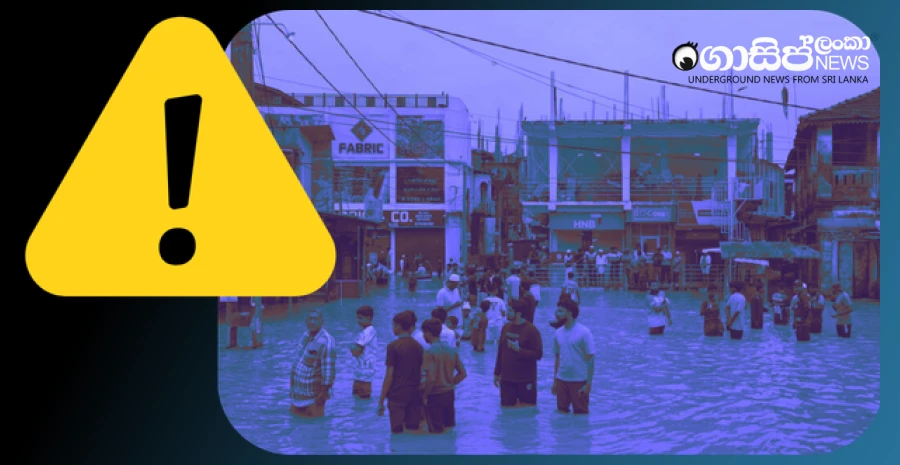
The recently experienced "Ditwa" disaster can be considered a practical example that clearly demonstrated the weaknesses in Sri Lanka's infrastructure. Due to this disaster, two major hospitals, schools, and court buildings suffered severe damage, and road and rail transport were disrupted, but places like airports and ports were not affected.
The disruption of telecommunication services during the Ditwa cyclone severely impacted people's lives, with over 2,000 telecom sites becoming inactive, halting communication services in several districts for several days. These breakdowns were primarily caused by prolonged power outages and flood conditions, which also led to financial service disruptions such as inoperable ATM machines and disrupted credit card and QR payment systems.
Looking at the energy sector, approximately 4 million consumers were affected by the Ditwa disaster, and about 40 percent of the Ceylon Electricity Board's infrastructure was damaged. Particularly, the damage to the distribution network and the Rantambe - Mahiyanganaya transmission line, as well as thousands of reported high-voltage and low-voltage breakdowns, revealed the system's vulnerability.
Given the risk of such disasters recurring in the future due to climate change, an independent assessment of the system's performance is essential. If CEB successor companies are under private or semi-private ownership, obtaining insurance coverage for such losses should be mandatory, thereby preventing losses caused by poor system design from being borne by the government or the treasury.
It is important to formulate a national policy for system risk management, and instead of allowing disaster costs to be recovered through consumer tariffs, making shareholders bear these costs will incentivize the creation of a more resilient infrastructure system. The opportunity to enforce such a formal mechanism will arise with the anticipated changes through the amendment of the 2025 Electricity Act.
The process of cyber security legislation in Sri Lanka, which has been ongoing since 2018 with the intervention of Mr. Rohan Samarajiva, is expected to reach its final stage this year, with a special focus on protecting "Critical Infrastructure." If this infrastructure becomes inactive for any reason, it will have a massive impact on the country's economy and society, and cyber security refers not only to hacker attacks but also to system breakdowns caused by natural reasons such as floods or landslides.
The U.S. Cybersecurity and Infrastructure Security Agency has identified 18 sectors, including chemical, communications, energy, financial, and transportation, as critical infrastructure. Although some sectors on this list may not be directly relevant to Sri Lanka's situation, it is clear that in the event of an energy infrastructure breakdown, all other critical sectors would be severely disrupted.