![Gossip Lanka News [English]](https://blogger.googleusercontent.com/img/a/AVvXsEhYm2aFFq-bIW1nWX-RrqnPFoIsVos6_VCVz8BpLt0QJi55GNXHXC2fugeRvL0qUStEuCfs7Sfu6ZiSlhrkldxfGuE_wzy5gitY6rMZ2KSi8VBbGvkgXLks37RwZV-4-HKbWiNLRxB8C_r1e4z3mpxFTMPDJPEADoG8E-bZteWFipeD5KNGbjvCfqEfKw=s300 "Gossip Lanka News [English]")
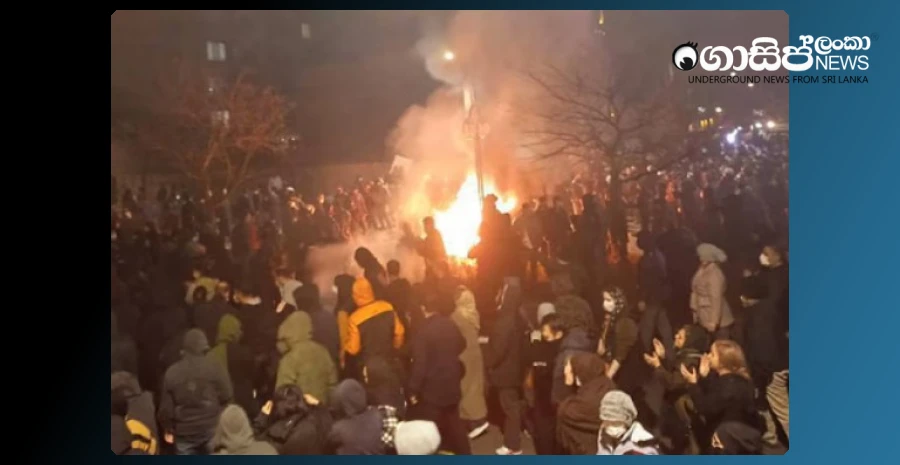
Foreign media reports indicate that thousands of people have been killed within a short period of two days to suppress the wave of protests that suddenly erupted across Iran. There are various reports regarding the number of casualties, with some citing figures between 2,000 and 4,000, while others claim a massacre of 12,000 to 20,000 has occurred.
Accordingly, a major bloodbath has taken place over Thursday and Friday, with all protesters who came out being killed. Reports suggest that this massacre was carried out by a mercenary army brought in from Iraq, as government forces supported the protests. With these killings, the struggle has ceased, and foreign reports indicate that Iran has now been silenced.This incident is considered the most brutal repression recorded in the country's history, with estimates of the massive death toll ranging from 12,000 according to Iran International media reports and up to 20,000 according to CBS News, deeply shocking the Iranian people. Although the Iranian government has almost completely shut down the internet, information and images leaking out of the country continue to reveal this bloodshed.
The Tehran regime continuously claims that the violence was caused by a group of armed saboteurs led by Israel and America, and that the government had to respond because they attacked civilians and security forces. However, eyewitness accounts and video evidence confirm that the Islamic Revolutionary Guard Corps (IRGC) is primarily responsible for these killings. Specifically, vehicles with heavy weapons were deployed on the streets of Tehran, and protesters were observed being shot with DShK-type heavy machine guns, typically used in combat, by the Imam Ali Security Unit.
The most horrific aspect of this repression is the reports of the use of foreign mercenaries and armed gangs. Eyewitnesses have told human rights organizations that security forces who shot at protesters in the Karaj area spoke Arabic instead of Persian and took selfies with the bodies of the deceased. Information also reports that about 3,000 members of pro-Iranian militia groups, such as Hashd al-Shaabi from Iraq, entered Iran across the borders disguised as pilgrims and joined the camps of the Iranian Revolutionary Guard Corps, directly contributing to the suppression of these protests.
Additionally, there is strong suspicion that, following a tactic used in the 2009 protest suppression, dangerous criminals who were imprisoned were released and used alongside security forces to attack protesters. Furthermore, opposition activists state that government claims of some protesters dying from drug overdoses are false, and that what actually happened was the provision of stimulant drugs like 'Captagon,' widely produced in Syria, to security forces to increase their aggression and brutality during the repression. Human rights organizations have confirmed that 3,379 protesters died in the five-day period from January 8 to 12 alone, and international observers point out that this number could further increase with the bodies that could not be brought to hospitals and those hidden by security forces.
The wave of protests, rooted in economic pressure, began on December 28, 2025, centered in Iran's capital, Tehran, and by mid-January 2026, it had transformed into the most severe state repression recorded in the country's history. This public uprising, which started as a small protest near Tehran's Bazaar market, spread to cover all provinces of Iran within a very short period. The measures taken by the Iranian government to suppress it are described by human rights organizations and international media as a large-scale massacre launched against unarmed civilians. These protests, initially based on economic hardships, later evolved into an anti-government political struggle, and the nature of the operations launched by the government in response was characterized by an unprecedented level of violence.
The central issue of this crisis has become the deadly nature of the state's response. Although the Iranian government accuses terrorists who infiltrated the protesters of being responsible for this violence, independent reports and eyewitness accounts confirm that the Islamic Revolutionary Guard Corps (IRGC) and foreign militia groups launched these attacks using heavy weapons typically employed on a battlefield against unarmed civilians. Especially with the prolonged internet shutdown that began on January 8, obtaining accurate information about deaths and injuries has become extremely difficult, and estimates of the death toll range widely from 2,000 to 20,000. This internet outage lasted for over 200 hours, allowing the government to conceal information about the crimes committed.
The most controversial and horrific revelation of this repression process is the use of foreign mercenaries by Iran's Supreme Leader Ayatollah Ali Khamenei to suppress the protests. According to reports, due to the refusal of ordinary Iranian soldiers to shoot at regular Iranian protesters, Khamenei decided to seek the assistance of approximately 5,000 Shia fighters from Iraq. Western security agencies and media outlets like CNN have confirmed that these fighters belong to Iraqi armed groups such as Hashd al-Shaabi (PMF) and Kata'ib Hezbollah. These groups, disguised as religious pilgrims, entered Iran by bus through the Shalamcheh border and areas like Meisan and Wasit, and are prepared to commit any inhumane act to protect the existence of the Iranian government. According to border officials' testimonies, these groups were transported in about 60 buses, each capable of carrying 50 people, and it was noted that there were no women or children in these vehicles, only armed men dressed in black.
Eyewitness accounts have emerged from severe crackdowns in areas like Karaj and Alborz, stating that security forces spoke Arabic instead of Persian, further confirming foreign military intervention. Video footage has been released showing pickup trucks mounted with DShK-type heavy machine guns moving on the streets in western Tehran, weapons not typically used for riot control in city centers. Due to the use of these heavy weapons and the intervention of foreign militias, a "massacre" is reported to have occurred in Karaj city alone. Evidence has been received that "shoot to kill" orders were implemented against protesters, and these armed groups even delivered final shots to kill the wounded and took selfies with the dead bodies.
There is a significant discrepancy in the data regarding the death toll. According to official Iranian government announcements, the death toll is around 2,000, and they state that this includes members of the security forces. However, according to data confirmed by the Human Rights Activists News Agency (HRANA), 2,885 protesters and 47 security force members have died. The Norway-based Iran Human Rights Organization (IHRNGO), citing internal sources from the Ministry of Health, states that the death toll exceeds 3,428. More seriously, Iran International media, citing some sources connected to the Iranian National Security Council, reports that the death toll could be around 12,000. Furthermore, CBS News estimates approximately 20,000 deaths based on activist and medical reports. The most inhumane aspect of this tragedy is that families of those killed have had to pay for bullets to retrieve the bodies of their relatives. Reportedly, an amount ranging from $480 to $1,720 is charged per bullet, which is also considered an act of further torment and revenge against the families of the deceased.
State repression was not limited to street clashes but also extended through arrests and legal actions. Over 10,000 people are reportedly arrested, and the Attorney General has labeled all protesters as "enemies of God" (mohareb). According to Iranian law, this charge can carry the death penalty. Additionally, although the Minister of Security claimed that protesters died from drug overdoses, opposition activists point out that security forces were given drugs like Captagon to unleash violence. This drug, widely produced in Syria, increases impulsivity and reduces fear, and it is believed to have contributed to the severe torture of arrested protesters.
The internet shutdown, which began on January 8, was not merely a technical glitch but a planned process. For over 8 days, internet connectivity dropped to 1%, and during that time, the "massacre" reached its peak. Tehran hospitals were filled with bodies, and there was a shortage of surgeons in Shiraz. As reported by 'The Guardian,' the Iranian government plans to completely withdraw from the global internet by the end of 2026 and introduce a domestic internet system (Intranet) under strict government supervision. This would make global internet access a privilege limited to government-friendly elites.
Politically, Supreme Leader Khamenei blames US President Donald Trump and foreign forces for these events. However, UN special representatives and the international community have expressed their deep concern. Reza Pahlavi, son of the exiled Iranian Shah, has declared that the collapse of the Islamic Republic is imminent and that he is ready to return. Nevertheless, despite the brutal repression launched with the support of foreign militias, protests appeared to be somewhat controlled by January 17, but the hatred and terror built up within Iranian society remain like a volcano ready to erupt again.