![Gossip Lanka News [English]](https://blogger.googleusercontent.com/img/a/AVvXsEhYm2aFFq-bIW1nWX-RrqnPFoIsVos6_VCVz8BpLt0QJi55GNXHXC2fugeRvL0qUStEuCfs7Sfu6ZiSlhrkldxfGuE_wzy5gitY6rMZ2KSi8VBbGvkgXLks37RwZV-4-HKbWiNLRxB8C_r1e4z3mpxFTMPDJPEADoG8E-bZteWFipeD5KNGbjvCfqEfKw=s300 "Gossip Lanka News [English]")
On the morning of November 30, 2025, a heartbreaking message emerged on social media from the Deltota, Pattiyagama area. Typed barely amidst weak phone signals, the message described isolation, fear, and hopelessness. "There is no electricity here, and the phone network is very weak. Roads are still blocked. No one has come to find us yet.
The price of food items is very high. No one has even come to check if we are alive or not. Relatives were caught in the flood and buried right there. It is doubtful if this message will even go through. There are no banking facilities either. We have no way to get water. Everything is broken. We are in a very difficult interior area. The government has not yet come in here," it stated.This plea perfectly illustrates the tragedy unfolding across hundreds of villages in the central highlands. Due to incessant rainfall, landslides, flash floods, and overflowing rivers occurred, and Sri Lanka is facing one of the most severe natural disasters in recent decades. As the scale of the catastrophe became clearer, it was confirmed that an unbearable loss of human lives had occurred in the country. By December 02, over 400 people were confirmed dead, and approximately 336 were missing.
Entire villages were submerged, buried under mudslides, or swept away, and isolated communities faced severe problems such as collapsed roads, power grid failures, communication breakdowns, and lack of clean water.
Although meteorological authorities had issued warnings of unusually heavy rainfall and potential landslides since mid-November, public life largely continued uninterrupted. Public transport was not restricted, and national examinations were held. Unaware that they would face the heaviest rainfall ever recorded in the region within a few days, many people in hilly areas remained in their homes. Despite previous experiences, from the Aranayake landslide in 2016 that claimed 127 lives to smaller-scale slope failures in the Central and Sabaragamuwa provinces, the gap between early warnings and preparedness this time has become a serious issue.
The most tragic news was reported from Matale, Badulla, Bandarawela, Rattota, Kandy, and Gampola, where unstable slopes collapsed under incessant rain. The Rambukela Wilanagama area, near Akurana, suffered the worst devastation, with about 40 homes buried under mudslides in the early hours of November 29. Residents stated they received no prior warning of the disaster. Entire families were asleep when the mudslides struck. Local relief teams described a horrific scene of mud, broken beams, uprooted trees, and an eerie silence. One survivor said over the phone, "It's heartbreaking. We believe almost all of them are lost. Only 11 bodies have been found." Landslide-prone areas like Aranayake were again hit by disaster, and days of continuous rain made it difficult for relief teams to reach affected areas.
Local geologists and disaster experts had long warned about the instability of the soil in Sri Lanka's central highlands. Soil composition, deforestation, and changing rainfall patterns have contributed to this increased risk. Although experts reiterated warnings about high-risk slopes in late November and urged critical evacuation measures, the state machinery's response was slow. The President and ministers were seen engaging in micromanagement, addressing district officials via television calls. While viral videos circulated showing high-ranking state leaders live-addressing officials and giving instructions, critics argue that while it attempted to portray leadership, it actually revealed confusion, delays, and a lack of pre-planned coordination. The President declared a state of emergency and appointed a Commissioner General of Essential Services by November 29.
But by then, significant damage had already been caused by Cyclone 'Ditwah'.
According to reports from the field, 'administrative fear' hindered prompt action. A senior official in an eastern district was reluctant to procure emergency supplies before the declaration of a state of emergency, fearing later corruption charges for bypassing procurement procedures. Civil society activists reported similar challenges. Officials even hesitated to borrow food or medicine from local vendors, fearing they would face investigations later. A volunteer coordinating relief efforts stated, "They weren't negligent; they were scared. They didn't know if emergency decisions would be questioned later." This 'procedural paralysis' meant officials waited for paperwork and approvals while villages were being engulfed by landslides.
Failures in the transport sector further fueled public anger. The Ministry of Transport was criticized for not halting the upcountry train services earlier, disregarding residents' warnings that vibrations could further weaken unstable slopes. At the same time, a bus caught in floods near the Rajanganaya Kala Oya bridge was broadcast live as it was swept away. As the nation watched, relief teams worked tirelessly to rescue the passengers. Although the President praised their bravery, the public questioned why road and flood warnings were managed so inefficiently.
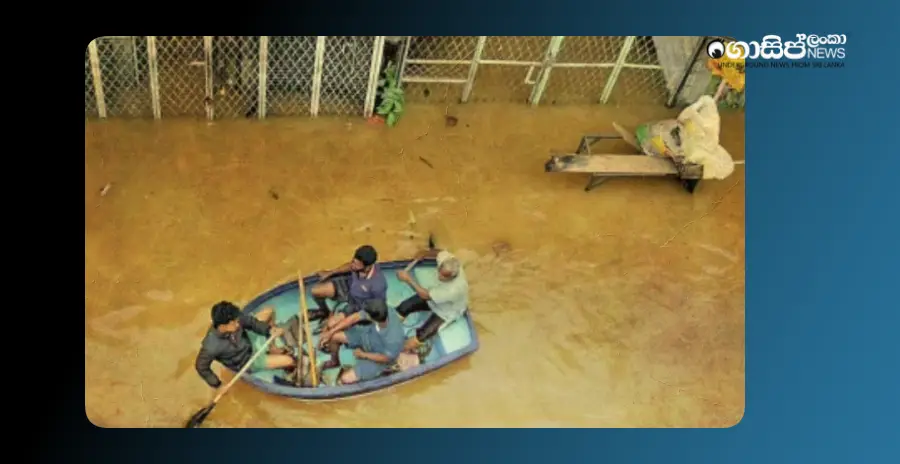
As state systems faltered, ordinary Sri Lankans stepped forward. Fishing communities brought their boats to rescue trapped families, and neighbors waded through waist-deep water, carrying elders to safety. Youth groups organized through social media, building relief supply networks. At least one Air Force officer and five Navy personnel lost their lives during rescue operations. Although communities, civil society organizations, and women's groups played a critical role in this disaster, the government's centralization of decision-making and limitation of community participation have been criticized. The new national team appointed to manage aid and reconstruction is problematic, being composed entirely of men and including businessmen accused of labor rights violations.
Furthermore, the circular stating that foreign aid must be channeled through the Ministry of Defense raises suspicions about militarization.
The impact of the cyclone was severely felt by historically marginalized communities, especially the Tamil people of the estate sector in the central highlands. Facing economic neglect and land insecurity, many of them live in steep areas without government support. This time, entire families were buried under mudslides, and a Nuwara Eliya area MP stated, "The upcountry has been neglected for centuries. Our safety is always at the bottom of the national priority list." There are also accusations that the sudden release of water from the Kotmale Reservoir contributed to the disaster in Gampola town.
Cyclone Ditwah exposed not only physical risks but also the social and political vulnerabilities of rural Sri Lanka. Why were orders to evacuate people from clearly identified high-risk areas not implemented? Why did communication networks and emergency supplies fail? Why were officials afraid of procedures in a life-threatening situation? These questions require honest answers and structural reforms. This disaster demonstrated the resilience of ordinary citizens as well as the failures of institutional systems. Whether preparedness and equity will prevail in facing future disasters, or if the cycle of neglect will continue, will be determined by how the nation responds in the coming weeks and months.
(Based on Daily Mirror)
Tags:
Trending