![Gossip Lanka News [English]](https://blogger.googleusercontent.com/img/a/AVvXsEhYm2aFFq-bIW1nWX-RrqnPFoIsVos6_VCVz8BpLt0QJi55GNXHXC2fugeRvL0qUStEuCfs7Sfu6ZiSlhrkldxfGuE_wzy5gitY6rMZ2KSi8VBbGvkgXLks37RwZV-4-HKbWiNLRxB8C_r1e4z3mpxFTMPDJPEADoG8E-bZteWFipeD5KNGbjvCfqEfKw=s300 "Gossip Lanka News [English]")
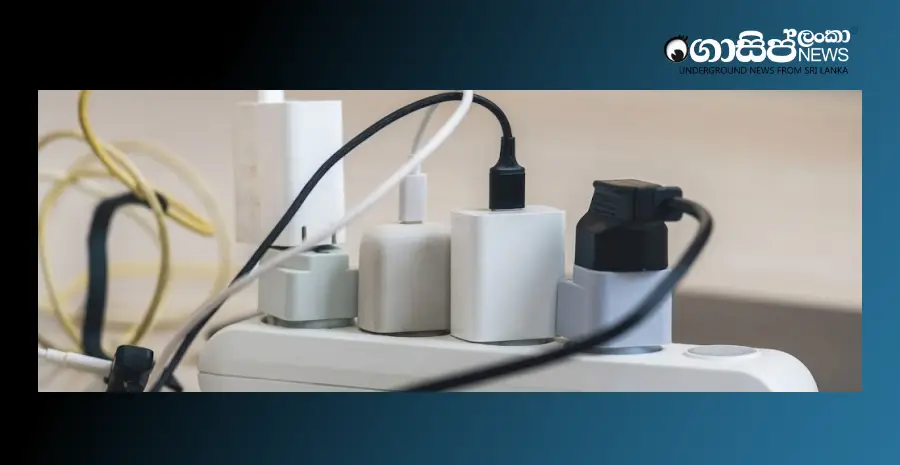
In today's world, the daily lives of many of us are intertwined with a multitude of rechargeable electronic devices such as mobile phones, laptop computers, smartwatches, and headphones. Often, it has become our habit to leave these devices plugged in even after they are fully charged or after the device has been removed,
to leave the charger in the wall sockets and move on to another task. But is it safe to keep chargers continuously plugged into electricity,and whether it incurs additional costs, is important to consider.
Generally, a charger converts the alternating current (AC) received from the wall socket into a low-voltage direct current (DC) suitable for the battery of our electronic device. To perform this process, the charger contains a transformer and various circuit components, and these components remain active whenever the charger is connected to the power supply. Even if you haven't connected a phone or another device, if the charger is plugged into the socket and the switch is on, it continuously consumes a small amount of electricity, which is technically known as 'Vampire power' or 'Standby power'.
While the additional power consumption of a single charger may seem very small, leaving all chargers in a house plugged into electricity for a year can waste a significant amount of electricity. However, modern, high-quality chargers are designed to minimize this energy loss, allowing them to enter a 'Sleep mode' when no external device is connected.
However, when using old or substandard chargers, this electricity waste can be higher.
In addition to energy waste, continuously leaving chargers plugged into electricity unnecessarily also poses a risk of reducing the lifespan of the charger's internal components. Voltage fluctuations and sudden power surges (Voltage spikes) in our electrical system can damage the charger, and this risk is significantly higher when using substandard or low-quality chargers. Experts believe that due to the lack of proper safety circuits in such chargers, they can overheat and even cause fires.
While it is true that modern chargers are safer and more energy-efficient, it is still a wise practice to unplug them from the wall socket whenever they are not in use. If, for some reason, your charger heats up more than usual when not charging, emits an unusual sound, or has external damage, you should not keep it connected to electricity and should immediately ensure it is removed from use.