![Gossip Lanka News [English]](https://blogger.googleusercontent.com/img/a/AVvXsEhYm2aFFq-bIW1nWX-RrqnPFoIsVos6_VCVz8BpLt0QJi55GNXHXC2fugeRvL0qUStEuCfs7Sfu6ZiSlhrkldxfGuE_wzy5gitY6rMZ2KSi8VBbGvkgXLks37RwZV-4-HKbWiNLRxB8C_r1e4z3mpxFTMPDJPEADoG8E-bZteWFipeD5KNGbjvCfqEfKw=s300 "Gossip Lanka News [English]")
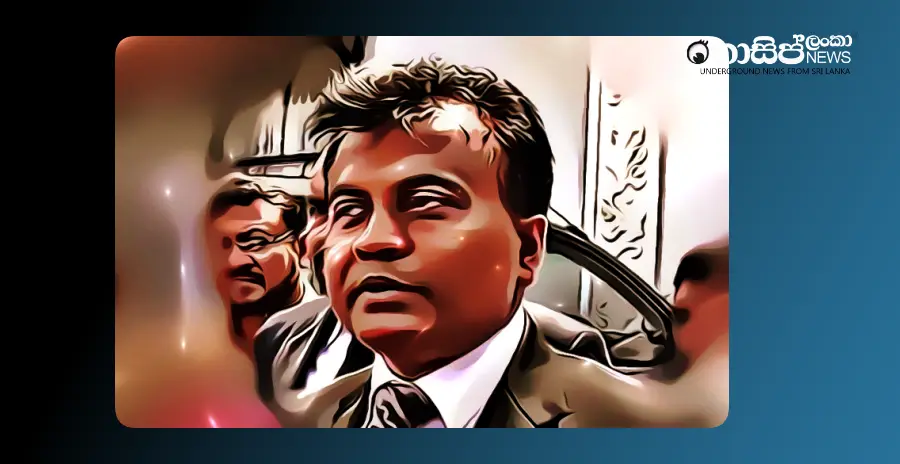
The political and social discourse surrounding the arrest of individuals who are slandering the President and other government leaders via social media, leveraging the current disaster situation and emergency law, has now taken a heated turn. Specifically, Deputy Minister of Public Security, Sunil Watagala, had instructed police station OICs to take strict measures to prevent false propaganda and smear campaigns carried out through social media, the internet, and Artificial Intelligence (AI) by various parties, including those residing abroad, targeting the President and the political authority.
The Deputy Minister further pointed out that such actions are covered under Sections 20 and 21 of the Emergency Regulations, and individuals spreading false information or disseminating distorted views about the disaster situation can be arrested without a warrant and sentenced to up to five years in prison.
Following this statement, the Sri Lanka Professional Journalists' Association expressed strong opposition, stating that using the emergency law, imposed to control the disaster situation, to suppress freedom of speech and expression is an act against democracy. The association's statement noted that it is regrettable that the current government, which advocated for media freedom before coming to power, is now adopting a repressive policy in the face of criticism, and that instructing to treat individuals as accused rather than suspects is abhorrent.
Meanwhile, Samagi Jana Balawegaya (SJB) Member of Parliament S.M. Marikkar also commented on the incident, stating that the government's attempt to suppress critics under emergency law reveals its true nature. The MP urged the government not to adopt an arrogant policy similar to that of former President Gotabaya Rajapaksa, and instead of attacking the opposition or critics, to focus on obtaining international aid to rescue the affected people.
However, responding to these allegations, Minister of Public Security Ananda Wijepala emphasized that the government has not given any instructions to use the emergency law to suppress social media or political criticism. The Minister clarified that the President's instructions were only to control false propaganda that frightens the public regarding the disaster situation (e.g., rumors of canals and dams bursting). He further stated that the public has the right to criticize politicians and that political witch hunts will not be carried out under the guise of emergency law.
The President, in his recent address to the nation, also emphasized that the emergency law was imposed due to disaster management requirements and assured that 'no repressive activities of any kind' would be carried out.
Meanwhile, police sources indicate that while 57 individuals who spread various false propaganda through social media have been identified, none of them have been arrested so far. It is also reported that, as mentioned by the Deputy Minister, about 20 complaints related to this matter have been received by the Criminal Investigation Department.
Tags:
Trending