![Gossip Lanka News [English]](https://blogger.googleusercontent.com/img/a/AVvXsEhYm2aFFq-bIW1nWX-RrqnPFoIsVos6_VCVz8BpLt0QJi55GNXHXC2fugeRvL0qUStEuCfs7Sfu6ZiSlhrkldxfGuE_wzy5gitY6rMZ2KSi8VBbGvkgXLks37RwZV-4-HKbWiNLRxB8C_r1e4z3mpxFTMPDJPEADoG8E-bZteWFipeD5KNGbjvCfqEfKw=s300 "Gossip Lanka News [English]")
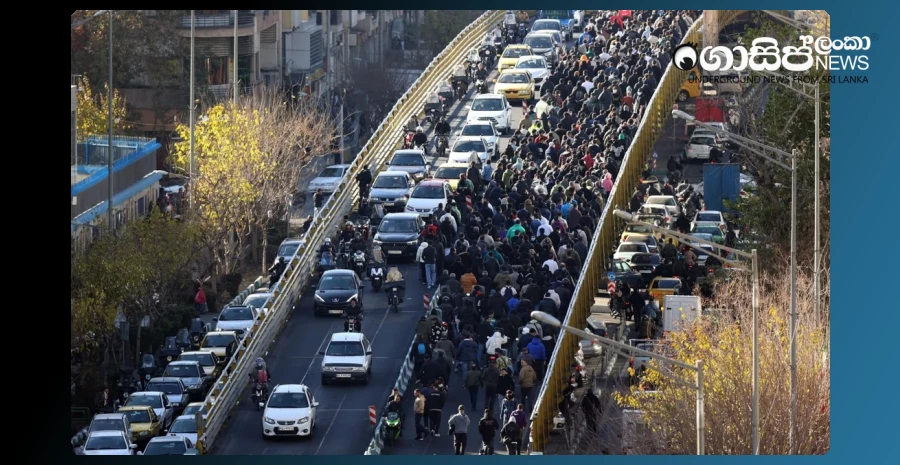
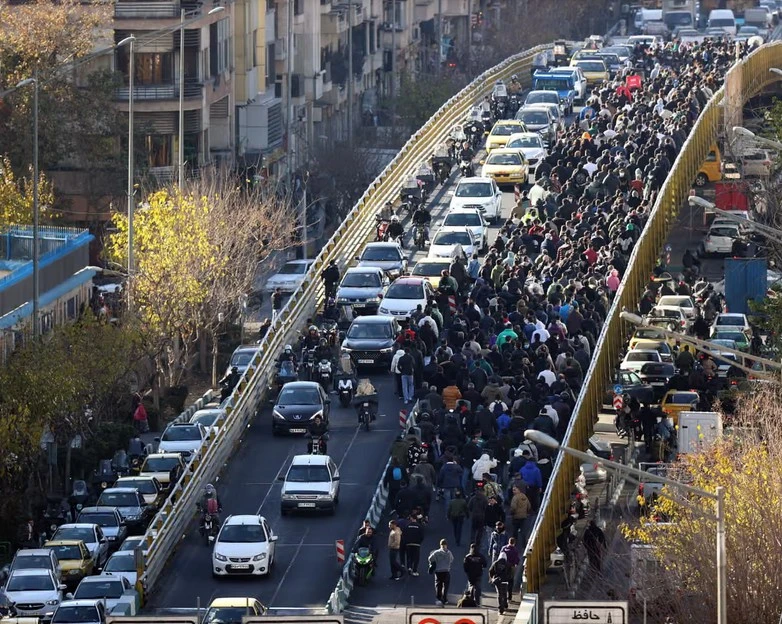
Protests and strikes, which began in the capital Tehran due to severe inflation and currency depreciation in Iran, have now spread to many other cities across the country. This marks the third consecutive day of these protests, initiated by merchants in Tehran's main market following a record fall in the value of the Iranian Rial against the US dollar.
In addition to Tehran, foreign media have confirmed that people are taking to the streets and engaging in protests in major cities such as Karaj, Hamadan, Isfahan, Shiraz, Mashhad, and Yazd, where police can be seen firing tear gas to disperse the protesters. This is considered the largest public protest in Iran since the death of Mahsa Amini in 2022, with shops closed and business activities suspended in some areas.
Amidst the ongoing crisis, Iranian President Masoud Pezeshkian has stated that he will patiently listen to the voices of the protesters and has instructed the Interior Minister to hold discussions with their representatives to resolve the issues. Concurrently, Mohammad Reza Farzin, the Governor of the Central Bank of Iran, has resigned from his post, and the President has taken steps to appoint former Finance Minister Abdolnaser Hemmati as the new Central Bank Governor.
According to the country's economic data, the inflation rate exceeded 42% in December, and food prices reportedly increased by about 70%. Last Sunday, the value of the Iranian Rial fell to 142,000 against the US dollar, and this financial instability has plunged the lives of the country's people into a severe crisis.
University students have also joined these protests, and they are seen chanting slogans against Iran's Supreme Leader Ayatollah Ali Khamenei and in support of Reza Pahlavi, the son of the Shah who was ousted in the 1979 revolution. Reza Pahlavi, who is in exile in the United States, has also issued a message via his social media accounts, stating that the country's economic situation will further deteriorate as long as the current regime remains in power, and that the people's victory is certain.
The US State Department has also issued a statement appreciating the courage of the protesters, and the current situation in Iran was also discussed during a meeting between US President Donald Trump and Israeli Prime Minister Benjamin Netanyahu in Florida. Trump stated that the Iranian economy has completely collapsed and warned that the US would support Israeli airstrikes if Iran restarts its nuclear programs.
Due to years of US sanctions and poor economic management, Iran's oil exports and foreign exchange transactions have been severely restricted, and the country's trade deficit exceeded $12 billion in 2024. Economic analysts point out that the Iranian government's plan to raise taxes next year is also contributing to the further growth of public unrest.