Stating that their future is becoming bleak in the face of rising cost of living, housing crisis, and education cuts, young people in Germany staged massive protests in over thirty cities across the country on October 31, Halloween. This action was led by a new youth alliance called “Gen Z regelt” or “Gen Z takes responsibility,” organized through social media and a website, and it has become another major milestone in a wave of youth protests spreading across Europe against the cost of living crisis.
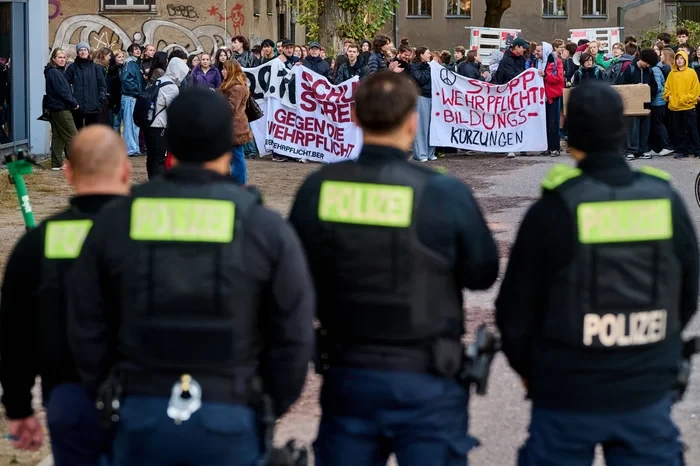
In an open letter, protesters accused Chancellor Friedrich Merz's conservative-led government of snatching away all their hopes and destroying their future through its austerity policies. Their primary concerns included cuts to state funding for education, social welfare, rehabilitation for drug addicts, and psychiatric treatment services, as well as housing shortages, the climate crisis, and the unequal distribution of burdens in the face of rising prices. Additionally, protesters expressed their displeasure regarding attempts to reintroduce compulsory military service ('Wehrpflicht') amidst increasing military spending, the expansion of state surveillance, pressure on universities, and the government's spending priorities concerning the Gaza Strip.
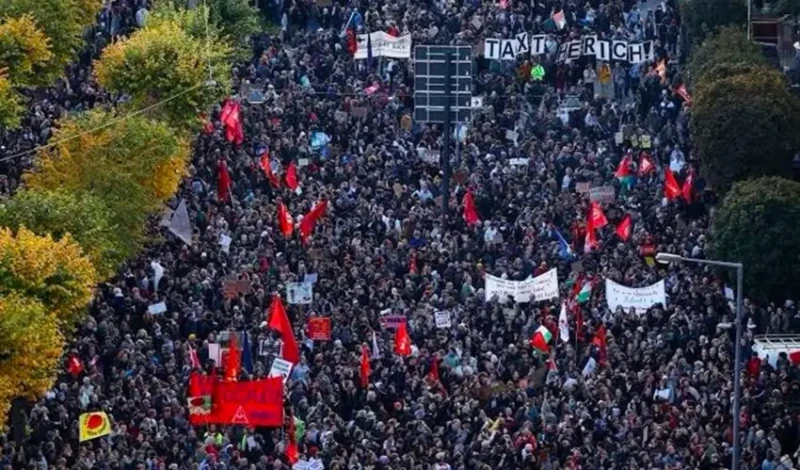
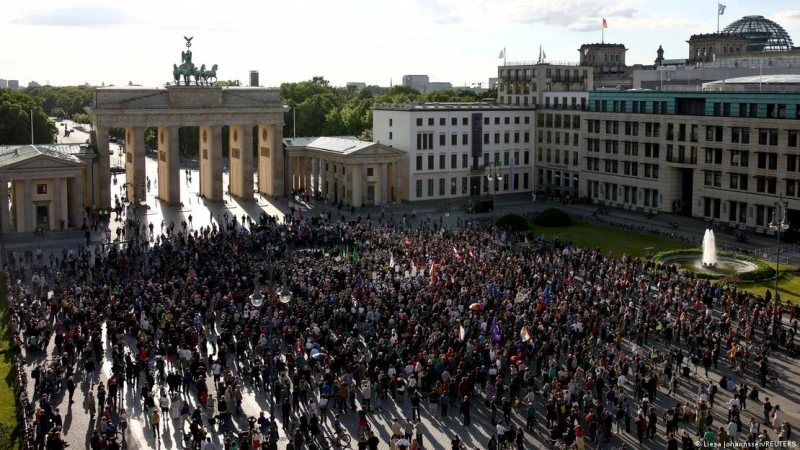
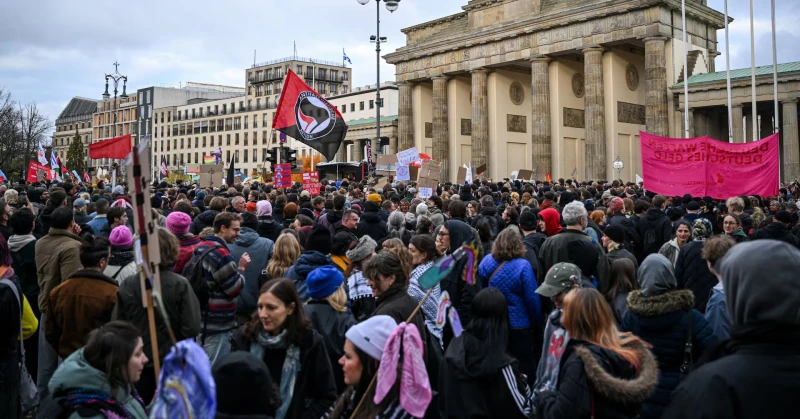
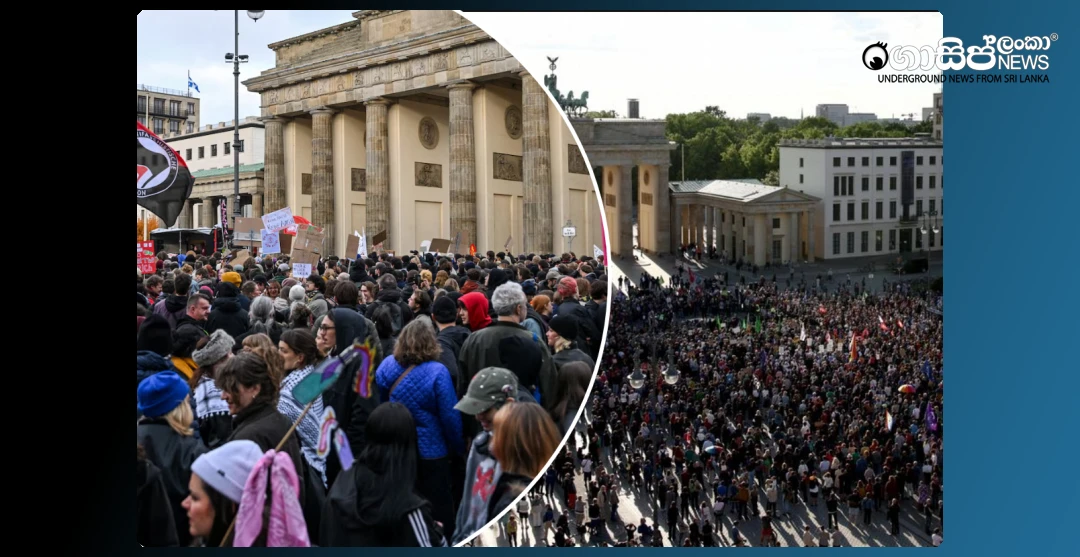
The number of people who registered online for these marches, which were planned as non-violent peaceful demonstrations, was between 160,000 and 182,000. Protest organizers stated that between 100,000 and 120,000 people, or even more, took to the streets in 30 to 34 cities across the country. However, police reports indicated lower participation. In Berlin, organizers claimed about 10,000 participants near the Brandenburg Gate, but police estimated around 5,000. Approximately 8,000 joined the march that started near the European Central Bank in Frankfurt, and the combined total for the three cities of Berlin, Frankfurt, and Munich was estimated at 18,000 in some calculations. In Leipzig, between 6,500 and 7,000 people participated, and about 3,000 in Stuttgart, while parades were also held in many other cities such as Cologne, Hamburg, Dresden, Nuremberg, Erfurt, Münster, Karlsruhe, and Hanover.
These afternoon protests, which included school students, university students, parents, and adults, were largely peaceful and festive, with many dressed in Halloween costumes. They displayed slogans such as "Spend for people, not for war," "Education, not bombs," "Our future is not for sale," and "System change, not climate change." A 23-year-old political science student from Hanover pointed out that with billions allocated to the military while education and social services face cuts, the high cost of living forces people to take on extra jobs. An 18-year-old from Munich said that the government only offers further cuts and burdens, while organization spokesperson Lena Friedrich stated that they stand for peace and freedom, prioritizing the health and education system over war and coercion.
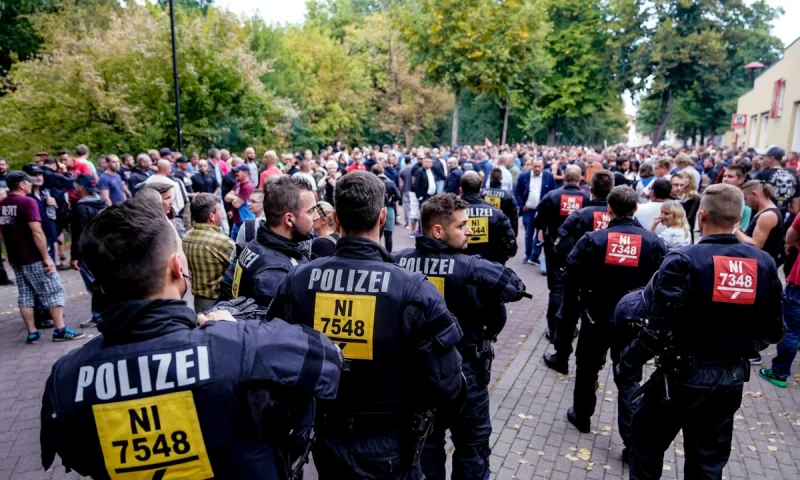
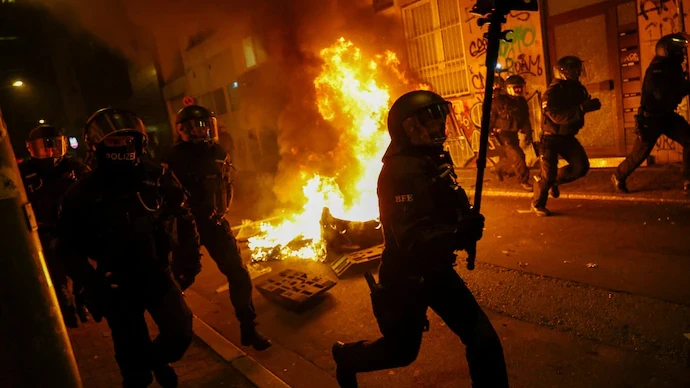
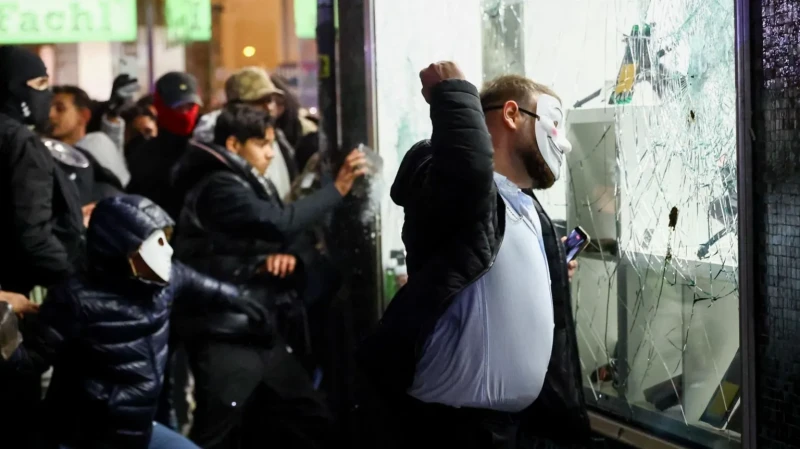
However, as evening approached, the peaceful atmosphere of the day was overshadowed by acts of violence, looting, and attacks on police in some cities. Authorities and politicians accused masked far-left groups of instigating violence under the guise of protests. After the main march in Frankfurt was dispersed amidst fireworks and stone-throwing, shop windows were smashed in and around the 'Zeil' street, a commercial area, and shoes, perfumes, as well as a specialized firearms store, were looted. Police managed to recover two firearms from a person who was arrested.
In Frankfurt, Molotov cocktails were thrown, setting fire to trash bins and barricades, and street signs were torn down and used to attack police officers. Water cannons and 'SEK' special task units had to be deployed to control the violence, and the area was sealed off. Some reports indicated that dozens of officers were injured, and many suspects were arrested. Roman Poseck, the Interior Minister of Hesse state, who visited the scene, warned of strict measures. He stated that there were about 100 clearly identified far-left extremists in Frankfurt.
Additionally, in Cologne, attacks with bottles and bicycles, and fireworks were reported near the cathedral, with police using water cannons. In Hamburg, burning barricades, fireworks, and arrests were also reported, including a person found with a fake firearm. Bottle, egg, and fireworks attacks were also reported in Berlin and other areas, and police had to use pepper spray in Leipzig and Stuttgart. Protest organizers condemned the violence, stating that media highlighting these incidents overshadowed their core issues and demands. The Berlin police chief had previously mentioned that while luxury stores like Tiffany & Co and Bulgari in Berlin had covered their windows before the protest, there was no clear evidence of such pre-planned looting.
Behind this unrest lies Germany's current economic and social backdrop. With an aging population, shrinking workforce, and weak economic growth, pensions and public services are under severe pressure, and inflation remains high. Annual inflation was recorded at 2.8 percent in October 2026, and energy costs remain a major factor amidst global crises. According to the recently released 2026 MLP Student Housing Report, student housing rents have increased by an average of 2.6 percent, and for small apartments, by 3.5 percent. The average monthly rent for a 30-square-meter apartment is 567 Euros, while a shared room costs around 513 Euros. This far exceeds the government's BAföG housing allowance limit of 380 Euros. In Munich, the rent for a small room often exceeds 800 Euros, and the situation is serious in cities like Berlin, Frankfurt, Hamburg, Cologne, and Stuttgart. As a result, two-thirds of student families face an unbearable financial burden, with over 50 percent of their income spent on rent, which reportedly deprives them of equal opportunities in education.
German organizers were directly inspired by the protests in France on October 31, which saw hundreds of thousands participate, as well as youth uprisings for wages, housing, and public service funding in countries like Italy, Portugal, Belgium, and Spain. A federal student union has planned a separate protest for November 20, independent of this action, but the "Gen Z regelt" alliance is also preparing to launch another series of Europe-wide protests around November 20.