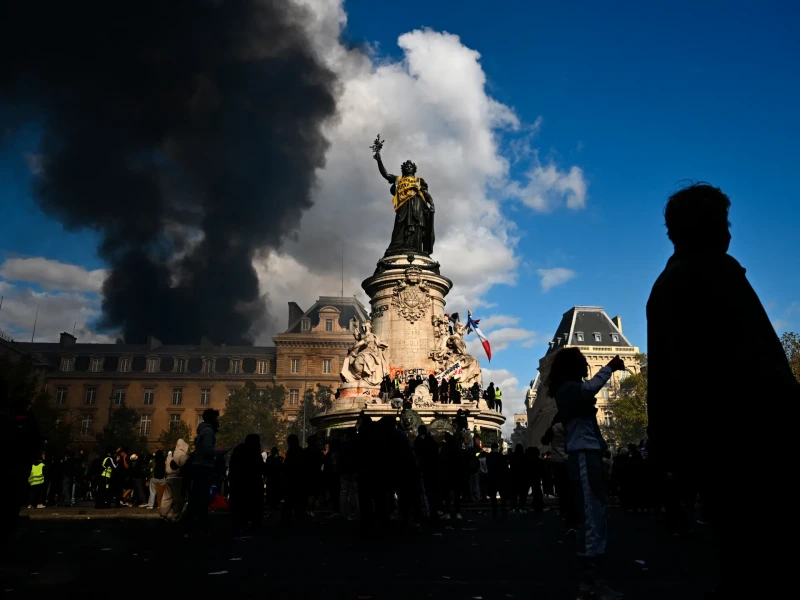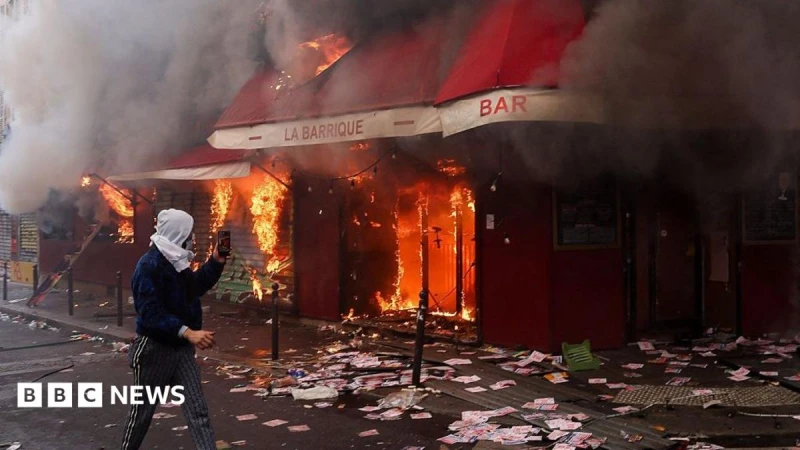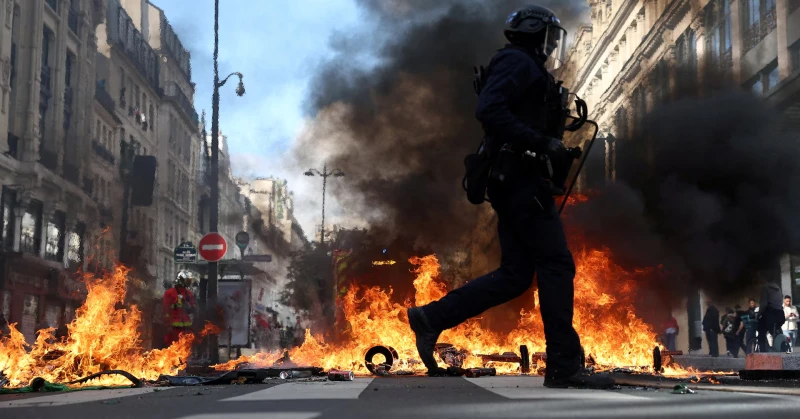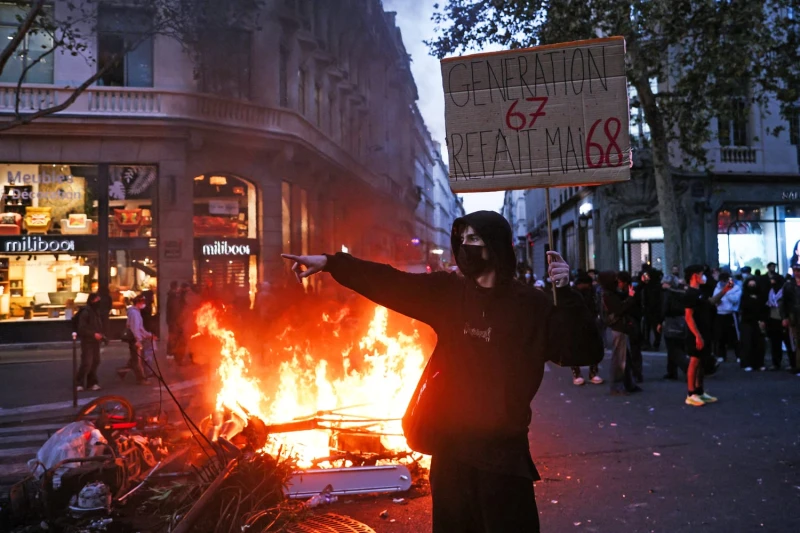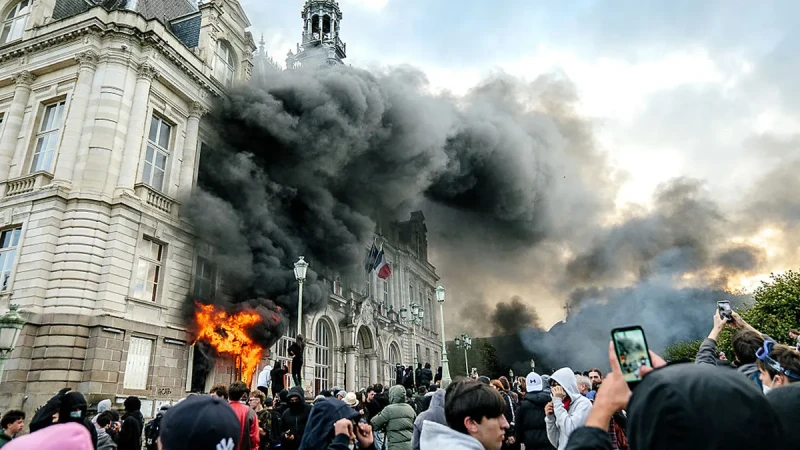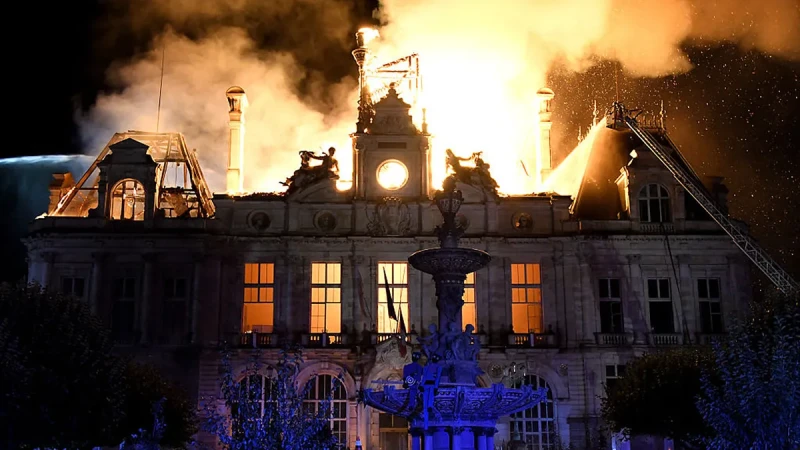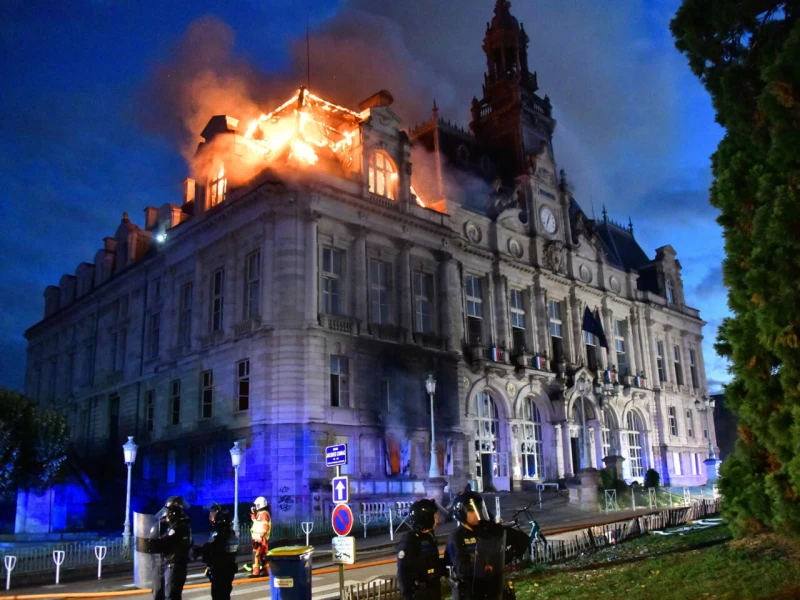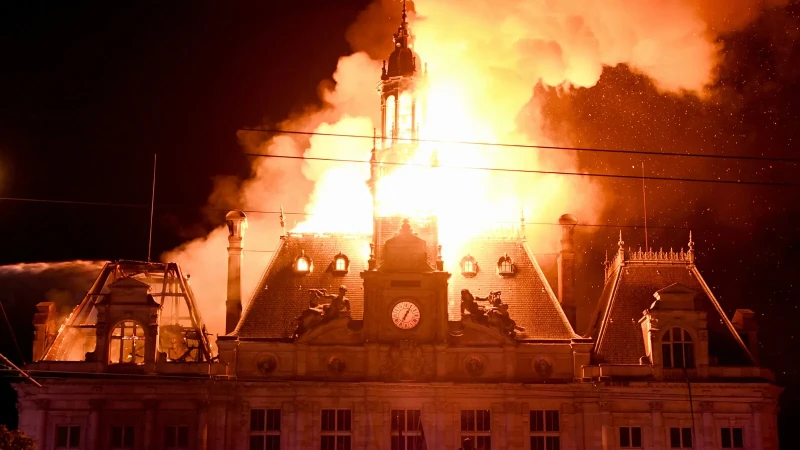
Massive protests against the rising cost of living across France have now escalated into a series of violent riots. As historical buildings, which even survived two World Wars, fall victim to flames, the country's insurance industry faces the risk of paying an unprecedented compensation of 1.2 billion Euros.
The crisis began on October 17, when over half a million people took to the streets. Along with school and university students demanding educational facilities, trade unions, farmers, and retirees also joined in protest against rising fuel and commodity prices. Additionally, immigrants disillusioned with French society and extremist Islamic groups also joined these protests, leading to major cities like Paris, Marseille, Lyon, and Bordeaux being filled with arson and looting.
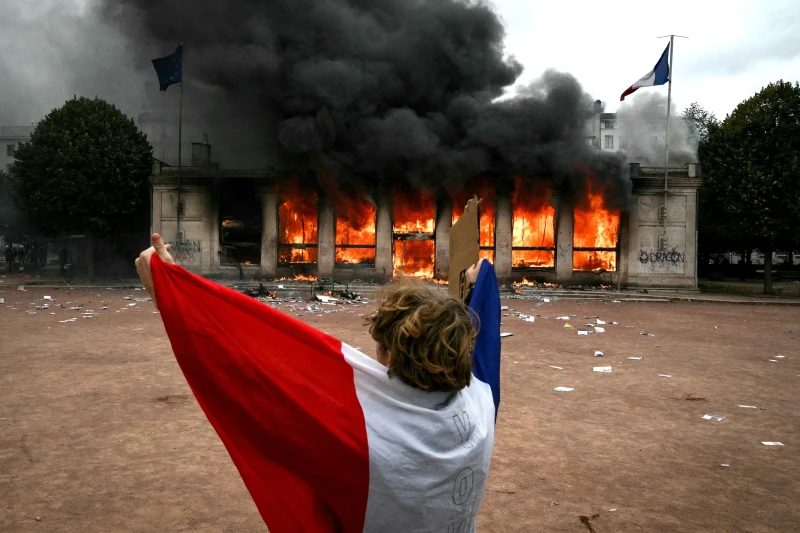
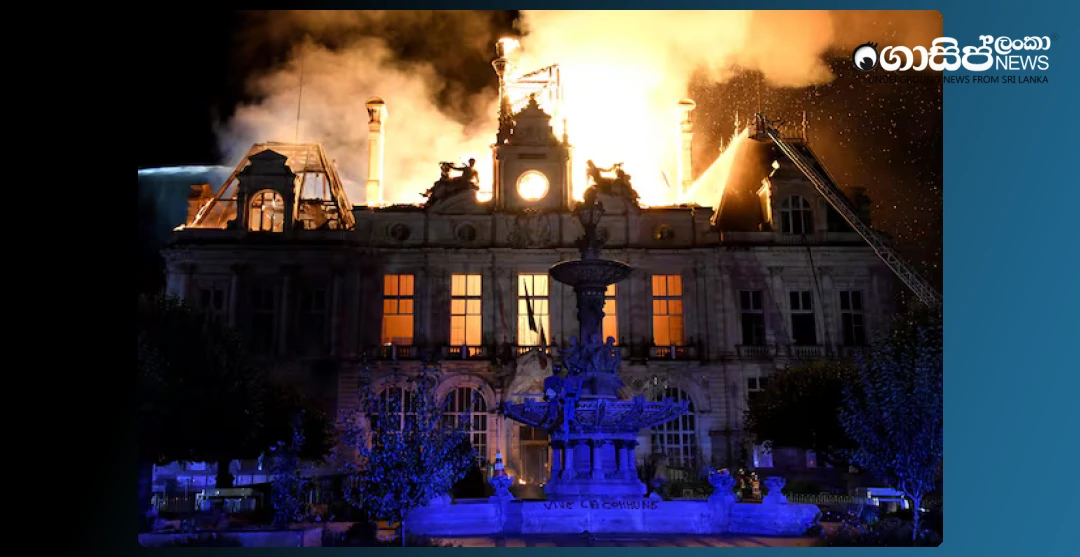
In the city of Limoges in central France, the historic town hall, which had survived two World Wars, was set ablaze, and its clock tower collapsed. On that day alone, the French Ministry of Interior announced that 2,397 people were arrested.
The damage to commercial establishments is also immense. It was revealed on October 20 that 50 stores belonging to the prominent Carrefour retail chain were damaged, with 20 of them being looted. In Marseille, a major southern city, stores of luxury brands like Louis Vuitton and Kenzo also became targets for looters. Alain Di Crescenzo, president of the French Chamber of Commerce and Industry (CCI), stated that over 2,000 businesses have been directly affected, and the damage could exceed hundreds of millions of Euros.
Global credit rating agency DBRS Morningstar announced on October 20 that if the situation does not escalate further, the losses incurred by insurance companies due to these riots, which began in major cities on October 17, could rise to 1.2 billion Euros. If this maximum value is confirmed, it would be recorded in history as the largest insurance compensation paid for civil unrest in mainland France.
Previously, the largest insurance claim in France was recorded in the summer of 2023. Riots that occurred over 11 days in 672 municipalities, following the fatal police shooting of a 17-year-old named Nahel during a traffic stop in Nanterre, west of Paris, resulted in 793 million Euros in insurance claims. Additionally, insurance companies paid 200 million Euros for the 2005 Paris suburban riots and 220 million Euros for the 'Yellow Vests' protests against fuel tax hikes in 2018-2019.
Considering territories outside mainland France, riots caused by pro-independence groups against electoral reforms in New Caledonia in May 2024 resulted in a loss of 1 billion Euros. However, the anticipated 1.2 billion Euro loss from the current French riots surpasses all those records. This figure is 407 million Euros higher than in 2023 and 20% higher than the New Caledonian riots. Compared to the 2005 crisis, the current loss is six times larger.
"Riots in France are now becoming natural disasters," Marcos Alvarez, an analyst at DBRS Morningstar, told the Financial Times. He further pointed out that street violence has become more intense and widespread in recent years.
Since France does not have an executive order for sharing losses, as is the case with natural disasters, the full financial burden falls on private insurance companies. However, due to uninsured sectors, the true economic impact of these riots is expected to be much higher than the insured losses. A French Senate investigation revealed that while insured losses in 2023 were 793 million Euros, the actual property damage was close to 1 billion Euros.
While standard property and comprehensive vehicle insurance cover arson and property damage, owners of older vehicles with only third-party insurance receive no compensation for damage caused by their vehicles being set on fire. Looting and theft are often subject to insurance exclusion clauses or coverage limits. British law firm HCR pointed out to Insurance Business that many people might lose out on compensation due to strict insurance conditions, such as the short seven-day reporting period for riot damage.
As the crisis escalated, French Prime Minister Sébastien Lecornu announced on October 19 that partial unemployment benefits would be provided to pay employee wages in affected businesses. At an emergency cabinet meeting held on the same day, a new law was also proposed to hold rioters financially responsible for reconstruction costs. Finance Minister Roland Lescure met with banks and insurance companies on October 20 to discuss support for affected businesses. However, Euronews points out that with a financial deficit of 5.4% of GDP and a national debt burden of 119% this year, France will face another massive financial challenge through these relief programs.