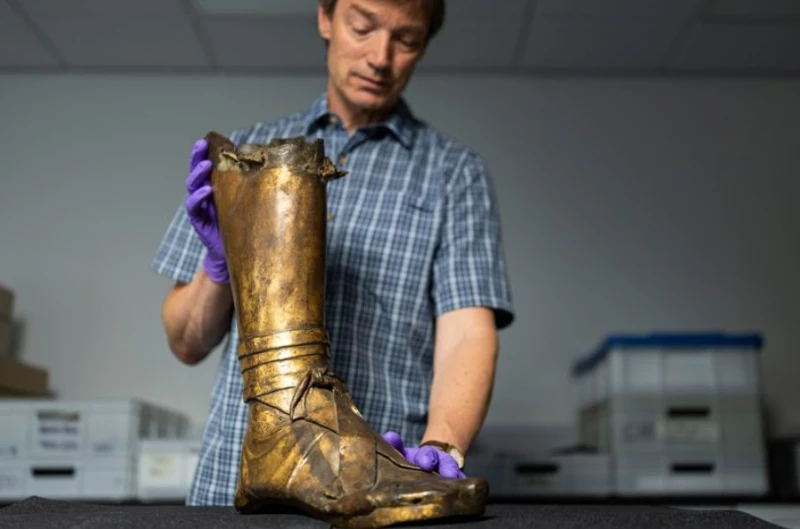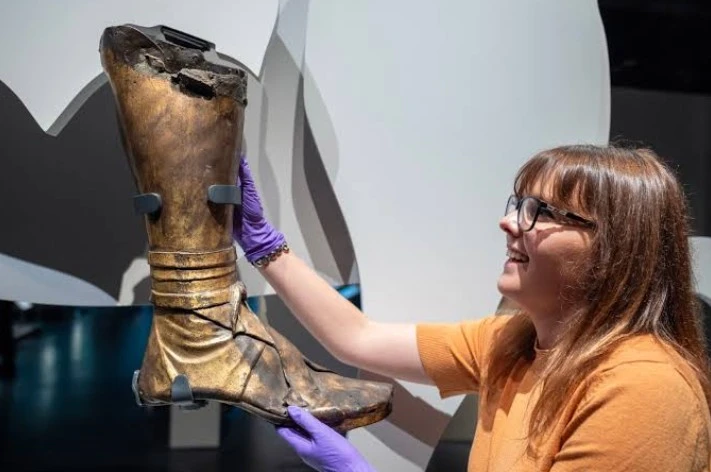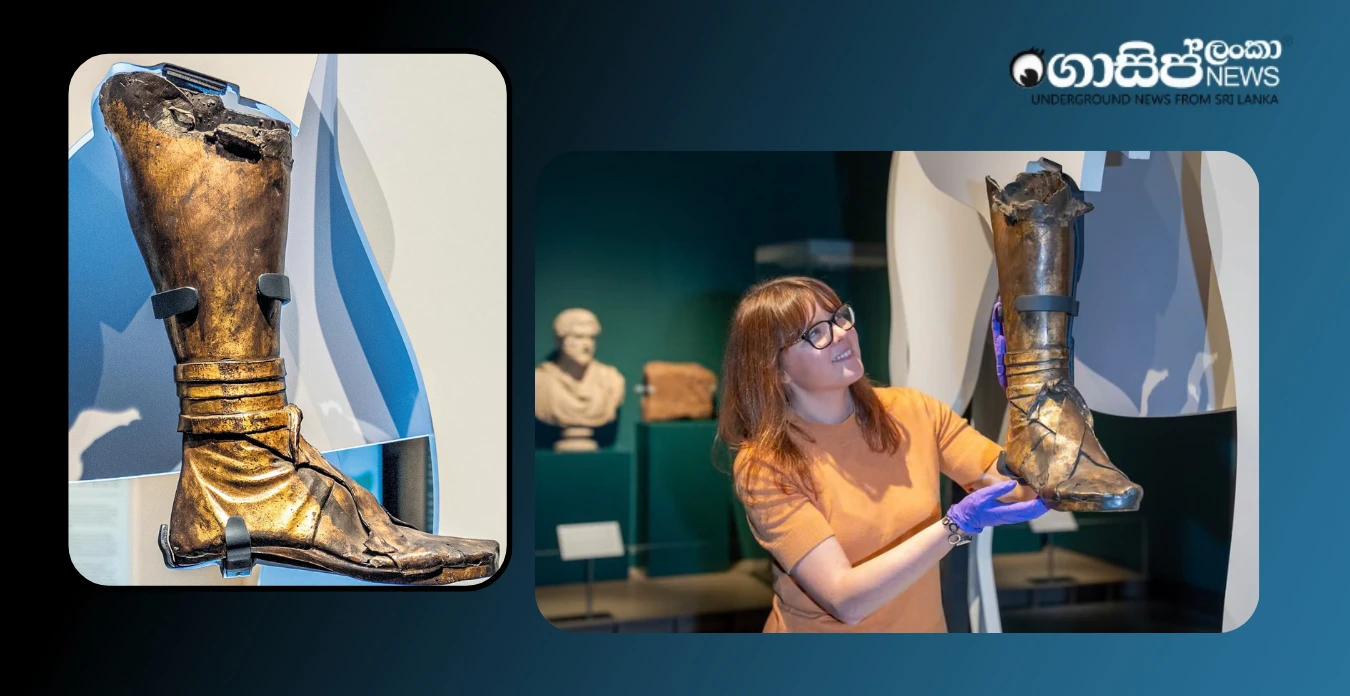
A bronze foot, discovered in a Scottish bog about two hundred years ago and subsequently stored in secret for nearly a century, is helping archaeologists rewrite the story of the historical relationship between the Roman Empire and Scotland.
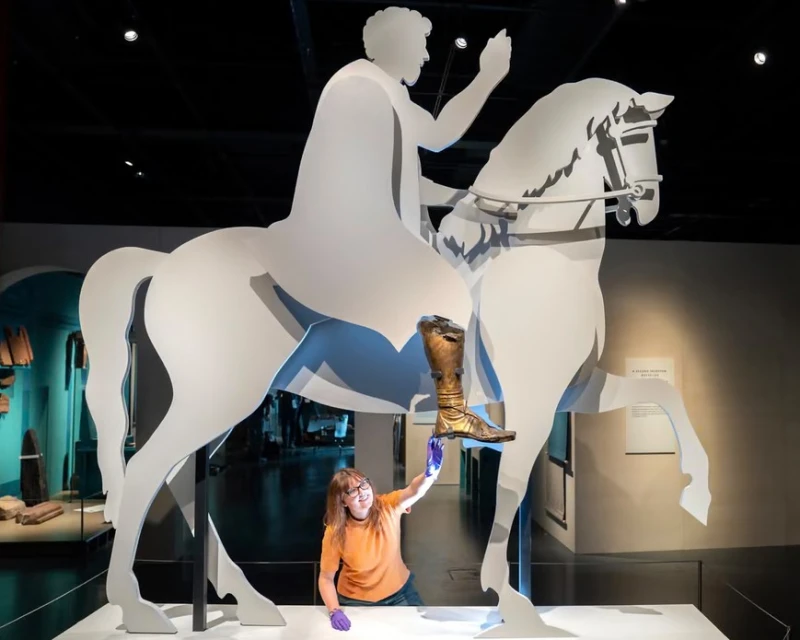
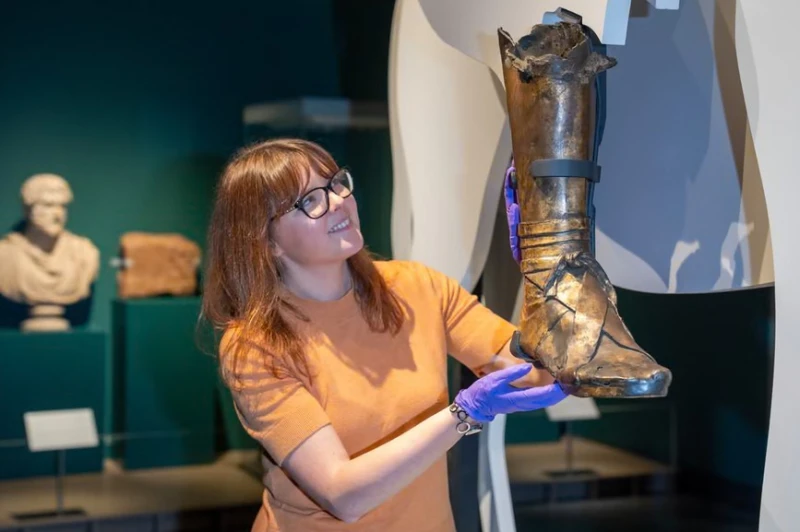
This gilded bronze foot and the base wearing a sandal were initially believed to have been plundered by Scottish tribes who broke through Hadrian's Wall. However, archaeologists now believe it is part of an equestrian statue of the Roman Emperor Antoninus Pius, erected near Hawick after Roman power was established in southern Scotland around 140 AD. They point out that the piece was not cut from the statue but was carefully removed and deposited in a bog.
This rare artifact, unearthed in 1820, was kept for a long time in a secret room at Dalkeith Palace, owned by the Duke of Buccleuch, near Edinburgh.
The bronze foot is also the main attraction of the largest exhibition on Roman history in Scotland ever held, which opens on November 14 at the National Museum of Scotland in Edinburgh. Curators at the museum say this confirms a stronger Roman influence north of Hadrian's Wall than previously thought. This also confirms that they controlled a large area and that their involvement significantly influenced the shaping of both art and politics.
Dr. Fraser Hunter, Principal Curator of Roman History at Scotland, says that such massive statues would have had a strong impact on Iron Age communities. "For Iron Age people, creating a human likeness like this was an unfamiliar experience. These were not just visually dominant, but appeared as alien creations completely different from their traditions," he stated.
The Romans used silver to buy the loyalty of Celtic rulers, which later prompted Pictish tribes to unite against Rome. Dr. Hunter further explains that Roman interventions created a more formidable enemy for them, but through their exposure to Roman models, imitating statues and writing, Pictish symbols may have been created. He also points out that this clearly reflects the creative response of those communities.
The exhibition also includes several other unique artifacts. Among them is a pottery vessel found in the Inveresk area, featuring images of dolphins, deer, and a hunting dog. According to Assistant Curator Bethany Simpson, a creation with such a combination of animal figures has not been found anywhere else in the United Kingdom. The Inveresk area, east of Edinburgh, served as a major Roman center at that time.
Also on display are two carved stone altars discovered in a Mithraic temple at Inveresk. A unique feature is the face of the god Mithras carved with gaps allowing light to shine through the eyes and mouth. In addition, a complete skeleton of a horse, believed to have been used for warfare, a rare find in Britain, is also exhibited here. Dr. Hunter notes that since such horses were not usually buried after death, this must have been a very important horse to the soldiers.