
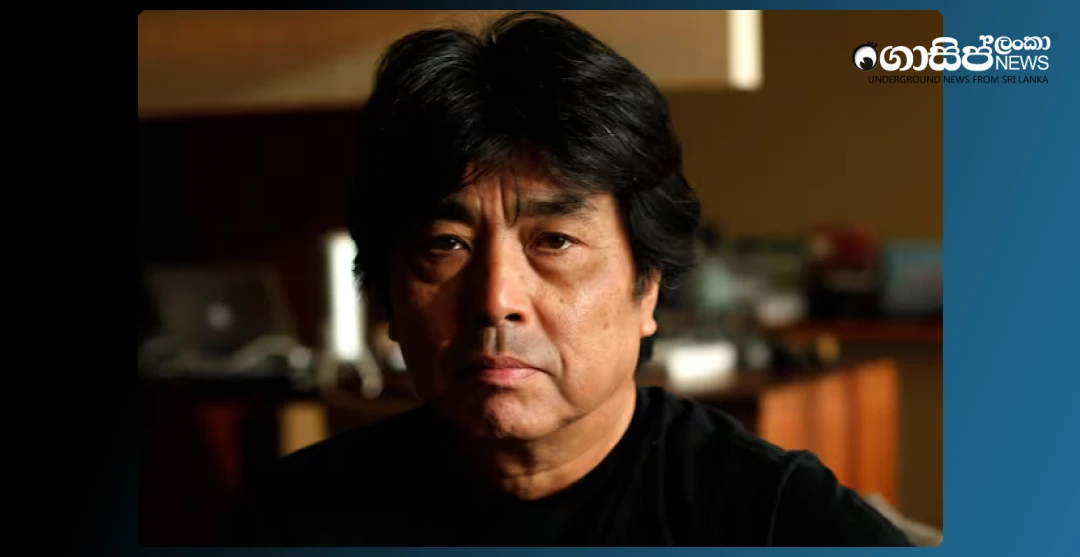
Ryu Murakami (Ryu Murakaminosuke), a giant of Japanese literature who bravely explored the dark aspects of modern Japanese society such as war, violence, and sexuality, has passed away. He was 74 years old at the time of his death.
With the passing of this epoch-making figure, who shared the golden age of Japanese literature alongside Haruki Murakami, known as the 'Double Murakamis,' a unique chapter in Japanese literature has become history.His office and Gentosha publishing house officially announced on the 23rd that he had passed away at his home on the 17th. His funeral services were held privately with the participation of only family relatives, and the family members kindly declined condolences, wreaths, or donations.
"Mr. Murakami's sudden passing, who continuously released shocking works targeting the younger generation, starting with 'Almost Transparent Blue,' has deeply saddened us. We pray for eternal peace for him, who led as a pioneer of his era," Gentosha stated in its official announcement.
Born in Sasebo City, Nagasaki Prefecture in 1952, Murakami was educated at Sasebo North High School and then spent his youth near a US military base in Fussa City, Tokyo. In 1976, while studying at Musashino Art University, he released his debut novel, 'Almost Transparent Blue.' This work, which realistically depicted the lives of young people addicted to drugs and hallucinations around a military base, simultaneously won both the Gunzo Prize for New Writers and the Akutagawa Prize, Japan's highest literary award. His bold themes and descriptions, which broke traditional literary conventions, caused a significant stir in Japanese society at the time, and with over a million copies sold, the work solidified his name in the literary world.
Thereafter, he bequeathed a number of serious works that explored the underbelly of the social system. His work 'Coin Locker Babies,' which brought the harsh world faced by children left in coin lockers through a fast-paced narrative, earned him the Noma Literary Prize for New Writers in 1981. In 1987, 'Fascism of Love and Fantasy,' which depicted young people rising as a political force amidst a global economic recession, also garnered immense response.
In addition, he received the Yomiuri Literary Prize for 'In the Miso Soup' in 1998 and the Tanizaki Junichiro Prize for 'Parasites' in 2000. 'From the Fatherland, with Love,' a fictional work about a Korean special forces unit occupying the Fukuoka Dome stadium, was awarded both the Mainichi and Noma prizes in 2005. In 2011, he also won the Mainichi Art Award for 'Singing Whale'.
Beyond mere literature, Murakami also contributed to the economic, social, and cinematic fields. His 2003 work, 'Hello Work at Age 13,' which introduced various professions from a child's perspective, achieved immense success under the practical books category. Having authored works such as 'The Tennis Boy’s Depression' and 'Sixty-Nine,' he also gained public acclaim as a film director and screenwriter.
From 2006, he hosted the popular economic discussion program 'Cambrian Palace' with actress Eiko Koike for nearly two decades, conducting sharp interviews with corporate executives. Ryu Murakami, who continuously engaged in writing until the release of 'Missing: Things We’ve Lost' in 2020, retired from all external activities last April, handing over his television presenter role to novelist Hitomi Kanehara.