![Gossip Lanka News [English]](https://blogger.googleusercontent.com/img/a/AVvXsEhYm2aFFq-bIW1nWX-RrqnPFoIsVos6_VCVz8BpLt0QJi55GNXHXC2fugeRvL0qUStEuCfs7Sfu6ZiSlhrkldxfGuE_wzy5gitY6rMZ2KSi8VBbGvkgXLks37RwZV-4-HKbWiNLRxB8C_r1e4z3mpxFTMPDJPEADoG8E-bZteWFipeD5KNGbjvCfqEfKw=s300 "Gossip Lanka News [English]")
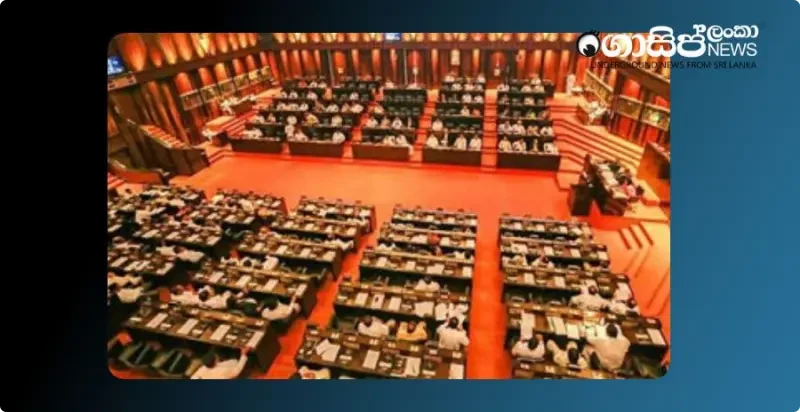
The Anti-Corruption (Amendment) Bill (Bill No. 78), which was presented with the aim of closing the operational gaps in the Anti-Corruption Act No. 9 of 2023, was read for the third time in Parliament today (October 08, 2026) and passed without a vote. Following the second reading debate chaired by Deputy Speaker Dr. Rizvi Sali, Prime Minister Dr. Harini Amarasuriya proposed the relevant amendments at the committee stage.
One of the main objectives of this 19-clause amendment bill, gazetted on July 27 and presented to Parliament by the Prime Minister on August 19, is to correct legal, administrative, and technical issues, as well as inconsistencies between the Sinhala and English texts of the Act, thereby making the law enforcement process more efficient. In addition, the government aims to expedite the administrative functions of the Commission to Investigate Allegations of Bribery or Corruption (CIABOC) and to streamline the process of obtaining asset and liability declarations from the President, Prime Minister, Members of Parliament, judges, staff and military officers, political party officials, and electoral candidates who submit nominations, through a centralized electronic system (ads.ciaboc.lk). Accordingly, asset declarations must be made within three months of appointment, annually before June 30 for the status as of March 31, within two years after leaving office, and within one month if there is a change exceeding 10 million rupees. Failure to do so will result in a fine equivalent to 12 months' salary or one year's imprisonment.
However, despite the government's claim that the law is being strengthened, Samagi Jana Balawegaya Member of Parliament Mujibur Rahman alleged in today's debate that these amendments have created loopholes that encourage corruption. Transparency International Sri Lanka (TISL) and several other parties had filed 15 petitions against this bill before the Supreme Court, and the decision of the three-judge bench comprising Justices Shiran Gunaratne, Mahinda Samayawardena, and Sampath Wijeratne was communicated to Parliament by Speaker Dr. Jagath Wickramaratne on September 22.
In this regard, several controversial clauses directly affecting the public have drawn significant attention. Notably, Clause 7 has abolished the requirement for cohabitants living in the same house for 6 months to declare their assets, leaving only spouses and dependents subject to this obligation. The court pointed out that this violates Article 12(1) of the Constitution related to equality, and TISL warned that this opens a path for assets to be hidden under the names of informal partners.
Furthermore, by raising the threshold for asset declarations in state corporations and companies from 25% state share ownership to 50%, directors and officials of companies with state ownership between 25% and 49% have been exempted from this law. Although TISL stated that this contradicts the 25% threshold of the Right to Information, the court ruled that a simple majority is sufficient for this. Additionally, executive officers of small trade unions with fewer than 1,000 members have also been excluded.
A significant change related to the media sector was also proposed through amendment 6(7). Instead of editors and editorial boards, who were previously required to declare assets, only owners, chairpersons, and directors of media companies registered with the Ministry of Mass Media and licensed under the Telecommunications Act were included. The Supreme Court ruled that removing editors who control content and including owners is illogical, and since it violates equality and freedom of expression, a two-thirds majority would be required for it.
Moreover, Clause 11(2) stipulates that using any information redacted by the Commission under Clause 11(1) on the grounds of violating privacy, without a formal complaint, is an offense punishable by a fine up to one hundred thousand rupees or one year's imprisonment, or both. This drew criticism as a chilling effect on citizens and journalists who compare asset declarations.
Significant controversies also arose regarding prosecution and granting bail. Clause 17 had proposed to remove the power of magistrates to grant bail to suspects in special circumstances and vest it solely with the High Court, if the bribe was one hundred thousand rupees or more, or if the loss or gain to the government, as certified by the Director-General, was five hundred thousand rupees or more. At the committee stage, an increase of this amount to 2.5 million rupees was also discussed. However, the court informed that since this violates judicial power and independence, a two-thirds majority as well as a referendum would be required. On September 29-30, Cabinet Spokesperson Dr. Nalinda Jayatissa clarified that since the government would not go for a referendum, Clause 17 would either be amended or removed at the committee stage.
Furthermore, TISL had alleged that judicial oversight would be removed by expanding the power to withdraw cases, which was previously limited to the High Court, to include Magistrate's Court charges and vesting it with the Director-General, and by transferring the power to decide not to prosecute an accomplice based on a full disclosure from the magistrate to the Commission. However, Clause 16 provides for imposing a fine of at least three times the value obtained through corruption or the loss incurred by the government, and for rendering any appointment, grant, or benefit obtained through corruption illegal from the date of conviction. Additionally, the investigation of conflicts of interest will be vested with the Commission, and provincial public service and police will have the opportunity to be temporarily or permanently seconded to the Commission.
Although this extremely important bill was passed in Parliament today, the certified final text of the bill with the Speaker's approval and the gazette number have not yet been issued. Therefore, whether the anti-corruption legal framework has truly become efficient as the government expects, or whether the controversial clauses 6(7), 7, and 17, which directly affect the public regarding media owners, cohabitants, and the bail process, have been amended or removed and in what form they remain in the final bill, will only be definitively confirmed after the official publication.