![Gossip Lanka News [English]](https://blogger.googleusercontent.com/img/a/AVvXsEhYm2aFFq-bIW1nWX-RrqnPFoIsVos6_VCVz8BpLt0QJi55GNXHXC2fugeRvL0qUStEuCfs7Sfu6ZiSlhrkldxfGuE_wzy5gitY6rMZ2KSi8VBbGvkgXLks37RwZV-4-HKbWiNLRxB8C_r1e4z3mpxFTMPDJPEADoG8E-bZteWFipeD5KNGbjvCfqEfKw=s300 "Gossip Lanka News [English]")
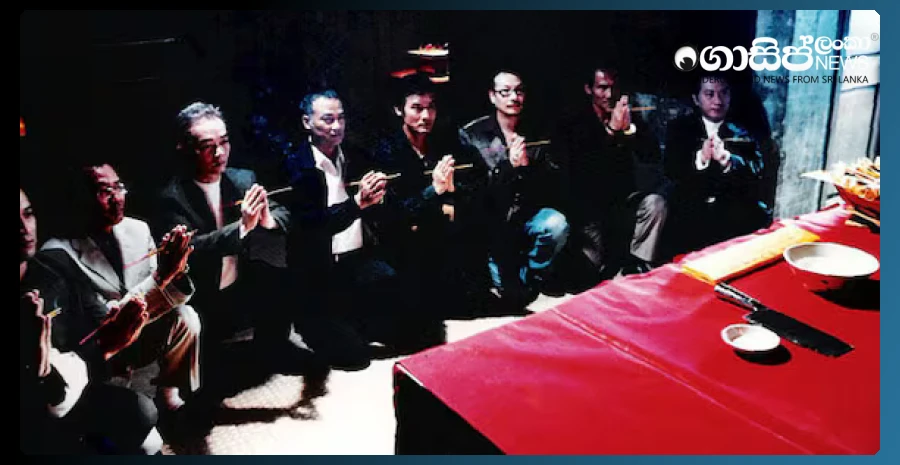
As seen in Hong Kong films, the traditional method of joining Hong Kong's criminal gangs involved slitting a rooster's throat in an incense-filled room, mixing its blood with alcohol, drinking it, and swearing an oath never to betray the organization. However, this situation has completely changed, and instead of roosters or altars, they now recruit new members through social media platforms like Instagram and Telegram.
Now, these gang members are not required to remain loyal to one leader for life; instead, they work part-time, receiving separate payments for each crime, much like food delivery drivers receive orders through mobile apps.On October 2, the 'South China Morning Post' (SCMP) reported that these gangs, which in the past were based on street fights and blood oaths, are now turning to digital crimes such as online fraud and money laundering, recruiting teenagers for part-time crimes via social media. Major gangs like Sun Yee On, 14K, and Wo Shing Wo have abandoned their rigid hierarchical systems and now operate as loose networks. Jason, a twenty-year-old who joined a criminal gang during middle school, stated that he did not undergo any traditional rituals as depicted in films, and that loyalty is now merely a myth, with profit-making being a much stronger motivator.
A recent study published in a British criminology journal also confirmed that these gang members tend to work on a contract basis for various groups for specific tasks, rather than serving one leader for life. Last July, Hong Kong police uncovered an organization that recruited teenagers through social media, paying them HKD 800 to 2,000 (approximately KRW 140,000 to 350,000) for a single task of splashing red paint on debtors' homes and shops.
The police have also released data related to the new methods of these criminal gangs. In 2025, 48.5% of all crimes reported in Hong Kong, totaling 43,212 crimes, were frauds, and losses due to online investment fraud increased by 58.4% to HKD 3.58 billion. Additionally, in May, 13 individuals were arrested in connection with phone scams where they impersonated officials from financial companies, and personal and credit information of over 2,000 individuals was found on their computers. Furthermore, in November 2025, an organization suspected of being involved in money laundering over HKD 1.1 billion was also apprehended.
While Hong Kong cinema in the 1980s and 1990s glorified this world of criminal gangs based on brotherhood and loyalty, today, instead of knives and honorable codes, they have started using Telegram and fake accounts. The South China Morning Post further analyzed that with the changing profit-making structures in the criminal underworld, these gangs no longer control streets or dominate members; instead, they meticulously operate their criminal networks by collecting individuals, accounts, and personal data online.