![Gossip Lanka News [English]](https://blogger.googleusercontent.com/img/a/AVvXsEhYm2aFFq-bIW1nWX-RrqnPFoIsVos6_VCVz8BpLt0QJi55GNXHXC2fugeRvL0qUStEuCfs7Sfu6ZiSlhrkldxfGuE_wzy5gitY6rMZ2KSi8VBbGvkgXLks37RwZV-4-HKbWiNLRxB8C_r1e4z3mpxFTMPDJPEADoG8E-bZteWFipeD5KNGbjvCfqEfKw=s300 "Gossip Lanka News [English]")
On September 22 and 23, 2026, the situation on the Ukrainian-Russian war front has become a crisis causing severe attrition for both sides rather than a progression in ground battles. Although no clear changes in territorial gains have been reported, both sides have significantly intensified long-range attacks targeting each other's energy and industrial targets.
Meanwhile, diplomatic discussions have also commenced to establish limited preparedness in the energy sector, coinciding with the United Nations General Assembly session.A special meeting between Ukrainian President Volodymyr Zelenskyy and American President Donald Trump was held on September 22 during the United Nations General Assembly session in New York. Zelenskyy emphasized that he is ready for any level of energy preparedness if Russia stops its attacks on Ukraine's energy infrastructure, sensitive sites, and food export routes. Furthermore, Zelenskyy stated that he would prefer a trilateral discussion with Russian President Vladimir Putin and Trump, and expressed hope to end the war before winter with American support. Trump, who previously stated he would work with both sides to end the war faster than many expect, had also asked Ukraine to ease attacks on Russian refineries due to rising oil prices, but no official agreement was reached at this meeting.
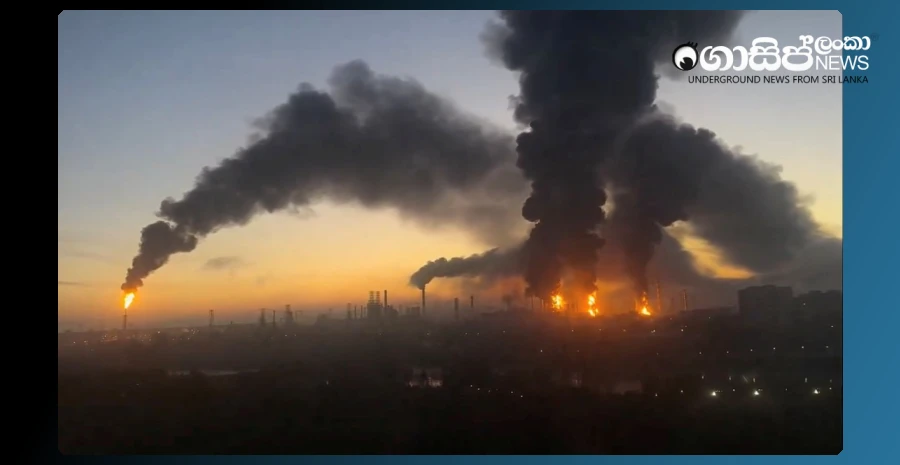
In addition, it was confirmed that Ukrainian defense forces attacked two major oil refineries in Russia on September 21 and 22. The Bashneft-UNPZ branch in Bashkortostan, with an annual capacity of 7.5 million tons, and the Kuibyshev refinery in the Samara region, with an annual capacity of 7 million tons, were targeted, and fires were reported at both locations. This series of attacks, which has been ongoing for months against the majority of Russia's 32 major refineries, has led to a drop in Russian oil production capacity and a rise in global diesel prices. Trump also publicly stated that Russia has lost control over certain parts of its oil industry, and Ukrainian officials indicate that these attacks are not an immediate step towards negotiations but rather a strategy to pressure Moscow's war economy.
Between the night of September 22 and September 23, Russia launched 161 attack drones, including jet-engine Shahed drones, Banderol/Dan-T drones, and missiles, towards Ukraine. Ukrainian air defense systems successfully destroyed or neutralized 119 drones and 3 Banderol drones. However, falling debris damaged a warehouse and a filling station in Kyiv, and previous attacks on September 22 on industrial sites in the Dnipropetrovsk region (Dnipro, Kryvyi Rih, Pavlohrad) resulted in four deaths and several injuries at the Interpipe company. A shopping complex in Zaporizhzhia was also attacked and caught fire, and power was cut in seven regions. President Zelenskyy also mentioned that intelligence indicates Russia is preparing for a massive attack targeting Kyiv.
Looking at the ground warfare, 247 clashes were reported in the 24 hours leading up to 08:00 AM on September 23 (previous evening reports mentioned 134 clashes), with the most intense fighting occurring in the Pokrovsk and Kostiantynivka areas. According to reports from the Institute for the Study of War (ISW), neither side made significant advances on September 22. Russian forces launched attacks in northern Kharkiv, Kupyansk, Sloviansk, Kostiantynivka, and southern routes but failed to establish a foothold in those areas due to Ukrainian drones and counterattacks. Coinciding with the UN session, the Russian Ministry of Defense made false claims of encircling the Dobropillia area, while Ukrainian forces continued to launch local-level counterattacks north of Lyman.
According to the Ukrainian General Staff, 1,560 Russian soldiers were lost in the past 24 hours, bringing the total reported Russian military casualties since February 2022 to approximately 1,522,440. Additionally, Ukraine claims to have destroyed 3 Russian tanks, 13 armored vehicles, 32 artillery systems, 2 air defense systems, 1,426 drones, and hundreds of vehicles. Russia has also used thousands of kamikaze drones and hundreds of guided bombs. A NATO commander has warned that Russian President Putin is inclined to take greater risks, and world leaders, including Macron, are urging Russia to stop attacks on energy infrastructure to prevent rising fuel prices as winter approaches. Data on these attacks and damages are sourced from official Ukrainian sources and independent organizations like ISW, and independent verification of all information is limited due to varying Russian reports.