![Gossip Lanka News [English]](https://blogger.googleusercontent.com/img/a/AVvXsEhYm2aFFq-bIW1nWX-RrqnPFoIsVos6_VCVz8BpLt0QJi55GNXHXC2fugeRvL0qUStEuCfs7Sfu6ZiSlhrkldxfGuE_wzy5gitY6rMZ2KSi8VBbGvkgXLks37RwZV-4-HKbWiNLRxB8C_r1e4z3mpxFTMPDJPEADoG8E-bZteWFipeD5KNGbjvCfqEfKw=s300 "Gossip Lanka News [English]")
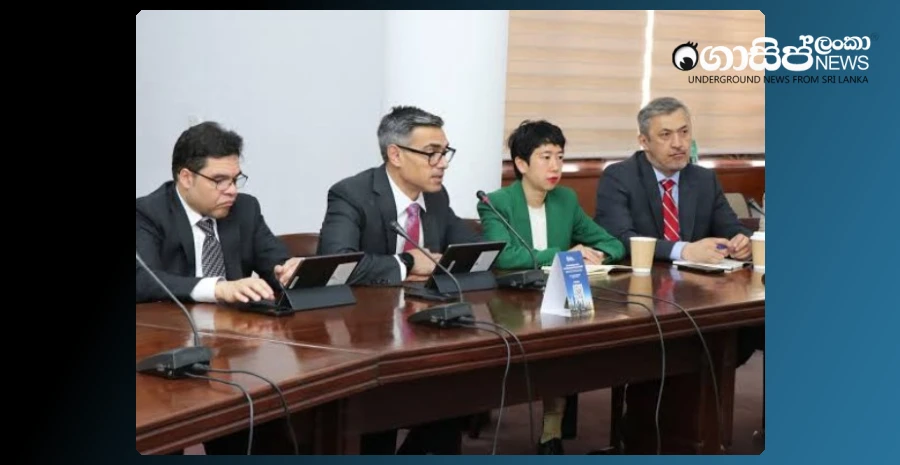
The International Monetary Fund (IMF) delegation has left Colombo without a final decision due to the inability to reach a staff-level agreement regarding the seventh review of Sri Lanka's Extended Fund Facility (EFF) program. As these discussions, held in the country for two weeks from September 10 to 23, concluded without an agreement, the process of obtaining Executive Board approval required to release the next financial installment will also be delayed.
Evan Papageorgiou, the IMF's Mission Chief for Sri Lanka, stated that both parties need more time to resolve several technical issues, including the 2027 budget plans. He pointed out that time is needed to study the large volume of documents presented during the discussion rounds and clarified that while discussions will continue in the future, a specific timeline for the release of funds has not yet been determined.
This delay in agreement occurs against a backdrop of positive economic progress in the country. The IMF points out that the Sri Lankan economy recorded a 4.2% growth in the second quarter, and gross official reserves had increased to US$ 6.9 billion by the end of August. However, they also warn that external factors such as the rise in inflation to 8% in August due to increasing global oil prices, the ongoing crisis in the Middle East, uncertainty regarding trade policies, and the El Niño weather phenomenon could threaten the economic recovery.
Special attention has been paid to tax policy, with the IMF emphasizing the need to develop a medium-term revenue mobilization strategy, broaden the tax base, and minimize tax exemptions. While acknowledging the need to provide tax relief to middle-income earners, the Mission Chief stated that such changes should be made considering the entire tax system. Furthermore, the IMF has advised the Sri Lankan government to continue the cost-recovery pricing mechanism in the energy sector and to promptly resolve issues hindering public investments.