![Gossip Lanka News [English]](https://blogger.googleusercontent.com/img/a/AVvXsEhYm2aFFq-bIW1nWX-RrqnPFoIsVos6_VCVz8BpLt0QJi55GNXHXC2fugeRvL0qUStEuCfs7Sfu6ZiSlhrkldxfGuE_wzy5gitY6rMZ2KSi8VBbGvkgXLks37RwZV-4-HKbWiNLRxB8C_r1e4z3mpxFTMPDJPEADoG8E-bZteWFipeD5KNGbjvCfqEfKw=s300 "Gossip Lanka News [English]")
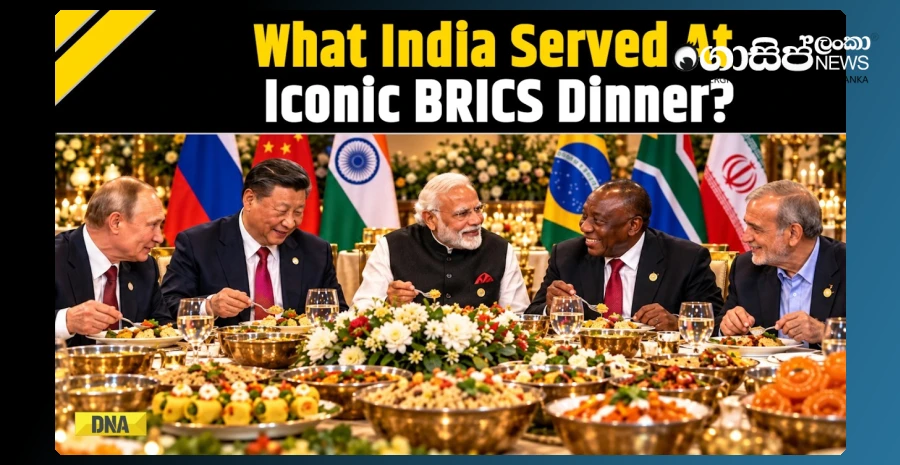
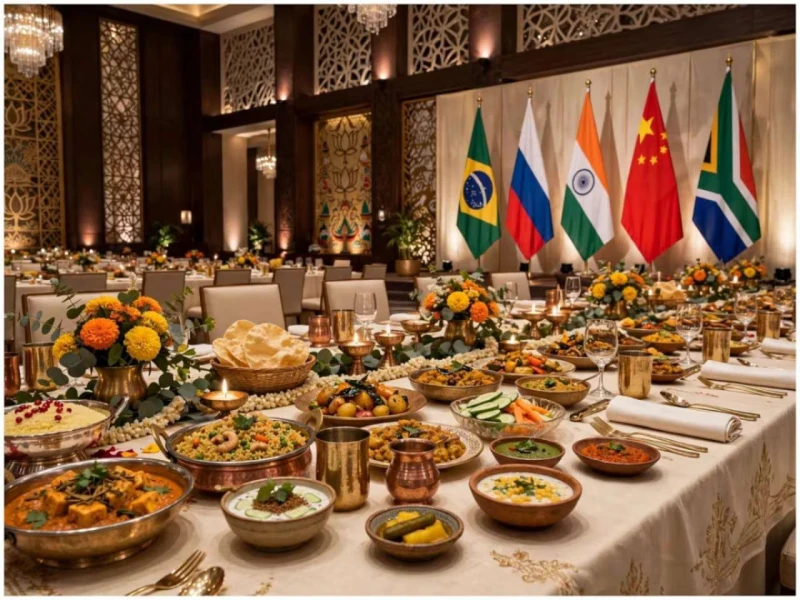
The dinner hosted for world leaders attending the BRICS summit in India last weekend, which consisted entirely of vegetarian food, has sparked intense political debate in the country. The banquet included unique vegetarian dishes such as paneer, a special type of Himalayan mushroom mixed with saffron, and a tomato and lentil curry with curry leaves.
However, the absence of any meat dishes on this menu has led to strong accusations against Indian Prime Minister Narendra Modi by his political opponents.Pointing out that the majority of people in India are not vegetarian, Opposition leader Rahul Gandhi stated on social media that the Prime Minister was attempting to present an incomplete picture of Indian food culture to the world. Rejecting these accusations, Kiren Rijiju, a minister in the Modi government, stated that the food served to the guests perfectly represented India's diverse regional traditions. He also expressed his displeasure that the Congress party was politicizing even the meal provided to world leaders.
In contemporary India, food has become a politically and religiously sensitive topic. Such issues appear to be increasingly polarized, especially under the Modi government, which has a Hindu nationalist base. While vegetarianism represents religious and cultural ties for some upper castes and Hindu communities in northern and western parts of India, many Hindus are accustomed to eating meat. Furthermore, Narendra Modi is a completely vegetarian leader who also abstains from alcohol. Alcohol is removed from both state and private events he attends, and security forces even take steps to close alcohol outlets in such places before his arrival.
This is not the first time foreign leaders have been served vegetarian food when visiting India. This year, Seychelles President Patrick Herminie and Vietnamese President To Lam, who visited New Delhi, were also served vegetarian meals. Furthermore, at the G-20 summit in 2023, a meal consisting of grains like finger millet and pearl millet was showcased, coinciding with the United Nations designating 2023 as the 'International Year of Millets'. Kerry Matwick, a scholar studying food and culinary diplomacy at Nanyang Technological University in Singapore, points out that the food served to visiting diplomats can convey an important message from one country to another and can lead to dialogue.
Examples of building diplomatic relations through food can be seen throughout world history. At the meeting between US President Donald Trump and North Korean leader Kim Jong Un in Singapore in 2018, the menu was curated to suit both their cultures. Shrimp and beef were served for Mr. Trump, while Mr. Kim Jong Un was offered a traditional Korean cucumber dish filled with vegetables, eggs, and meat, as well as a soy-infused fish dish. Similarly, in 1939, US President Franklin D. Roosevelt's offering of 'Hot dogs' to King George VI and Queen Elizabeth of Britain during a picnic is considered a historic occasion that added uniqueness to a diplomatic encounter.