![Gossip Lanka News [English]](https://blogger.googleusercontent.com/img/a/AVvXsEhYm2aFFq-bIW1nWX-RrqnPFoIsVos6_VCVz8BpLt0QJi55GNXHXC2fugeRvL0qUStEuCfs7Sfu6ZiSlhrkldxfGuE_wzy5gitY6rMZ2KSi8VBbGvkgXLks37RwZV-4-HKbWiNLRxB8C_r1e4z3mpxFTMPDJPEADoG8E-bZteWFipeD5KNGbjvCfqEfKw=s300 "Gossip Lanka News [English]")
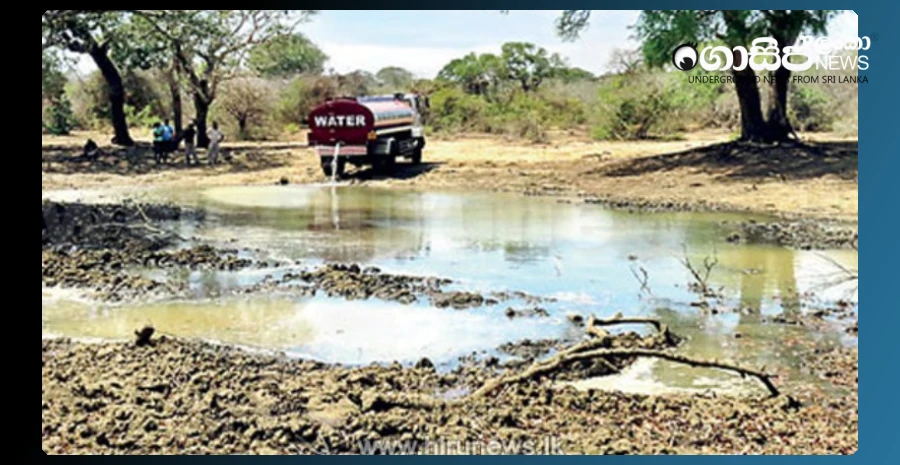
Amidst the severe dry weather conditions prevailing across the island, several more national parks in Sri Lanka are at risk of temporary closure. Even though the government is earning high revenue from the wildlife tourism sector, the Department of Wildlife has already taken steps to close Zones 1 and 2 of Yala National Park to protect wildlife and the sensitive ecosystem from the prevailing heat.
As the majority of the 23 national parks located in Sri Lanka are situated in the dry zone, they are highly vulnerable to such prolonged dry weather conditions.According to official data, the total number of tourists who visited wildlife attractions and national parks in the country during the six-month period from January to June 2026 was 1,381,079. Of these, 759,411 were domestic tourists, and 621,668 were foreign tourists. Furthermore, among the foreigners, 615,022 came from non-SAARC countries, and 6,646 came from the SAARC region. During this period, Yala National Park, which attracted the most visitors, received over 459,000 people, while Udawalawe received 219,465, Horton Plains received 196,651, and the Elephant Transit Home received 123,273.
During that six-month period, the government was able to generate a massive revenue of LKR 4,279,609,307.37 through tourist arrivals. Yala National Park earned the highest revenue of LKR 2.10 billion. Udawalawe National Park received the second-highest revenue of LKR 927.5 million, while Minneriya earned LKR 297.9 million, Horton Plains earned LKR 264.3 million, and Mirissa-related activities generated LKR 233.4 million. The largest portion of the total revenue, LKR 4.06 billion, came from foreign tourist fees. Additionally, LKR 94.5 million was generated from domestic tourists, LKR 27.5 million from SAARC tourists, and LKR 86.9 million from vehicle and boat fees.
Considering June alone, a total of 56,165 tourists visited Yala National Park, including 26,378 domestic tourists and 29,681 foreign tourists. In that month, the revenue generated solely from foreigners was LKR 305.27 million. However, despite such high revenues, providing necessary water and essential resources to wildlife while maintaining tourism activities amidst the severe dry weather has become a major challenge for the authorities. Officials state that even if the weather worsens further and national parks have to be temporarily closed completely, protecting the ecosystem and wildlife remains their primary priority.