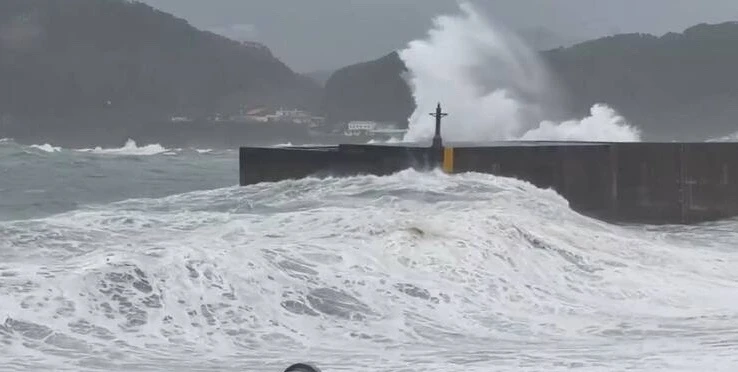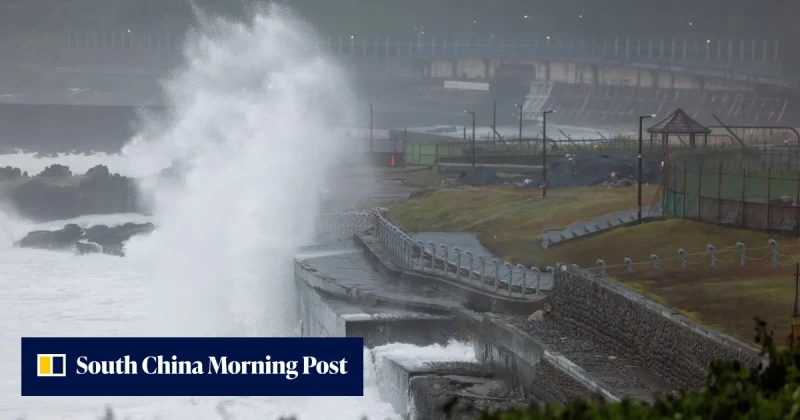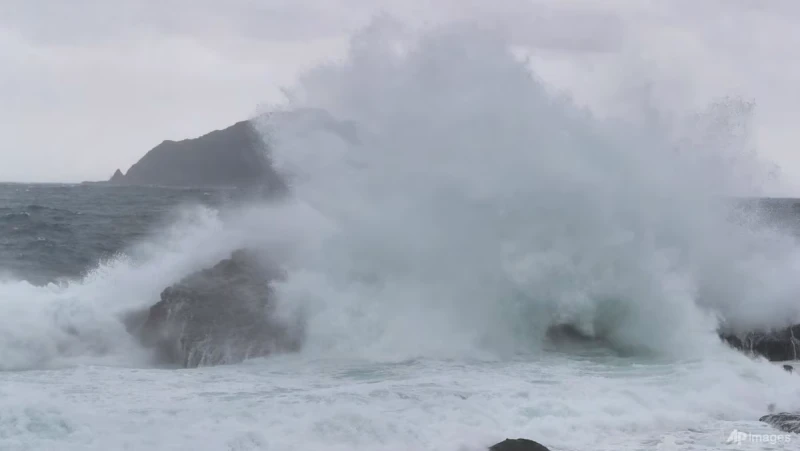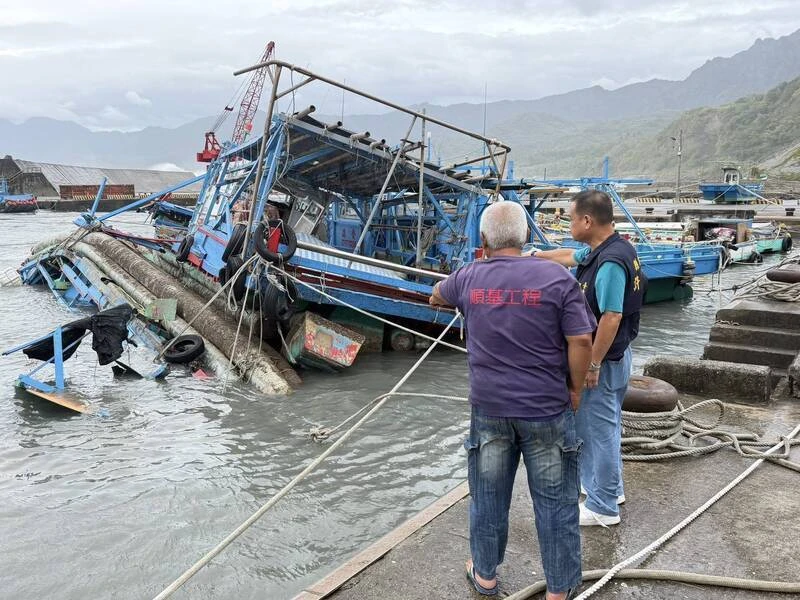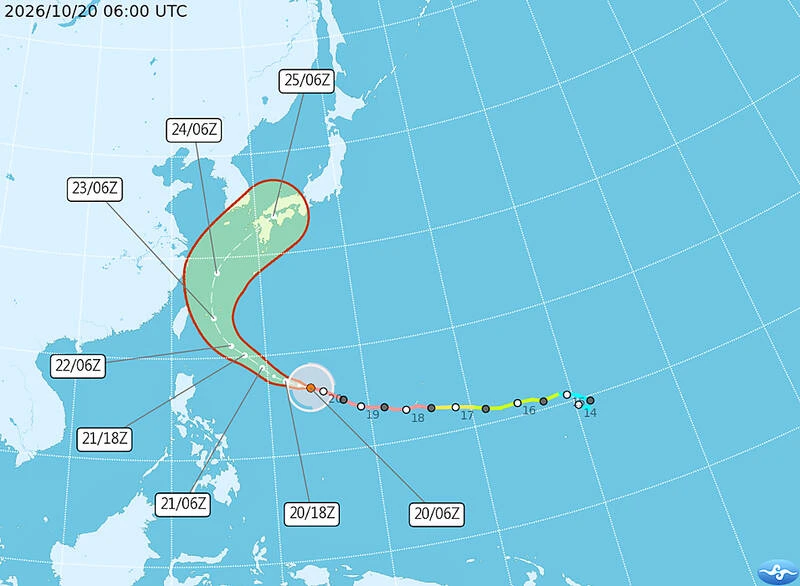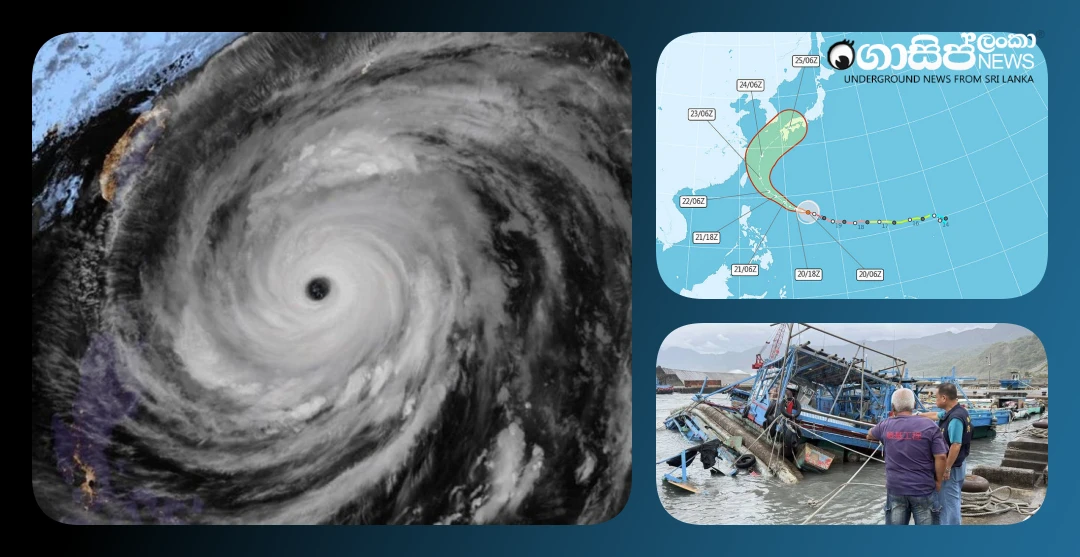
Typhoon 'Champi', which churned the Philippine Sea as a deadly super typhoon with winds approaching 300 kilometers per hour, has unleashed its full force, plunging air and sea connections across East Asia into a massive crisis. This natural disaster, named 'Rosal' in the Philippines and 'Typhoon No. 30' in Japan, is almost completely encircling the island of Taiwan with its fierce storm ring, unleashing heavy rains, terrifying winds, and high waves.
Although it did not make direct landfall, the typhoon's vast expanse and its slow movement have succeeded in bringing the entire region's transportation network to a standstill.By Friday morning, October 23, Taiwan's Civil Aeronautics Administration confirmed that 977 flights had been canceled between Thursday, when the storm began to approach, and 10 AM on Friday. This included 262 domestic flights and 715 international and cross-strait flights. At Taiwan Taoyuan International Airport, the main gateway, authorities had to suspend 596 flights between midnight and 9 AM, comprising 521 passenger flights and 75 cargo flights.
The repercussions of these flight disruptions extended beyond Taiwan across Asia. EVA Air canceled all long-haul flights to Europe and America scheduled for later on Friday, as well as several services arriving at Taoyuan and Songshan. Starlux operated only long-haul flights to Europe and America that day. China Airlines and Tigerair Taiwan also cut their schedules, and over 70 flights between Hong Kong and Taiwan by various companies, including Cathay Pacific, HK Express, and Hong Kong Airlines, were suspended.
Singapore Airlines canceled four flights between Singapore and Taipei on Friday, while Scoot suspended numerous flights planned from Taipei to Singapore, Tokyo, and Seoul. In Japan, airlines including JAL and ANA suspended between 100 and 160 domestic flights targeting surrounding islands such as Okinawa, Miyako, Ishigaki, and Naha until the weekend, severely inconveniencing over 11,000 passengers.
Land and sea were not spared from this situation either. 96 ferry services on 10 sea routes connecting China and outlying islands via Keelung-Matsu and Kinmen were suspended, with only limited service operating between Kinmen and Wutong. Schools and offices across Taiwan, except Kinmen, were closed, and stock market trading was halted. Although high-speed rail operations continued, several regular railway lines and highways experienced traffic disruptions. Approximately 1,286 people were evacuated to safe locations, and one person was swept away by a massive wave and died in the Xiao Liuqiu (Liuqiu) area the previous day. Another 94 people were injured due to traffic accidents, falls, and falling debris carried by the wind.
Champi, which formed in the Western Pacific in mid-October, moved south of Guam around October 18, causing flight cancellations and power outages there. Upon entering the Philippine Sea, the typhoon rapidly intensified, developing into a Category 5 super typhoon on October 20 and 21 with extremely destructive wind speeds of 295 to 296 kilometers per hour (some reports stated over 160 mph or 184 mph). The pressure at its center dropped to approximately 895 hectopascals, and based on its wind speed, it is considered the strongest tropical cyclone recorded so far in 2026.
By Friday, Champi showed signs of gradually weakening, but it was still located approximately 260 kilometers southeast of Yilan County around 11 AM. Moving north-northeast at a speed of 11 to 15 kilometers per hour, the storm's maximum sustained winds were 155 kilometers per hour, with gusts reaching 191 kilometers per hour. Its massive typhoon-force wind field, covering an area of approximately 320 kilometers, had almost engulfed all of Taiwan. Weather forecasters stated that the typhoon's center would pass near Taiwan's northeastern coast, and extremely heavy rainfall, massive waves, and violent winds could occur in the northern and northeastern regions, as well as the Yilan mountains, from Friday to Saturday morning.
Weather authorities have predicted a low probability of the typhoon making direct landfall, unless it stalls or changes its course. It is then expected to gradually weaken and turn towards Japan's Kyushu region. However, due to the storm's outer bands, weather warnings have also been issued for mainland East China, with an orange warning for massive waves issued for the Zhejiang coast. Previously, the Batanes Islands in the Philippines also faced violent winds and waves, and power outages and one wind-related injury were reported from Japan's Okinawa region.
Although the impact of this massive typhoon, moving slowly near Taiwan, was expected to subside from late Saturday to Sunday, the existing rain and wave conditions could persist. As there is still a risk of further changes to flight schedules, relevant airlines and airport authorities have advised passengers to check the latest information and make their travel plans accordingly.