![Gossip Lanka News [English]](https://blogger.googleusercontent.com/img/a/AVvXsEhYm2aFFq-bIW1nWX-RrqnPFoIsVos6_VCVz8BpLt0QJi55GNXHXC2fugeRvL0qUStEuCfs7Sfu6ZiSlhrkldxfGuE_wzy5gitY6rMZ2KSi8VBbGvkgXLks37RwZV-4-HKbWiNLRxB8C_r1e4z3mpxFTMPDJPEADoG8E-bZteWFipeD5KNGbjvCfqEfKw=s300 "Gossip Lanka News [English]")
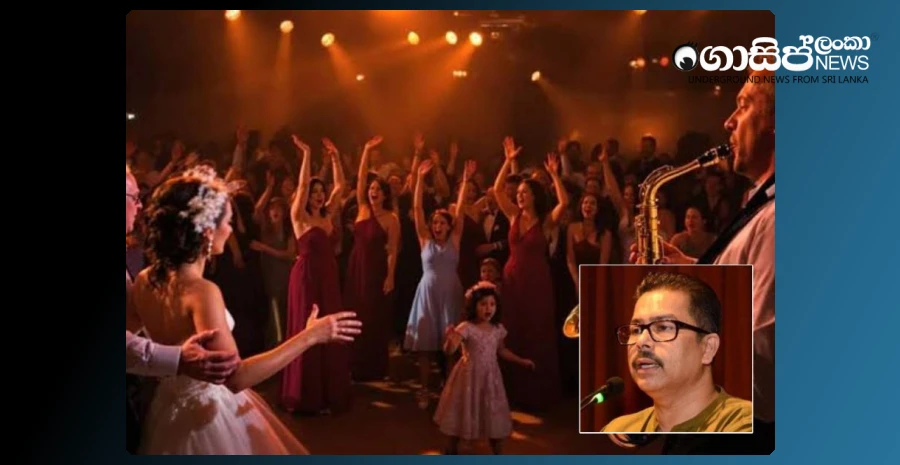
According to a new series of regulations issued by the Association of Creators and Publishers of Sri Lanka (ACPOSL), operating under the National Intellectual Property Office of Sri Lanka, obtaining a license to play music at weddings, parties, and various commercial or private events has been made mandatory. Under this new law, which came into effect last Tuesday, prescribed license fees must be paid for playing Sinhala, Tamil, and Hindi songs.
Here, Sri Lankan musical creations are represented by the ACPOSL association, while Hindi and Tamil musical creations are represented by the Indian Performing Right Society (IPRS).These regulations cover many events involving music, including wedding receptions, private parties, corporate events, dinner dances, award ceremonies, product launches, exhibitions, conferences, live music shows, and DJ performances. However, obtaining licenses is not required for events where only English or other foreign music is used, and certain services provided by private musicians or DJs may be exempt in some cases. The hotel or relevant event organizer must obtain this license 14 days before the event, and a sufficient audio recording must be provided to the association after the event to identify the music played.
The applicable license fee varies from LKR 20,000 to LKR 125,000, depending on the number of attendees and the nature of the event. Accordingly, for regular DJ events with fewer than 100 people, between 100-300 people, and over 300 people, the fees are LKR 20,000, LKR 30,000, and LKR 40,000 respectively, while for live music events, they are LKR 25,000, LKR 35,000, and LKR 50,000 respectively. For private or corporate DJ events, fees range from LKR 25,000 to LKR 50,000, and for private or corporate events with live or hybrid music, the fees are LKR 50,000, LKR 75,000, and LKR 125,000 respectively.
In addition to events, an annual license is issued for commercial premises such as supermarkets, retail stores, banks, financial institutions, showrooms, shopping malls, office buildings, and cinemas. These annual fees vary based on the floor area of the premises and the local government authority (Municipal Council, Urban Council, or Pradeshiya Sabha) where it is located. Furthermore, this licensing system has been applied to passenger buses, tourist transport vehicles, and passenger trains.
Nilar N. Cassim, President of the ACPOSL association, states that this measure was taken to protect intellectual property rights. He mentioned that while singers receive recognition, lyricists and melody creators often do not receive proper recognition or payment, and the main objective of these regulations is to ensure they receive due royalties when their creations are used at commercial events.
However, strong opposition has emerged from the hotel sector regarding these new regulations. Mr. Asoka Hettigoda, President of The Hotels Association of Sri Lanka (THASL), stated that this is an excessive and unfair burden. He pointed out that such an additional financial burden might even lead to the cessation of playing Sinhala music within hotel premises, which could negatively impact the tourism industry by harming the popularity of Sinhala music among tourists who come to experience Sri Lankan culture. The Hotels Association has approached the Ministry of Tourism for further guidance on this matter.