![Gossip Lanka News [English]](https://blogger.googleusercontent.com/img/a/AVvXsEhYm2aFFq-bIW1nWX-RrqnPFoIsVos6_VCVz8BpLt0QJi55GNXHXC2fugeRvL0qUStEuCfs7Sfu6ZiSlhrkldxfGuE_wzy5gitY6rMZ2KSi8VBbGvkgXLks37RwZV-4-HKbWiNLRxB8C_r1e4z3mpxFTMPDJPEADoG8E-bZteWFipeD5KNGbjvCfqEfKw=s300 "Gossip Lanka News [English]")
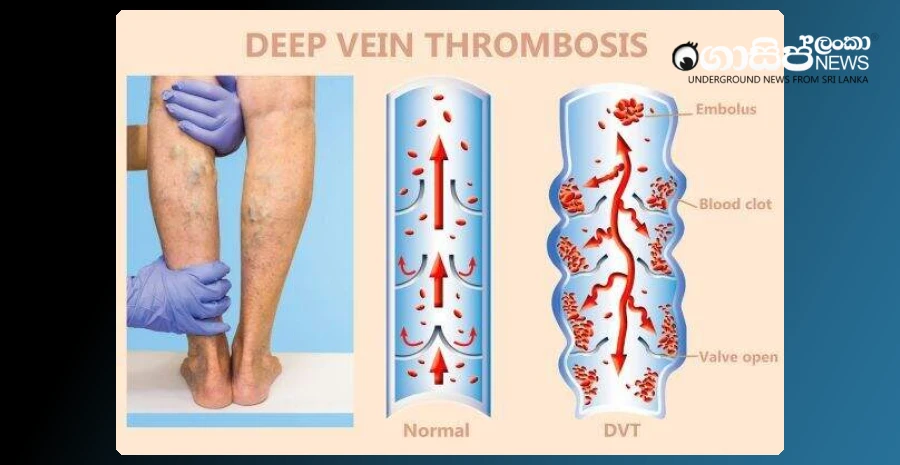
Medical reports indicate that the risk of Deep Vein Thrombosis (DVT) in the deep veins of the legs is increasing among the younger generation, including adolescents, due to prolonged sitting or lying down. Remaining in the same posture continuously during long holidays or other occasions is a major cause of blood clot formation, confirming that this is not a health issue limited only to adults.
In this disease, abnormal blood clotting in the deep veins of the leg obstructs blood flow towards the heart. Although the contraction of calf muscles normally pushes venous blood upwards during walking, prolonged immobility reduces the speed of blood flow, increasing the risk of blood clot deposition. In addition to continuous sitting, individuals who have recently undergone planned or emergency surgeries, bone fractures, immobilization of limbs, long air or road journeys, pregnancy and postpartum periods, cancer, and those with a genetic predisposition to blood clotting are at a higher risk of developing this condition.
DVT symptoms often appear in only one leg, with the main signs being swelling in only one leg, a noticeable difference in circumference between the two legs, severe pain or a heavy sensation, and redness or warmth of the skin in the affected leg. These blood clots can travel through the blood vessels towards the lungs, leading to a fatal condition called Pulmonary Embolism. If symptoms such as sudden difficulty breathing, chest pain, coughing up blood, or loss of consciousness appear, immediate medical attention should be sought.
When such swelling or pain occurs in the leg, one should completely avoid applying heat, massaging, or squeezing it tightly, and should not attempt to control the condition through strenuous exercise. It is essential to avoid taking aspirin or other blood-thinning medications without medical advice, as well as attempting to diagnose the disease through self-examination methods. Instead, immediately consult a qualified doctor or a vascular specialist to receive proper treatment.
To prevent blood clots caused by continuous sitting, staying active by moving your legs throughout the day is the primary solution. This risk can be significantly reduced by minimizing the time spent sitting in one place and frequently getting up to walk, engaging in ankle and foot forward and backward movement exercises when unable to stand, and drinking adequate water. However, it is mandatory for high-risk individuals with a history of blood clots or those who have undergone surgery to seek medical advice before undertaking long journeys. (Source: Time)