![Gossip Lanka News [English]](https://blogger.googleusercontent.com/img/a/AVvXsEhYm2aFFq-bIW1nWX-RrqnPFoIsVos6_VCVz8BpLt0QJi55GNXHXC2fugeRvL0qUStEuCfs7Sfu6ZiSlhrkldxfGuE_wzy5gitY6rMZ2KSi8VBbGvkgXLks37RwZV-4-HKbWiNLRxB8C_r1e4z3mpxFTMPDJPEADoG8E-bZteWFipeD5KNGbjvCfqEfKw=s300 "Gossip Lanka News [English]")
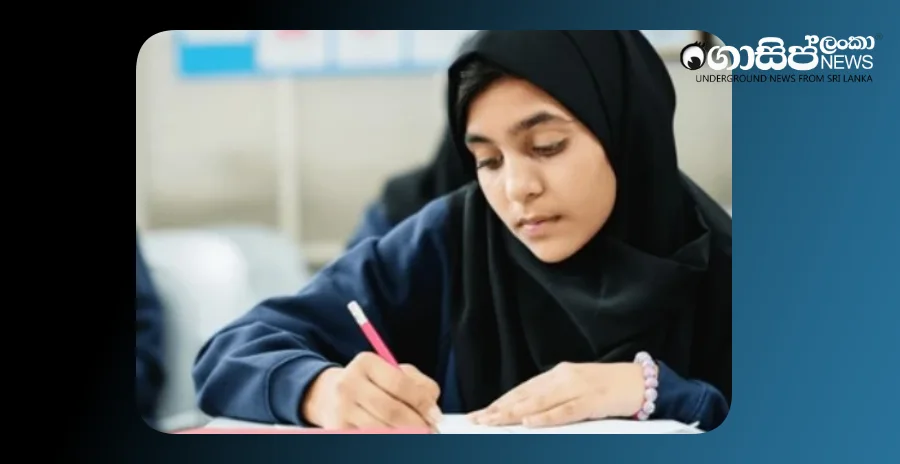
The Human Rights Commission of Sri Lanka has determined that the decision to suspend the G.C.E. Advanced Level examination results of approximately seventy Muslim female students of Trincomalee Zahira College, held in 2024, has violated their fundamental human rights. The Commission issued these recommendations in relation to a complaint examined under No. HRC/SUO-MOTU/02/2024, against the action taken by the former Commissioner General of Examinations.
At that time, the examination authorities had taken steps to suspend these results based on allegations that the students had violated examination rules by wearing religious attire that covered their ears inside the examination hall.All the students who appeared for the examination were Muslim young women, and they had worn a loose shawl on their heads in accordance with their religious beliefs and practices. However, according to examination rules, candidates' ears must be clearly visible, and therefore, the stance of the Examination Department officials was that this style of dress constituted a violation of examination regulations. The Human Rights Commission intervened with the Examination Department to resolve this issue at the initial stage, and as a result, arrangements were later made to release the results of the relevant students and to provide them with the opportunity to apply for re-scrutiny of their results.
However, the Human Rights Commission, after conducting a lengthy and full investigation into the matter, has revealed that the Department of Examinations failed to prove that the students had violated examination rules. According to the evidence provided by the officials in charge of the examination centers, it has been confirmed that the religious attire worn by the students did not obstruct the observation of their ears. Furthermore, the Commission has observed that the Department of Examinations did not conduct any formal preliminary inquiry to ascertain whether a violation of rules had occurred on the part of these students before suspending their results.
Announcing its final conclusion, the Human Rights Commission of Sri Lanka points out that this action by the Department of Examinations constitutes a direct violation of the fundamental rights of the students guaranteed by the Constitution. Specifically, the Commission states that the freedom of religion under Articles 10 and 14(1)(e) of the Constitution, as well as the right to equality and non-discrimination affirmed by Articles 12(1) and 12(2), have been violated. The Human Rights Commission's position is that this step taken to restrict the students' right to express their religion or belief is an unnecessary, disproportionate, and unjust imposition of restrictions.
In this context, the Human Rights Commission has recommended that a full and impartial investigation be conducted into the reasons that led to the arbitrary decision, whether there was any intervention by external officials, and whether any incorrect information was provided to the Department of Examinations. It is also emphasized that if any wrongdoing or improper motive is proven, disciplinary action should be taken against those responsible. Furthermore, the Commission requests that clear guidelines be issued to examination authorities to ensure that religious attire is not misinterpreted in a way that restricts students' rights, and that proper approval and accommodation be provided for appropriate religious attire, such as loose shawls worn in a way that allows ears to be visible.
The Human Rights Commission has further recommended that the process of appointing examination hall invigilators should be reformed to avoid such unnecessary conflicts and problematic situations in the future. Accordingly, the Commission points out that formal steps should be taken to appoint an adequate number of female invigilators as well as Tamil-speaking invigilators for examination centers.