![Gossip Lanka News [English]](https://blogger.googleusercontent.com/img/a/AVvXsEhYm2aFFq-bIW1nWX-RrqnPFoIsVos6_VCVz8BpLt0QJi55GNXHXC2fugeRvL0qUStEuCfs7Sfu6ZiSlhrkldxfGuE_wzy5gitY6rMZ2KSi8VBbGvkgXLks37RwZV-4-HKbWiNLRxB8C_r1e4z3mpxFTMPDJPEADoG8E-bZteWFipeD5KNGbjvCfqEfKw=s300 "Gossip Lanka News [English]")
Following the attack on Iran by the United States and Israel on February 28, Iran took steps to almost completely close the Strait of Hormuz, through which most of the world's oil and gas supplies are transported. With this crisis, global energy prices rose sharply, which severely impacted the Asian region.
However, according to the latest advisory report by the Asia Group, China is the only country in Asia that has emerged victorious from this geopolitical and economic crisis. The fact that before the strait was closed, about 80% of the oil and 90% of the liquefied natural gas transported through it went to Asian markets clearly demonstrates the vulnerability of this region.Researchers have studied how this crisis has affected the industrial, energy, and agricultural sectors in China, India, Japan, South Korea, and the emerging markets of Southeast Asia. China has been able to successfully cope with this energy shock due to its massive oil reserves and enormous investments in renewable energy. Last year, China further expanded its strategic energy reserves by purchasing oil at low prices, and by 2025, daily crude oil imports have increased from 11.1 million to 11.6 million barrels. As Erica Downs, a senior research fellow at the Center on Global Energy Policy, points out, more than 80% of that import growth has been directed towards building reserves, and China currently holds oil reserves equivalent to 104 days of imports.
Although more than 50% of China's energy needs still rely on coal, their use of renewable energy is growing very rapidly. Last year alone, China managed to install more than half of the world's new solar power capacity, amounting to 315 gigawatts, and added another 277 gigawatts in 2024. China aims to obtain half of its total energy needs from non-fossil sources by 2030 and expects to increase the contribution of wind and solar power from the current 22% to 30% by 2025. The report further states that China was able to withstand the initial shock of this crisis better than other countries in the region due to its operational renewable energy capacity of 1.4 terawatts and sufficient oil reserves for 90 to 110 days.
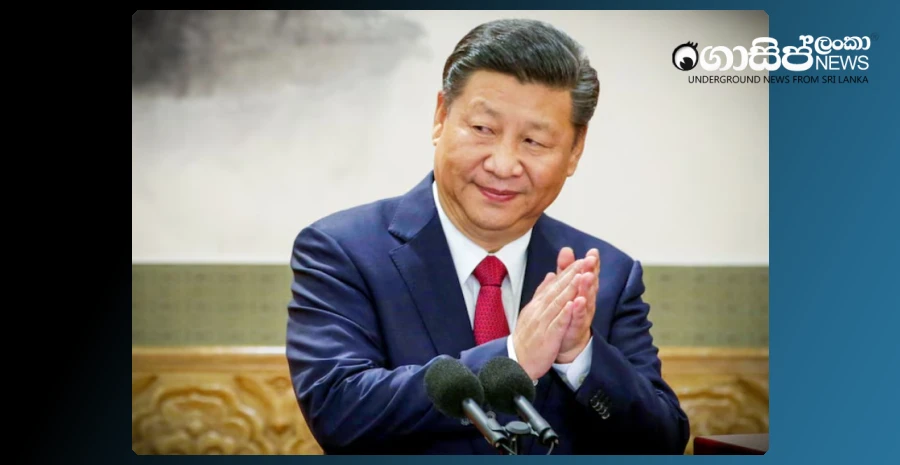
The acceleration of clean energy adoption by other countries during this crisis has also benefited China. The Beijing government, which dominates the global supply chain for solar panels and other clean energy technologies, exports its products to foreign countries at low prices. Accordingly, their electric vehicle exports in May increased by approximately 110% compared to the previous year, and solar cell exports grew by 60% in April. Although both American presidential candidate Donald Trump and Chinese President Xi Jinping expressed hopes for a ceasefire during their meeting last May, this crisis has provided China with an opportunity to portray America as a destabilizing party imposing costs on the world. However, Drew Thompson, a senior fellow at the Lee Kuan Yew School of Public Policy in Singapore, has stated that China has no desire to take on America's role as the security guarantor of the Middle East, and the report indicates that China views these situations as challenges to be managed and opportunities to be leveraged.