![Gossip Lanka News [English]](https://blogger.googleusercontent.com/img/a/AVvXsEhYm2aFFq-bIW1nWX-RrqnPFoIsVos6_VCVz8BpLt0QJi55GNXHXC2fugeRvL0qUStEuCfs7Sfu6ZiSlhrkldxfGuE_wzy5gitY6rMZ2KSi8VBbGvkgXLks37RwZV-4-HKbWiNLRxB8C_r1e4z3mpxFTMPDJPEADoG8E-bZteWFipeD5KNGbjvCfqEfKw=s300 "Gossip Lanka News [English]")
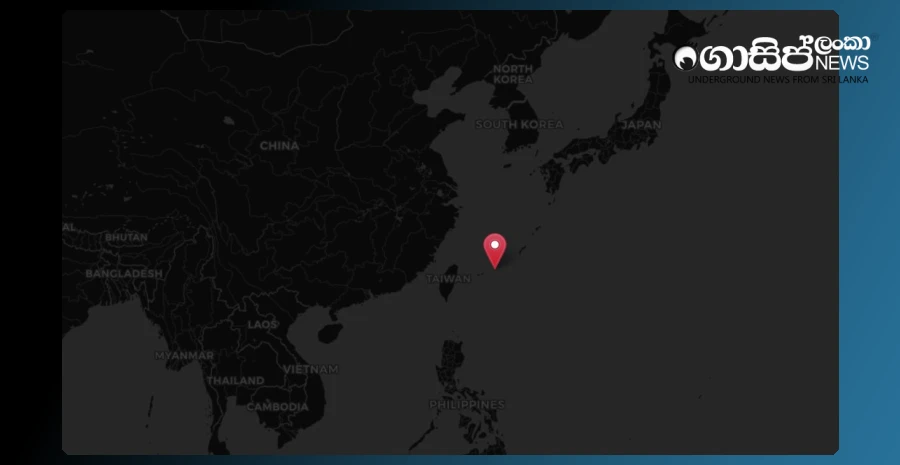
An earthquake with a magnitude of 6.4 on the Richter scale has occurred in the sea area northwest of Miyakojima Island, which belongs to Okinawa Prefecture, Japan. The Japan Meteorological Agency (JMA) confirms that this earthquake occurred around 13:05 PM on July 3, 2026, Japan time.
The epicenter of this earthquake, which originated from a very shallow seabed, specifically at a depth between 10 and 20 kilometers, has been marked at 26.0 degrees North latitude and 125.8 degrees East longitude.Due to this earthquake, Kumejima town in Okinawa Prefecture reported a maximum intensity of 3 on the Japan Meteorological Agency seismic intensity scale, and several surrounding islands, including Naha and Miyakojima, also experienced tremors of lower intensity. However, no significant tsunami threat has emerged due to this, and although minor sea level changes may occur along the coasts, no damage is expected from them, the Meteorological Agency announced.
Before this main shock, a series of smaller earthquakes with a magnitude of 5.0 on the Richter scale were also reported from this region on the same morning. This situation has occurred in the Ryukyu Islands, a geologically active region due to the collision of the Philippine Sea Plate with the Eurasian Plate. Similar activities were observed in the northwestern region of Miyakojima in February and March 2026, with several earthquakes exceeding magnitude 5 on the Richter scale, and this is identified as a geographically different, moderate local tremor compared to the powerful 7.4 magnitude earthquake that occurred off the Sanriku coast in the Miyako region last April.
According to the latest reports, no casualties, injuries, or significant property damage have been reported so far. Although residents felt a noticeable tremor due to the recorded low intensity, it was not strong enough to cause widespread panic, and well-constructed buildings were not damaged. Okinawa's infrastructure, including airports in Miyakojima and bridges connecting islands like Irabu and Ikema, is specifically designed to withstand such earthquakes, but continuous monitoring is being carried out due to the possibility of aftershocks.