![Gossip Lanka News [English]](https://blogger.googleusercontent.com/img/a/AVvXsEhYm2aFFq-bIW1nWX-RrqnPFoIsVos6_VCVz8BpLt0QJi55GNXHXC2fugeRvL0qUStEuCfs7Sfu6ZiSlhrkldxfGuE_wzy5gitY6rMZ2KSi8VBbGvkgXLks37RwZV-4-HKbWiNLRxB8C_r1e4z3mpxFTMPDJPEADoG8E-bZteWFipeD5KNGbjvCfqEfKw=s300 "Gossip Lanka News [English]")
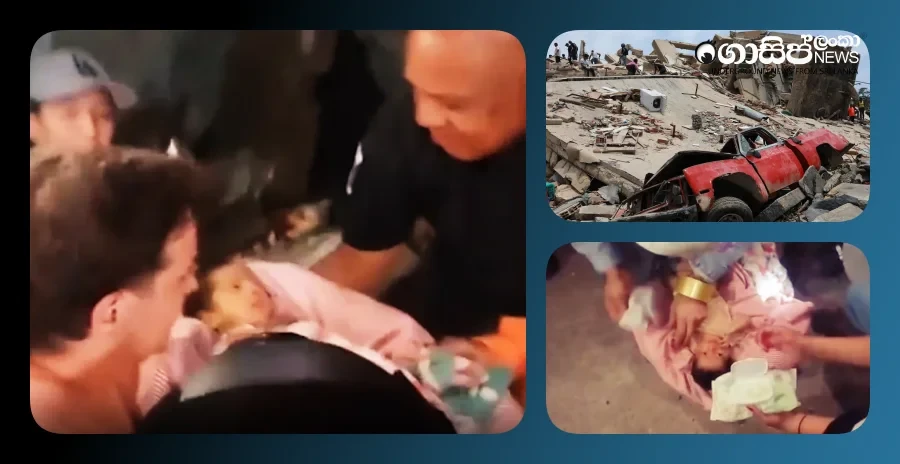
Amidst the dark canopy of that great destruction, where massive buildings lay in ruins and only the wails of death echoed from all directions, a new hope for life cried out.
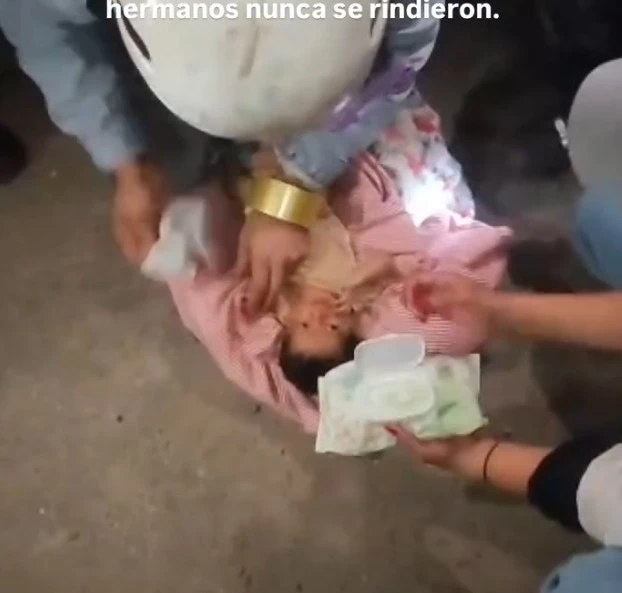
On June 24th, the entire country was plunged into an ocean of tears due to the twin earthquakes of magnitudes 7.5 and 7.2 on the Richter scale that struck Venezuela's northern coastal region. As an eight-story apartment complex in the port city of La Guaira was completely flattened, relief workers and volunteers successfully rescued an 18-day-old infant, who had been trapped in the rubble for over thirty hours, alive and without a single scratch.
That loving mother, Dayana Patino, had protected her child's life by tightly covering the infant with her body during that terrifying moment when death seemed imminent. After 12 hours of arduous searching, relief workers, guided by a faint cry heard from between the concrete slabs, first rescued the child, and about an hour later, the mother, amidst the cheers of the gathered crowd. The miracle of motherhood, where she attempted to feed her blood as milk, unable to even provide breast milk amidst the intense darkness and pressure, is now circulating like a wildfire across social media, moving the entire world to tears.
According to data updates over the past few days, the death toll from this earthquake has now exceeded 920, with over 3,300 injured. Tens of thousands are still missing, and the regional hospital system has been completely crippled. Against a backdrop where Venezuela is attempting to rebuild under a new American-backed government following recent political transformations, poor building standards and collapsed infrastructure have been the primary causes of this immense loss of human life. Although international aid, including US Navy ships, Spanish relief teams, and financial donations from Pope Leo XIV, has poured in, relief efforts are still progressing at a very slow pace due to pre-existing economic crises.
Although many lives were saved thanks to the collective strength of the community and the initial willingness of volunteers to dig through the rubble with bare hands, the golden window of opportunity to save the lives of thousands still trapped is slowly closing. The serious question of whether natural disasters claim human lives due to the wrath of nature or due to fragile concrete structures built by humans themselves without proper standards, remains once again before the world.
Nevertheless, that tiny life that emerged from the rubble amidst the dark shadows of death silently affirms to the entire world that human love, motherhood, and hope are more powerful than any great destruction.