![Gossip Lanka News [English]](https://blogger.googleusercontent.com/img/a/AVvXsEhYm2aFFq-bIW1nWX-RrqnPFoIsVos6_VCVz8BpLt0QJi55GNXHXC2fugeRvL0qUStEuCfs7Sfu6ZiSlhrkldxfGuE_wzy5gitY6rMZ2KSi8VBbGvkgXLks37RwZV-4-HKbWiNLRxB8C_r1e4z3mpxFTMPDJPEADoG8E-bZteWFipeD5KNGbjvCfqEfKw=s300 "Gossip Lanka News [English]")
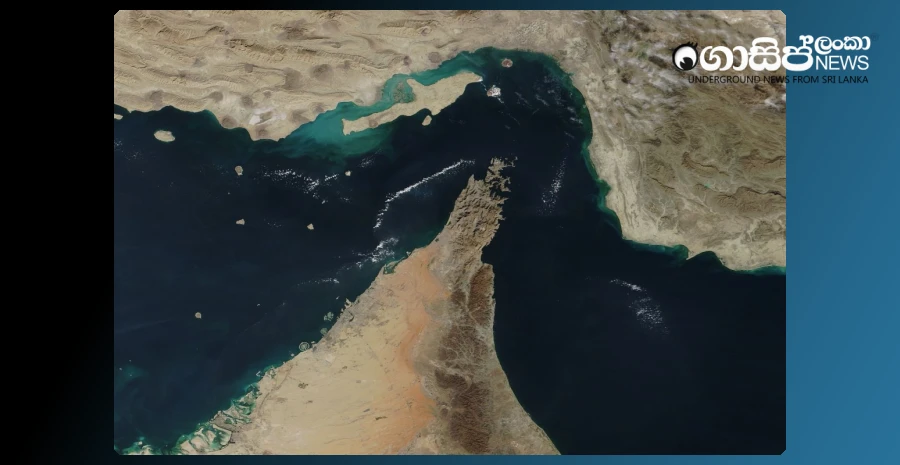
Accusing the United States and Israel of continuously violating ceasefire agreements and attacking Lebanon, Iran's Islamic Revolutionary Guard Corps (IRGC) has decided to once again close the Strait of Hormuz. This decision, which severely impacts geopolitical stability in the Middle East as well as the global energy sector, has been announced amidst the fragile atmosphere that emerged after recent temporary agreements between the US and Iran.
The Iranian Joint Armed Forces Command Headquarters and the Revolutionary Guard Corps Navy announce that this closure will remain valid "until further notice," pending the lifting of US sanctions and blockades and the full implementation of the ceasefire in Lebanon. They have also issued a stern warning that any vessel attempting to traverse the Strait in defiance of this decision will undoubtedly be attacked. The Tehran regime points out that the Israeli attacks, which led to the deaths of a large number of people, including civilians in Southern Lebanon, constitute a complete breach of previous agreements.
This is not the first time Iran has used the Strait of Hormuz as a political and military strategic tool following a period of intense belligerence. Although this sea lane was temporarily opened under previous short-term ceasefire conditions, the ongoing conflicts in Lebanon and the actions of the United States have prompted Iran to close it again. Despite this serious situation, it is reported that high-ranking officials, including US Vice President J.D. Vance, are still attempting to resolve the issue through discussions in Switzerland.
To maintain its power in this region, the Iranian Revolutionary Guard Corps has equipped its "Mosquito Fleet" naval unit, which consists of fast attack craft, naval mines, and anti-ship missiles. As the Iranian Navy has already taken steps to gain full control of the Strait of Hormuz using asymmetric warfare tactics, a strong sense of distrust regarding maritime security has been created.
The blocking of the Strait of Hormuz, the primary sea lane through which nearly 20 percent of the world's total oil trade is transported, poses an immediate risk of a sharp rise in global crude oil prices. If this closure occurs long-term, it will directly impact global inflation, increase fuel costs, and completely disrupt supply chains. Energy exports from other Middle Eastern countries such as Saudi Arabia, the United Arab Emirates, and Iraq will also be severely hampered by this.
Due to the closure of the Strait, international shipping fees and insurance costs will rapidly increase, and the necessity for vessels to use alternative, longer sea routes could further drive up global food and fuel prices. Foreign analysts suggest that to control this situation, the United States and its allies may provide naval protection for merchant ships or initiate mine-clearing operations. However, the currently active 60-day fragile ceasefire process and sanctions relief discussions are now at severe risk.