![Gossip Lanka News [English]](https://blogger.googleusercontent.com/img/a/AVvXsEhYm2aFFq-bIW1nWX-RrqnPFoIsVos6_VCVz8BpLt0QJi55GNXHXC2fugeRvL0qUStEuCfs7Sfu6ZiSlhrkldxfGuE_wzy5gitY6rMZ2KSi8VBbGvkgXLks37RwZV-4-HKbWiNLRxB8C_r1e4z3mpxFTMPDJPEADoG8E-bZteWFipeD5KNGbjvCfqEfKw=s300 "Gossip Lanka News [English]")

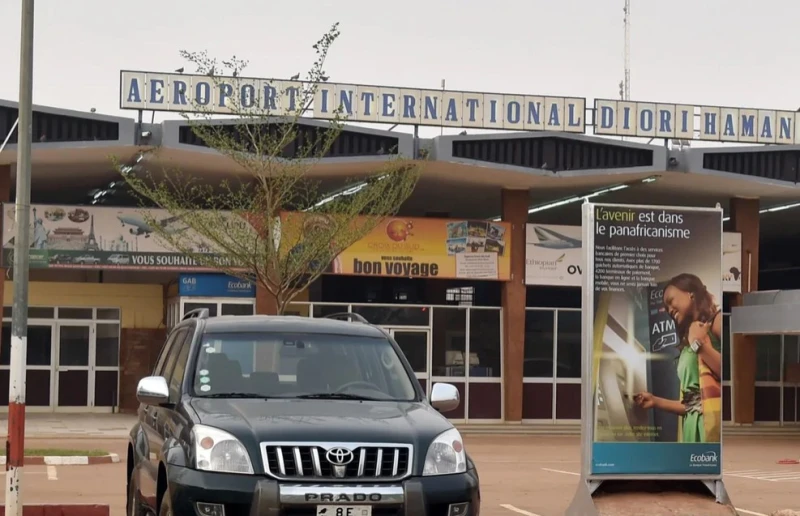
A severe attack was launched by a group of armed gunmen in the early hours of Thursday, June 18, on Diori Hamani International Airport, the largest airport in Niger, located in Niamey, the capital of Niger. The attack, which began between 5:00 AM and 6:00 AM local time, reportedly lasted from half an hour to nearly two hours, involving bomb explosions and continuous gunfire.
The attack targeted the 101st Air Force Base located adjacent to the airport, and locals reported hearing the gunfire and explosions during their usual early morning prayers.According to official reports released by the Niger Ministry of Defense, 11 members of the security forces and two civilians were killed in these clashes. 22 members of the armed group who carried out the attack were killed in counter-attacks by security forces, and security forces managed to arrest approximately 20 suspects along with their weapons. However, some independent media reports indicate that the total death toll, including the attackers, is around 35. The jihadist group Jama'at Nusrat al-Islam wal-Muslimin (JNIM), affiliated with Al-Qaeda, has claimed responsibility for the attack, describing it as a suicide attack targeting the military base and the airport.
This incident marks the second deadly attack targeting Diori Hamani Airport in 2026. Previously, on January 29, the Sahel regional branch of the Islamic State (IS) organization launched an attack on the same airport, destroying several aircraft. A clear chronological similarity can be observed between that attack and this latest attack in June. Security analysts state that the geographical proximity of the main terminal for civilian flights and the military zone in Niamey makes it easy for jihadist groups to reach such strategic targets. The internal rivalry between JNIM and IS groups to consolidate their power in the region is also well reflected by these attacks.
Niger has been severely affected by jihadist terrorist activities in the Sahel region throughout the past decade. Following a military coup in 2023, rooted in the failure to control security threats, the country's governance fell under a military junta. Subsequently, Niger's rulers took steps to withdraw Western security forces, including French and American troops, from the country and sought increased Russian support to combat terrorism. Against this backdrop, the attack centered in the capital highlights the weaknesses in the military junta's new security strategies.
Although authorities managed to resume airport operations under strict security measures on the same afternoon following the attack, numerous civilian flights were delayed, severely impacting the economy and passengers. Civilians residing in Niamey state that if such an attack can occur at the airport, considered one of the safest places in the capital, they cannot have any confidence in their own safety. This incident also poses a threat to the stability of neighboring countries like Mali and Burkina Faso, and the response of the Economic Community of West African States (ECOWAS) and other international partners regarding Niger's security situation will be crucial going forward.