![Gossip Lanka News [English]](https://blogger.googleusercontent.com/img/a/AVvXsEhYm2aFFq-bIW1nWX-RrqnPFoIsVos6_VCVz8BpLt0QJi55GNXHXC2fugeRvL0qUStEuCfs7Sfu6ZiSlhrkldxfGuE_wzy5gitY6rMZ2KSi8VBbGvkgXLks37RwZV-4-HKbWiNLRxB8C_r1e4z3mpxFTMPDJPEADoG8E-bZteWFipeD5KNGbjvCfqEfKw=s300 "Gossip Lanka News [English]")
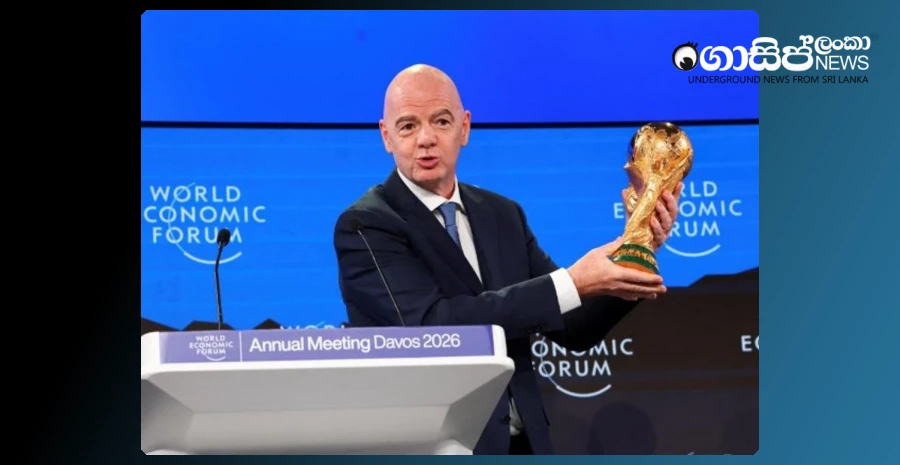
The International Football Federation (FIFA) took steps to increase the number of teams for the World Cup football tournament from 32 to 48, targeting massive markets like India and China, which have a combined population of 2.7 billion. However, with only about a month left until the start of the 2026 tournament, FIFA President Gianni Infantino's failure to reach an agreement on broadcast rights in these two Asian countries has created a severe crisis.
Even if small nations like Cape Verde or Curaçao qualify for the tournament, countries like China and India are commercially far more important than such nations, which have populations equivalent to a city like Mumbai or Shanghai.Initially, FIFA expected a price of $100 million for India and between $250 million and $300 million for China, but due to a lack of bidders, these prices have rapidly fallen. Currently, the highest bid for broadcast rights in India is a meager $20 million, which is significantly lower than the $90 million paid by Sony in 2014 and 2018. Additionally, the depreciation of the Indian Rupee against the dollar has also contributed to this situation, with the value of one dollar rising from 54 rupees in 2013 to 95 rupees currently.
The current monopolistic nature of the Indian sports broadcasting market and the high attention given to cricket tournaments like the Indian Premier League (IPL) have been major reasons for the decreased demand for football. Following the merger of Reliance and Disney, JioStar has become the leading commercial partner, and even they are reluctant to spend large sums on a football tournament because major matches are scheduled to be broadcast at midnight or in the early morning. According to Shaji Prabhakaran, an executive committee member of the Asian Football Confederation, while match timings can be used as an excuse, the lack of alternatives in the broadcasting sector and the distrust regarding investments are the real reasons for this price drop.
The situation is similar for China, where the national television service CCTV has a limited budget of between $60 million and $80 million. This is significantly lower than FIFA's expected minimum price range of $120-150 million. The Chinese football team's failure to qualify for the tournament and the 12-hour time difference relative to Beijing time have hindered promotional activities. Gianni Infantino's failure to strike deals with these two countries, which account for one-third of the world's population, has become a major headache, and if broadcast rights have to be granted at significant discounts at the last minute, it will adversely affect the commercial value of the football product.