![Gossip Lanka News [English]](https://blogger.googleusercontent.com/img/a/AVvXsEhYm2aFFq-bIW1nWX-RrqnPFoIsVos6_VCVz8BpLt0QJi55GNXHXC2fugeRvL0qUStEuCfs7Sfu6ZiSlhrkldxfGuE_wzy5gitY6rMZ2KSi8VBbGvkgXLks37RwZV-4-HKbWiNLRxB8C_r1e4z3mpxFTMPDJPEADoG8E-bZteWFipeD5KNGbjvCfqEfKw=s300 "Gossip Lanka News [English]")
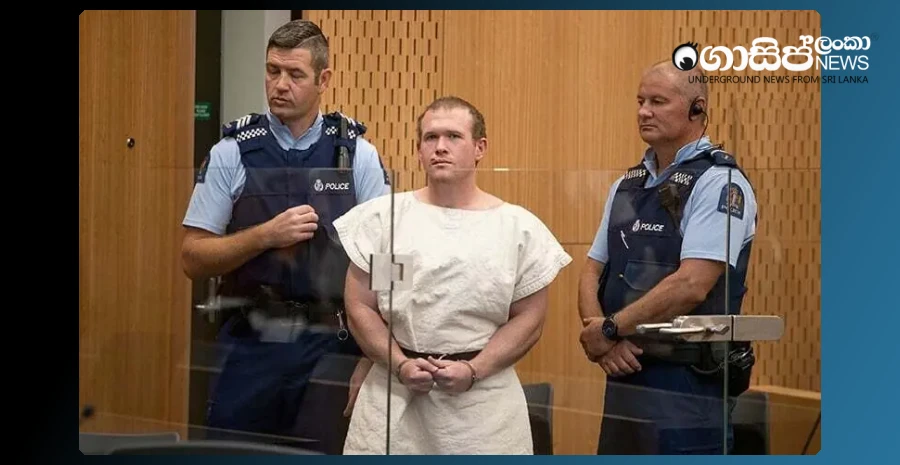
The court has rejected the appeal filed by white supremacist Brenton Tarrant, who was convicted and sentenced for the 2019 shooting at two mosques in Christchurch, New Zealand, which killed 51 people.
Tarrant, 35, who admitted to carrying out the deadliest mass shooting in New Zealand's recent history, was sentenced to life imprisonment without parole in August 2020. This sentence, with no possibility of parole, is considered the harshest punishment ever handed down in New Zealand's history.
However, he filed a petition with the Court of Appeal last February, claiming that he was unable to make correct decisions due to the "torturous and inhumane" conditions in prison during his trial. He stated that he did not have the necessary mental health or proper state of mind to plead guilty at the time.
However, a panel of three judges rejected Tarrant's evidence regarding his mental state. The court pointed out that there were inconsistencies in his statements and that his testimony completely contradicted the observations of prison authorities and mental health specialists at the time he pleaded guilty.
Accordingly, the panel of judges determined that Tarrant had voluntarily pleaded guilty and that no coercion or threats were made. The court ruling further stated that he had not suffered any significant mental distress due to prison conditions at the time of his plea, and that his appeal was without any basis. The court emphasized that the facts against him were undisputed and that he had not presented any legally acceptable excuse.
On March 15, 2019, he launched this brutal attack, storming two mosques in Christchurch with a cache of semi-automatic firearms. Before the attack, he had published a manifesto online, and then proceeded to livestream his killing spree for 17 minutes. All those who died in the attack were Muslims, including young children, women, and elderly individuals.
Meanwhile, the judicial process became somewhat complicated when Tarrant attempted to fully withdraw his appeal a week after the appeal hearing in February. He submitted a notice to withdraw the appeal using a false name, but the court rejected it due to the absence of a date or a witness's signature. Later that same week, he filed a second notice under a false name, complete with the required date and witnesses.
He stated that he no longer needed a lawyer and that pursuing this appeal would not serve justice. However, commenting on the dismissal of the appeal, lawyers representing the survivors and victims' families stated that justice had been served correctly and that this was a great relief. They further expressed that this decision provides immense comfort to the victim families, as they will not have to relive the traumatic events of March 15 by facing a new trial once again.