![Gossip Lanka News [English]](https://blogger.googleusercontent.com/img/a/AVvXsEhYm2aFFq-bIW1nWX-RrqnPFoIsVos6_VCVz8BpLt0QJi55GNXHXC2fugeRvL0qUStEuCfs7Sfu6ZiSlhrkldxfGuE_wzy5gitY6rMZ2KSi8VBbGvkgXLks37RwZV-4-HKbWiNLRxB8C_r1e4z3mpxFTMPDJPEADoG8E-bZteWFipeD5KNGbjvCfqEfKw=s300 "Gossip Lanka News [English]")
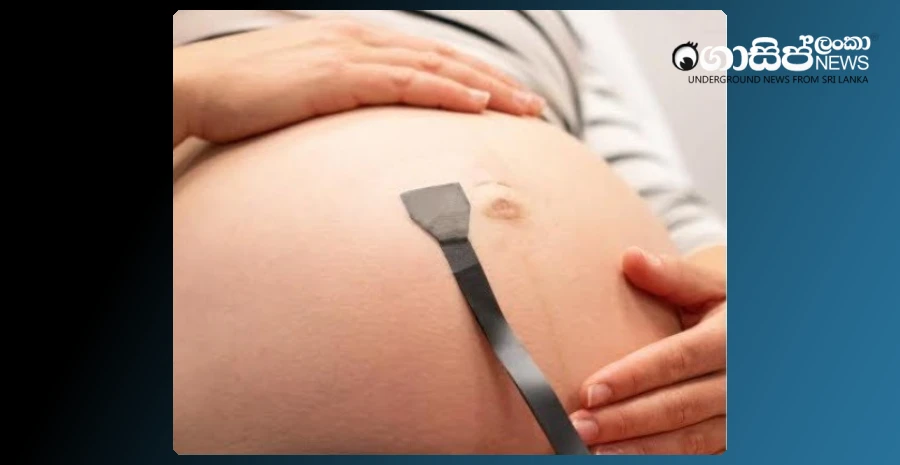
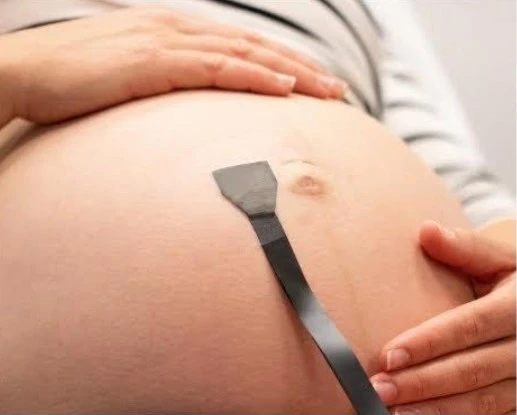
A group of scientists has succeeded in developing a wearable ultrasound patch to continuously monitor the condition of the baby in the womb during pregnancy. The main objective of this new invention is to help identify potential complications during pregnancy early.
Researchers point out that although existing traditional ultrasound scans monitor the baby's heartbeat and uterine contractions, they often provide inaccurate warnings, and the assistance of a specially trained operator is essential for them. According to Professor Sheng Xu of Stanford University, existing devices only provide a snapshot of the baby's condition at a specific moment, meaning a lot of important information can be missed between hospital visits.As a successful solution to this problem, this new wearable device operates by continuously collecting data. It allows for monitoring the condition of the mother and baby anywhere, and doctors can identify the patient's vital signs and analyze changes occurring in them. This enables accurate diagnoses. Through this device, images of the fetus in the womb, as well as blood flow in moving structures like the umbilical cord, can be continuously monitored in real-time for several hours. Currently, this device exists as a proof-of-concept model connected by wires to external electronic devices, and a traditional scanner is needed to identify the correct placement during its initial application. Nevertheless, this technology, named "UPatch," is considered the first creation of its kind.
According to this research report published in 'Nature Biotechnology' journal, various electronic devices and algorithms have been used to overcome challenges such as signal loss when the baby moves in the womb and obtaining weak signals due to the depth of blood vessel locations. Clinical trials for this research have been conducted in the United States and the United Kingdom. In one test involving 62 pregnant women, Tom Park, a PhD candidate in the Department of Engineering at the University of California (UC San Diego) and lead author of the study, stated that the blood flow data obtained from this new wearable UPatch device and traditional handheld scanners closely matched each other.
Using this device, the heart rate and blood flow of babies in 52 pregnant women were continuously monitored, and in one instance, researchers were able to detect a severe condition of intrauterine growth restriction early. This allowed doctors to prevent a potential stillbirth and safely deliver the baby via Cesarean section. Park emphasizes that fetal blood flow can change dynamically over time, clearly illustrating the risk of relying solely on short-term scans. The research team is currently developing a wireless version of this technology that can be used during daily activities at home.
According to Dr. Antoniya Georgieva, a senior author at Oxford University, this technology represents a very important milestone demonstrating its practical applicability. Professor Xu points out that such wearable devices are more suitable for areas with limited resources, such as low and middle-income countries. This technology has great potential to directly prevent stillbirths, and these continuous data will also open doors in the future to gain critical scientific understanding of why some babies in the womb survive safely while others are lost.