![Gossip Lanka News [English]](https://blogger.googleusercontent.com/img/a/AVvXsEhYm2aFFq-bIW1nWX-RrqnPFoIsVos6_VCVz8BpLt0QJi55GNXHXC2fugeRvL0qUStEuCfs7Sfu6ZiSlhrkldxfGuE_wzy5gitY6rMZ2KSi8VBbGvkgXLks37RwZV-4-HKbWiNLRxB8C_r1e4z3mpxFTMPDJPEADoG8E-bZteWFipeD5KNGbjvCfqEfKw=s300 "Gossip Lanka News [English]")
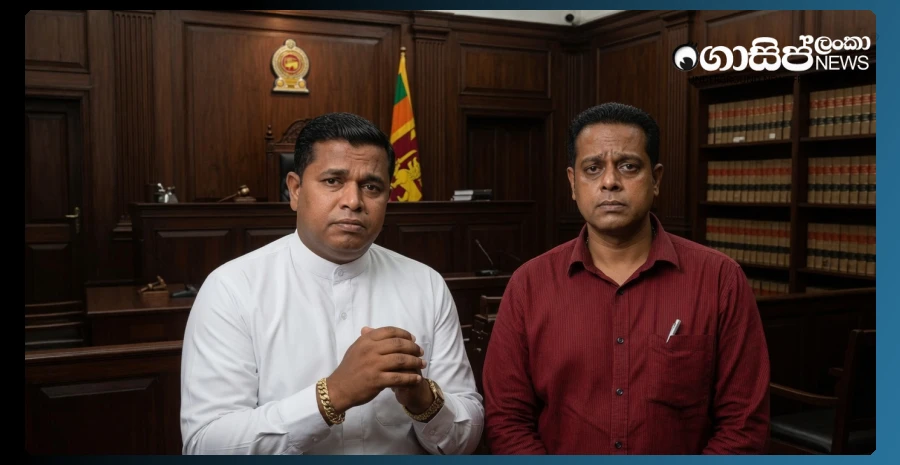
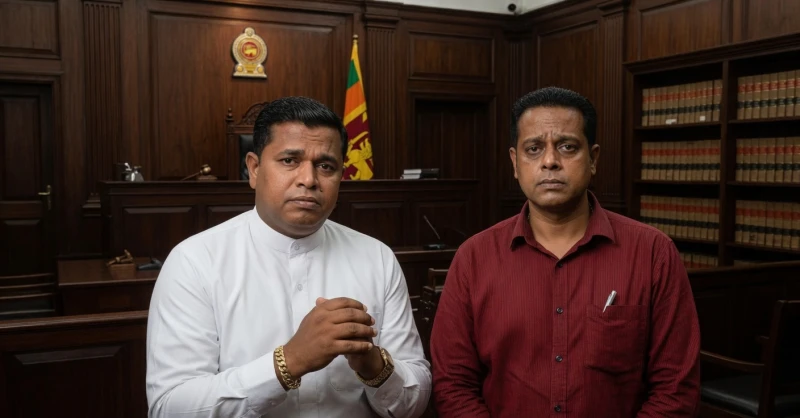
Justice, which had been hidden in the shadows of political power for nearly two decades, has awakened after eighteen years and unsheathed its sword against those intoxicated by power. Jagath Samantha, former chairman of the Arachchikattuwa Pradeshiya Sabha and co-organizer of the Sri Lanka Podujana Peramuna for Chilaw, was recently sentenced to five and a half years of rigorous imprisonment by the Chilaw High Court.
In addition to this prison sentence, he, the brother of the late former State Minister Sanath Nishantha, was also ordered to pay a compensation of one million rupees and a fine of one hundred and thirty-six thousand rupees. If the compensation is not paid, an additional twenty-four months of imprisonment has been imposed.This sentence was imposed for the heinous crime of publicly assaulting and obstructing the duty of Mr. Dhanasena Surasinghe, who was then serving as the Divisional Secretary of Arachchikattuwa in 2008. That helpless public official, deeply humiliated and mentally distressed by the slap he received in front of villagers and police officers, was so traumatized that he requested a transfer from the area on the very same day. To seek justice for the grave injustice he suffered, he had to embark on an extremely difficult journey, seeking the court's help for eighteen long years.
This unfortunate and disgraceful incident occurred on November 24, 2008, at the Karukkuliya Jayathilakarama Viharaya in Arachchikattuwa. The root cause was a stock of valuable timber, including teak, that had been felled from reservoir reserves and roadsides in the area without any legal authorization. This massive environmental destruction and illicit trade were carried out under the guise of constructing a Dhamma school building at the temple. Following public protests and complaints from residents, the Divisional Secretary took steps to investigate. Accompanied by forest conservation officers and Chilaw police officers, the public official, who went to enforce the rule of law, was met with an unexpected mob attack.
At the time of the incident, Jagath Samantha and a group stormed the temple, rang its bell, gathered innocent villagers, and surrounded the Divisional Secretary and his team of public officials. By then, Mr. Sanath Nishantha, who was emerging as a powerful political figure in the North Western Province and was then a provincial council member, also stormed the location. Without any hesitation, he brutally assaulted the Divisional Secretary in the face, right in front of the police officers who were present to uphold the law. Even though the police officers were nearby, they became silent spectators, unable to do anything in the face of political threats and thuggery. That dark day, when the law knelt before power, was like a historic landmark that perfectly depicted the tragedy of the public service in Sri Lanka.
Evidence presented in court confirmed that the defense completely failed to prove that this timber stock was a legally obtained donation to the temple. Although prior permission from proper authorities is required to cut a tree from a government reserve, they did not possess any such legal document. The massive illicit trade, carried out by destroying the environment, hidden behind the sacred word 'temple development,' was completely exposed before the court. The politicians who rang the temple bell to display their power now, years later, hear the sound of prison iron doors closing.
This case, which dragged on for nineteen years, is a perfect mirror reflecting the slow nature of Sri Lanka's judicial system and the extent of political influence. Mr. Sanath Nishantha was named as the first accused and Mr. Jagath Samantha as the second accused when the trial began in 2017. The case was being heard under serious charges of illegally gathering people, obstructing a public official's duty, and assaulting him. However, with the unfortunate death of Mr. Sanath Nishantha in a road accident on the Katunayake Expressway in January 2024, the full burden and responsibility of the case fell upon his brother, Mr. Jagath Samantha. While death delivered nature's punishment to the first accused, those who remained were caught in the net of the law.
Delivering the verdict, Chilaw High Court Judge Ms. Nayomi Wickremasekara strongly emphasized that there must be a safe environment in the country for public servants to perform their duties independently, without any fear or doubt. If public officials, who go to protect government property and enforce the law, have to succumb to the thuggery of politicians, then the rule of law can never exist in that country. The court's position was that this attack on officers who went to measure illegally felled trees, claiming they were donations to the temple, was not merely an assault on one individual, but a fatal blow to the entire state mechanism.
The story of public officials being helpless in the face of political thuggery is still not new to our country today. However, the message conveyed to society by this court verdict is extremely powerful. It has once again confirmed that no one can be above the law, no matter how delayed, and no matter how much political power they wield. Although Jagath Samantha is still an active politician in the area, the law has given him his due place. The court has succeeded in raising a voice for the oppressed public servant.
This historical lesson teaches us that while the machinery of justice may operate slowly, it undoubtedly operates; yet the question we must truly ask is whether we still see true justice in a system where an officer, for simply doing their duty, has to spend the most valuable years of their life on the steps of the courthouse for two decades to achieve redress.