![Gossip Lanka News [English]](https://blogger.googleusercontent.com/img/a/AVvXsEhYm2aFFq-bIW1nWX-RrqnPFoIsVos6_VCVz8BpLt0QJi55GNXHXC2fugeRvL0qUStEuCfs7Sfu6ZiSlhrkldxfGuE_wzy5gitY6rMZ2KSi8VBbGvkgXLks37RwZV-4-HKbWiNLRxB8C_r1e4z3mpxFTMPDJPEADoG8E-bZteWFipeD5KNGbjvCfqEfKw=s300 "Gossip Lanka News [English]")
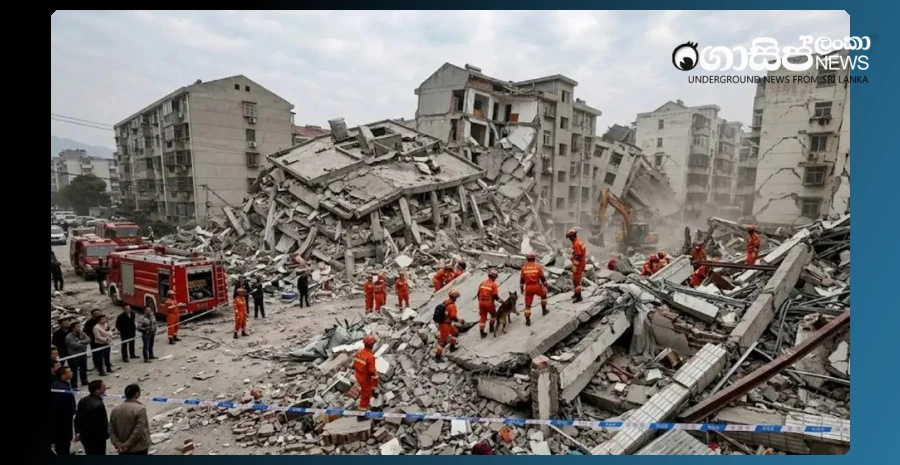
Today (18th) at approximately 00:21 China time, the Liunan District, part of Liuzhou city in the Guangxi Zhuang Autonomous Region of Southwest China, was affected by an earthquake with a magnitude of 5.2 on the Richter scale. As a result of this disaster, two people have died and another is missing, and authorities have taken immediate steps to evacuate over 7,000 residents as a precautionary measure.
The epicenter of this earthquake was recorded at 24.38° North latitude and 109.26° East longitude, and due to its very shallow depth of 8 to 10 kilometers, the ground shaking was more intense. This is considered the strongest earthquake recorded in the history of Liuzhou city, which has a population of approximately 4 million. The tremors were felt in nearby areas such as Nanning, Guilin, Guigang, Wuzhou, Hechi, and Laibin, as well as in Hong Kong city, and according to the Hong Kong Observatory, over 10 reports of tremors with Modified Mercalli Intensity II were received.
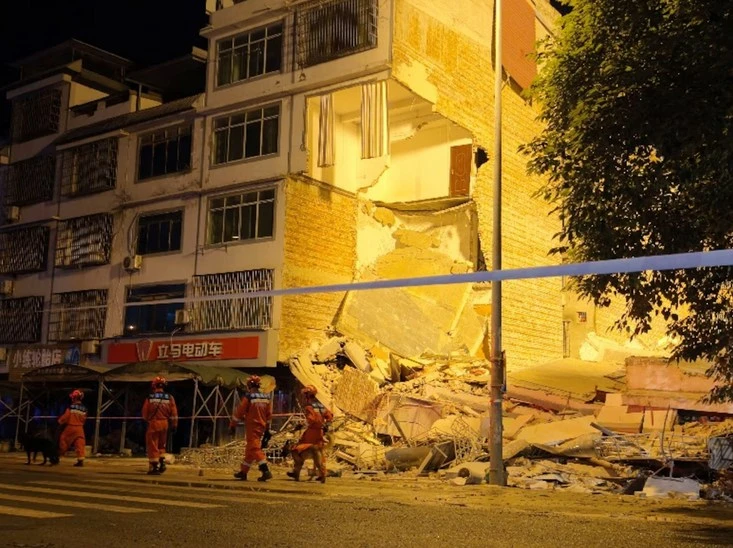
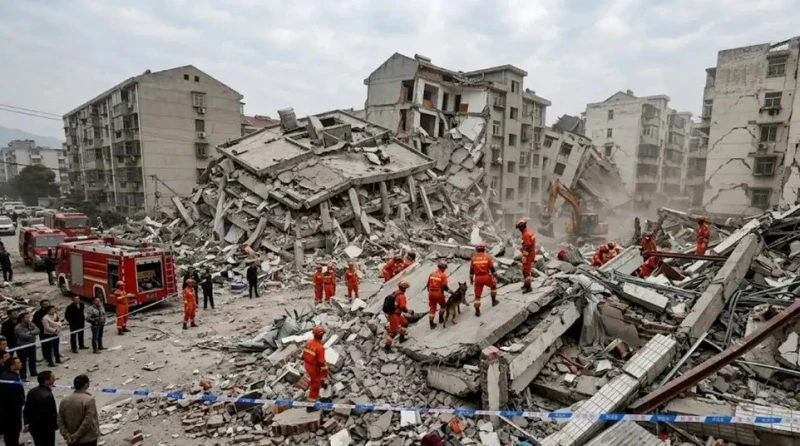
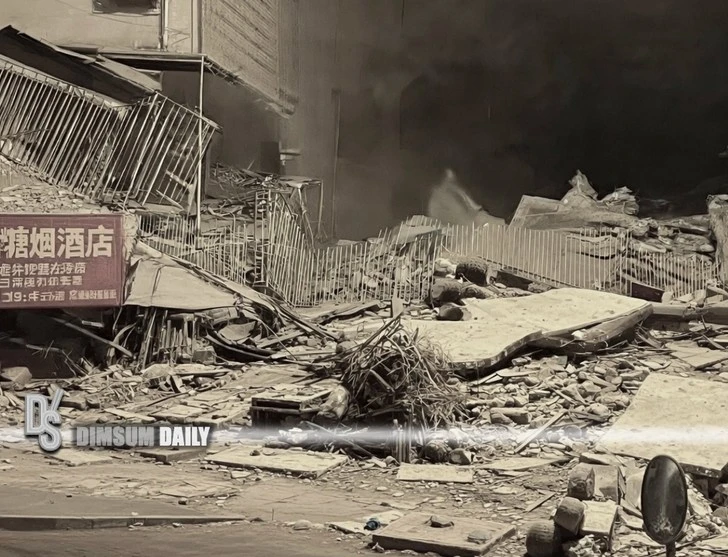
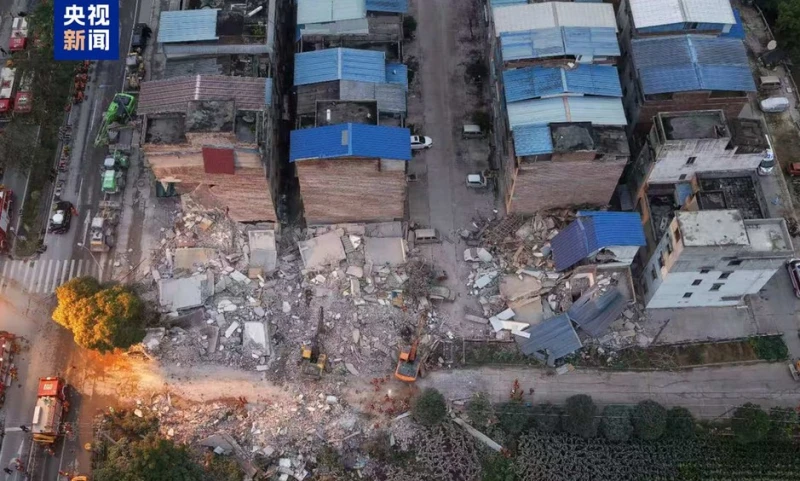
It has now been confirmed that the two people who died, trapped in the debris, were a married couple aged between 50 and 60, residents of Taiyang village. Additionally, four injured individuals have been hospitalized, and authorities state that their condition is not serious. Due to this tremor, approximately 13 buildings, including self-built houses along streets, have completely collapsed, and many other buildings have sustained damage with cracked walls. However, no high-rise buildings have been reported to have collapsed so far, and further investigations into the damage are underway.
To control the situation, Guangxi authorities activated a Level III emergency response at approximately 2:00 AM, and concurrently, the Chinese State Council and the Ministry of Emergency Management activated a Level IV response, dispatching a special task force to the affected area. Currently, 315 firefighters and rescue officials, 51 vehicles, police officers, and emergency service teams are engaged in search and rescue operations in the disaster-stricken areas. Additionally, authorities are monitoring aftershocks and inspecting railway infrastructure, which has led to disruptions in some transportation services.
Although there is no tsunami risk due to this disaster, it clearly reflects the existing vulnerability of old and informally constructed buildings in Southern China. Southwest China, including the regions of Sichuan, Yunnan, Guangxi, and Tibet, is located in a very complex and active seismic zone where the India-Eurasian tectonic plates collide. Numerous devastating earthquakes have been recorded in this region previously, among which the 7.9 magnitude earthquake in Sichuan in 2008, which claimed over 87,000 lives, the 7.1 magnitude earthquake in Dingri, Tibet in January 2025, which caused between 126 and 400 deaths, and the 5.1 magnitude earthquake in Yunnan in January 2026, which damaged approximately 1,500 homes, are prominent. Although such tremors are rare in Liuzhou compared to neighboring provinces, the earthquake's shallow depth and the nature of existing buildings have caused a severe impact at the local level.