![Gossip Lanka News [English]](https://blogger.googleusercontent.com/img/a/AVvXsEhYm2aFFq-bIW1nWX-RrqnPFoIsVos6_VCVz8BpLt0QJi55GNXHXC2fugeRvL0qUStEuCfs7Sfu6ZiSlhrkldxfGuE_wzy5gitY6rMZ2KSi8VBbGvkgXLks37RwZV-4-HKbWiNLRxB8C_r1e4z3mpxFTMPDJPEADoG8E-bZteWFipeD5KNGbjvCfqEfKw=s300 "Gossip Lanka News [English]")
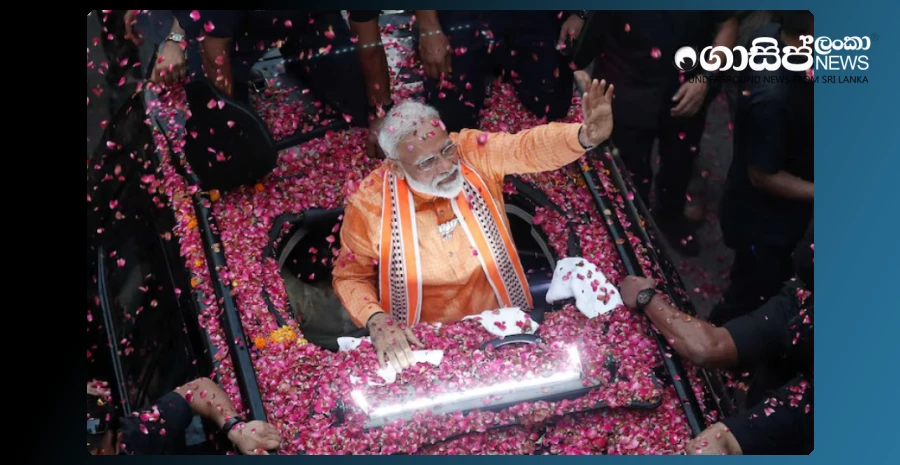
The current political climate clearly shows how opposition politics in India is severely declining in the face of the Bharatiya Janata Party's (BJP) dominance. The concept of an "India free from the Congress party," put forward by Mr. Narendra Modi when he came to power a decade ago, now appears to be becoming a reality, as the Congress party, the country's main opposition, has fallen into an extremely weak state at both state and national levels.
The results of recent state elections have further consolidated Prime Minister Modi's power, with regional leaders like Mamata Banerjee and M.K. Stalin, who previously posed a challenge to him, facing severe defeats even within their strongholds. This has led to the emergence of a unilateral political trend in Indian democracy instead of a diverse political culture.The Bharatiya Janata Party (BJP), driven by Hindu nationalist ideology, has succeeded in building a strong organizational structure by uniting various castes and communities in India. Although opposition parties have severely criticized the Modi government on issues such as unemployment and economic inequality, these issues have failed to have a decisive impact on election results. Despite opposition allegations of irregularities in the revision of voter lists in some states and the use of state institutions for political purposes, the Election Commission has rejected these accusations. Political analysts describe Modi's victory, especially in states like West Bengal, as surprising and a severe blow to the opposition.
The current Indian economy faces problems such as high fuel prices and inflation, and the issue of unemployment among a large number of graduates is also worsening. However, opposition leaders like Rahul Gandhi have not yet been able to overcome Modi's political machinery. The Bharatiya Janata Party has succeeded in branding Rahul Gandhi as someone with a dynastic political legacy, which has contributed to a decrease in his popularity among the public. Even after twelve years in power, public support for Mr. Modi remains unchanged due to the BJP's astute election management.
The main problem concerning democracy in India is the centralization of the country's governance around a single party in the absence of a strong opposition. Prime Minister Modi is expected to consolidate his power further in the coming years, and as he will be 78 years old by 2029, discussions about his successor have already begun. Political commentators point out that a democratic country requires both a ruling party and a strong opposition. However, under the current circumstances, it is clear that the opposition in India is gradually declining, posing a challenge to the diverse liberal democratic concept envisioned by India's early leaders.