![Gossip Lanka News [English]](https://blogger.googleusercontent.com/img/a/AVvXsEhYm2aFFq-bIW1nWX-RrqnPFoIsVos6_VCVz8BpLt0QJi55GNXHXC2fugeRvL0qUStEuCfs7Sfu6ZiSlhrkldxfGuE_wzy5gitY6rMZ2KSi8VBbGvkgXLks37RwZV-4-HKbWiNLRxB8C_r1e4z3mpxFTMPDJPEADoG8E-bZteWFipeD5KNGbjvCfqEfKw=s300 "Gossip Lanka News [English]")
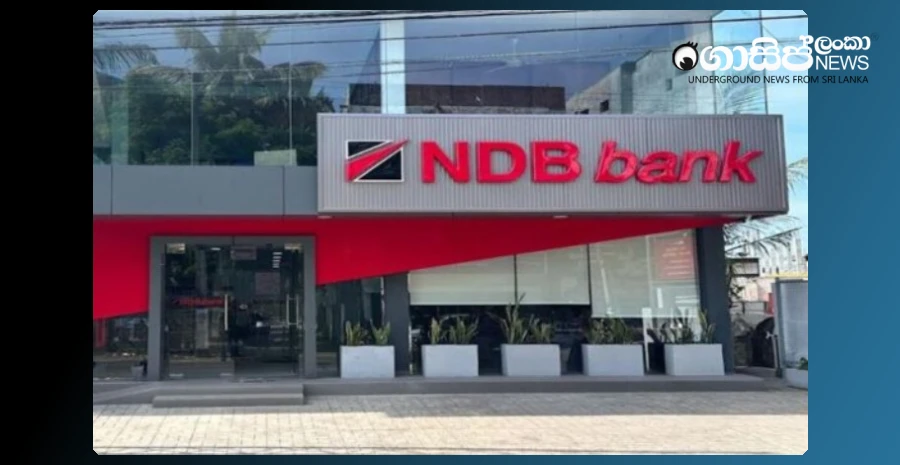
A serious incident has now been revealed where an enormous sum of Rs. 13.2 billion, considered the largest financial fraud ever recorded in Sri Lankan banking history, has gone missing from the National Development Bank, or NDB Bank.
This large-scale robbery was systematically carried out by a group of employees who secretly credited customers' money to private accounts, bypassing the bank's internal audit department inspections. Although the bank initially announced a fraud of Rs. 380 million in a statement issued to the Colombo Stock Exchange on April 2nd, a second statement released four days later confirmed that the amount had escalated to Rs. 13.2 billion, leading to a sharp drop in the institution's share price and a halt in trading.The financial impact of the fraud on this institution, which started as a fully state-owned bank in 1979, was privatized in 1993, became a commercial bank in 2005, and possesses assets worth Rs. 990 billion, is immense. Although this business, which spans small enterprises, savings, and investments, earned a profit of Rs. 11 billion in 2025, financial analysts expect it to incur a massive loss of approximately Rs. 4 billion in the first quarter of 2026 due to the revealed fraud. This represents 0.7% of the bank's total assets. Amidst this crisis, dividend payments of Rs. 8.50 per share, which were to be paid based on last year's profit, have been temporarily suspended, and those who invested Rs. 16 billion through a recently issued debenture by the bank are also facing severe uncertainty regarding their returns.
The fact that such a large sum of money was defrauded without any hindrance has exposed numerous serious weaknesses in the country's banking system and regulatory bodies to society. Although the usual daily limit for money transfers is fifty lakhs (Rs. 5 million), the internal audit departments of the bank or the audit firms preparing annual statements have failed to detect unusual amounts of up to Rs. 9 billion being credited periodically to an account in a certain private commercial bank in the Eastern Province since 2023. Furthermore, it is a serious puzzle that these unusual transactions were missed by the supervisory processes of the Central Bank of Sri Lanka, which examines transactions once every three months, as well as by the National Intelligence Unit, especially given the strict laws that mandate explaining the source of funds for deposits exceeding two lakhs (Rs. 200,000).
Although the management stated that the suspect employees involved in this racket have been suspended and arrested, and that the defrauded money will be recovered, it is the assets of the ordinary people and major investors in this country that are at risk. As 'Norfund', a fund belonging to the Norwegian Ministry of Foreign Affairs, as well as the Employees' Provident Fund, Employees' Trust Fund, and Bank of Ceylon are major shareholders, the financial loss incurred will directly impact the benefits of the working people of the country. In a context where the International Monetary Fund has recommended strengthening Sri Lanka's banking system and gradually reducing the number of banks beyond what is necessary, and two major international banks have already exited the country, such incidents severely damage the confidence of foreign investors, which is a serious situation affecting the entire economy.