![Gossip Lanka News [English]](https://blogger.googleusercontent.com/img/a/AVvXsEhYm2aFFq-bIW1nWX-RrqnPFoIsVos6_VCVz8BpLt0QJi55GNXHXC2fugeRvL0qUStEuCfs7Sfu6ZiSlhrkldxfGuE_wzy5gitY6rMZ2KSi8VBbGvkgXLks37RwZV-4-HKbWiNLRxB8C_r1e4z3mpxFTMPDJPEADoG8E-bZteWFipeD5KNGbjvCfqEfKw=s300 "Gossip Lanka News [English]")
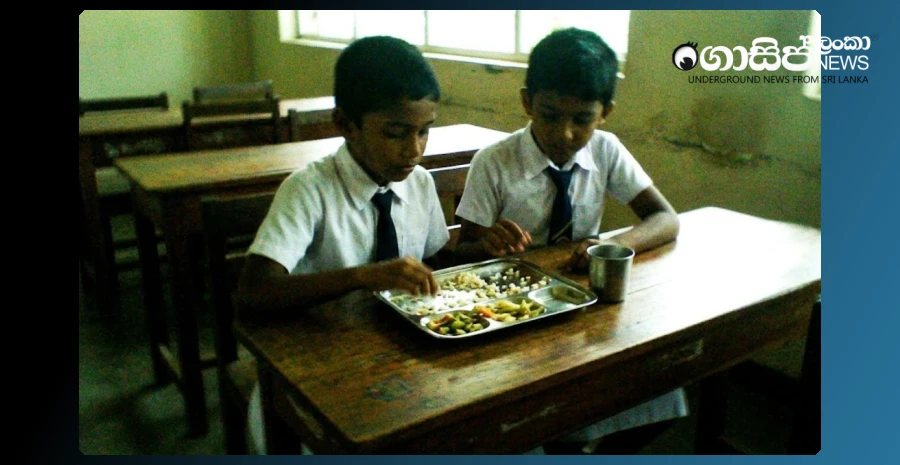
The government's school breakfast program, implemented to eradicate child malnutrition, is currently facing a severe crisis. There are approximately four million school children in the country, and the government provides this free meal to about 1.4 million of them.
However, food suppliers' associations point out that there is a risk of food suppliers withdrawing from the program, stating that they can no longer supply food for the amount stipulated by the government due to severe inflation and the rapid increase in prices of essential food items.This breakfast program was introduced by the National People's Power government with the aim of preventing children from falling victim to various health problems. Its primary objective was to protect schoolchildren from malnutrition, cancer, joint-related diseases, mental stress, high blood pressure, coronary heart disease, stroke, gallbladder-related diseases, and diseases affecting brain function.
Nevertheless, suppliers emphasize that providing the nutritious meal recommended by the Ministry of Education has become practically impossible due to the significant increase in prices of dry food items, gas, and transportation costs. According to Mr. R.R.S. Mediwela, Chairman of the Entrepreneurship Development Cooperative Society for School Food Suppliers, within the past month alone, the price of a kilogram of lentils, which was Rs. 250, has increased to Rs. 350, and the price of a kilogram of sprats, which sold for Rs. 1100, has risen to Rs. 1600. He stated that many of those who supplied food to schoolchildren are already withdrawing from these activities in the face of such a situation.
Currently, the government pays suppliers Rs. 100 for a preschool child's meal and Rs. 110 for a child above preschool age. However, the chairman points out that providing a balanced meal consisting of rice, lentils, vegetables, mallum (a type of salad), fish, sprats, dried fish, soy, eggs, and fruits for this small amount is absolutely impossible under current market prices. Furthermore, approximately ten percent of schoolchildren are absent daily, and deducting ten percent from the payment corresponding to these absences has become another problem for suppliers. Accordingly, Mr. R.R.S. Mediwela further stated that if authorities do not take steps to increase the amount paid to food suppliers, considering the current economic inflation, his association will have no alternative but to completely withdraw from the food supply operation.