![Gossip Lanka News [English]](https://blogger.googleusercontent.com/img/a/AVvXsEhYm2aFFq-bIW1nWX-RrqnPFoIsVos6_VCVz8BpLt0QJi55GNXHXC2fugeRvL0qUStEuCfs7Sfu6ZiSlhrkldxfGuE_wzy5gitY6rMZ2KSi8VBbGvkgXLks37RwZV-4-HKbWiNLRxB8C_r1e4z3mpxFTMPDJPEADoG8E-bZteWFipeD5KNGbjvCfqEfKw=s300 "Gossip Lanka News [English]")
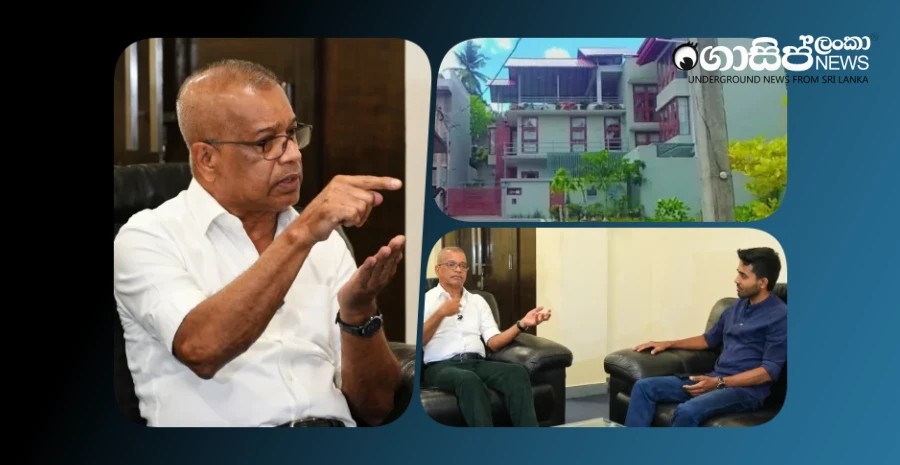
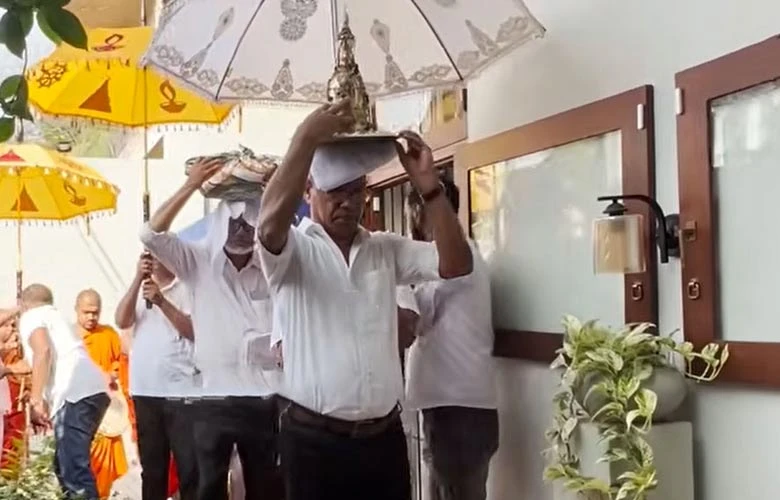
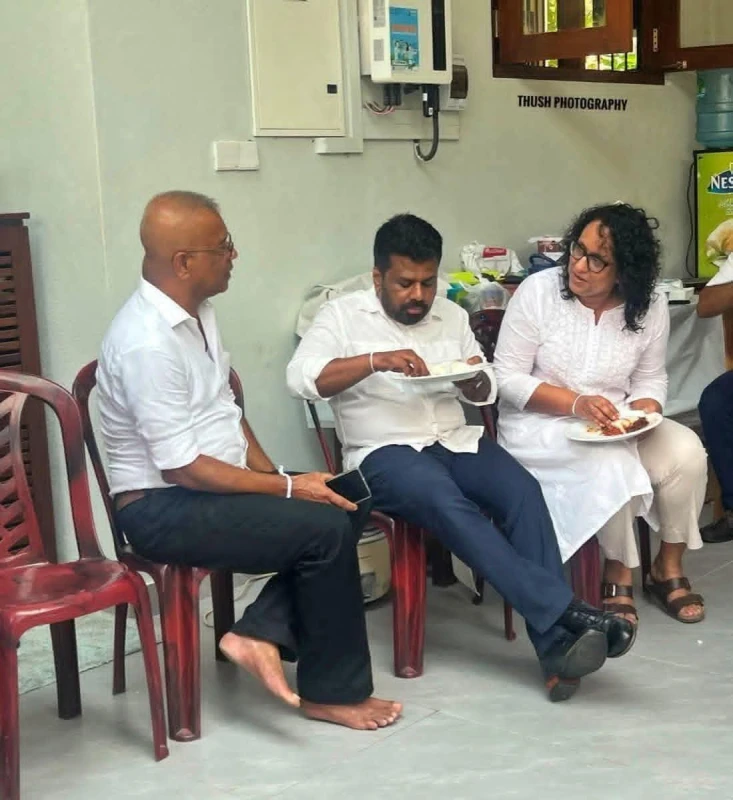
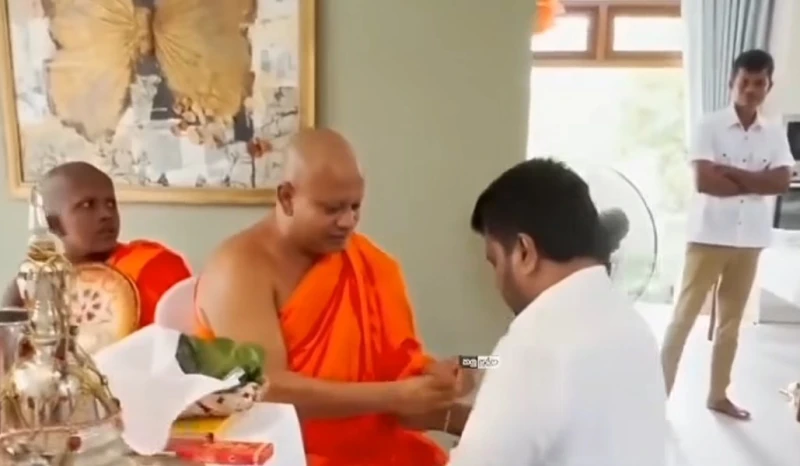
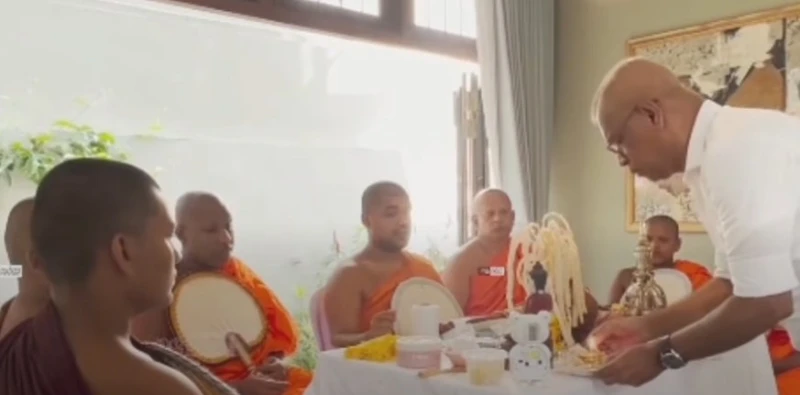
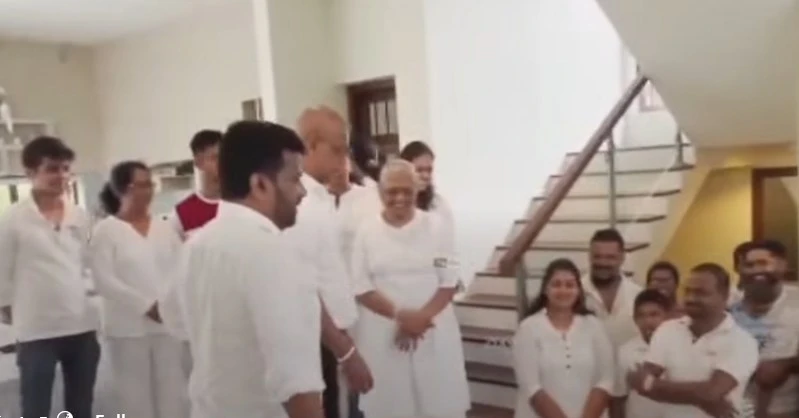
In a recent special interview conducted via a YouTube channel between the Minister of Agriculture, Land, Irrigation, and Livestock, Mr. Lal Kantha, and journalist Mr. Ruwan Liyanarachchi, there was a broad exchange of views on the Minister's personal life, current agricultural crises, the fertilizer problem, wildlife damage, and the current political situation. Specifically, he also clarified matters regarding the accusations and criticisms leveled against him on social media, stemming from a recent alms-giving ceremony held at his new residence.
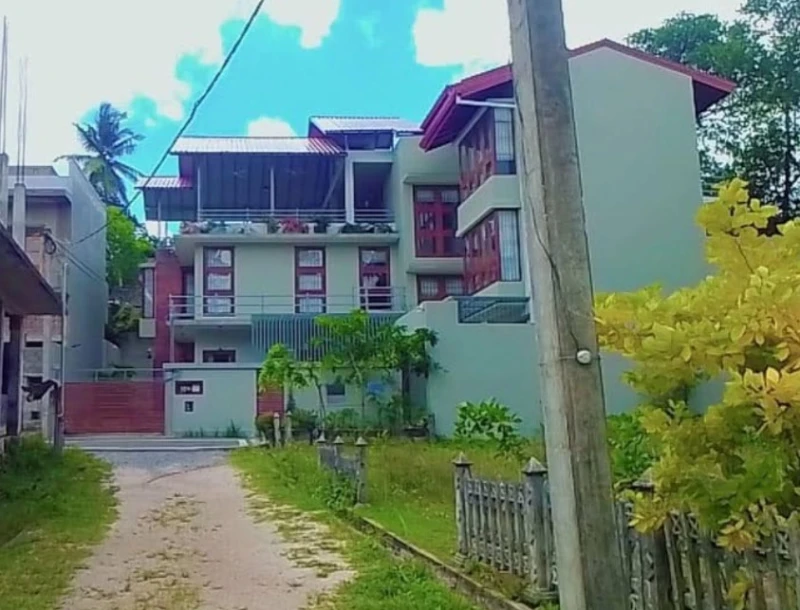
The questions and answers from that interview are given below.Question: A recent alms-giving ceremony held at your home became a big topic of discussion on social media. People are questioning how you, who lived a very simple life in the past, have built such a valuable house today. What do you have to say about this?
Answer: Although some people thought I had moved into a new house, I have been living in this house, which was completed around late 2024, for some time now. I organized this alms-giving ceremony this time for my deceased parents and relatives. I also invited the President and the Prime Minister. I have been fully involved in politics for nearly forty years now. During that time, I sold my parents' property at the Anuradhapura-Matale junction to buy this land and build this house. Also, my wife has a job. I have never misused party funds or government money. If I wanted to, I could have used my social capital to earn a large sum of money, but I have never done so.
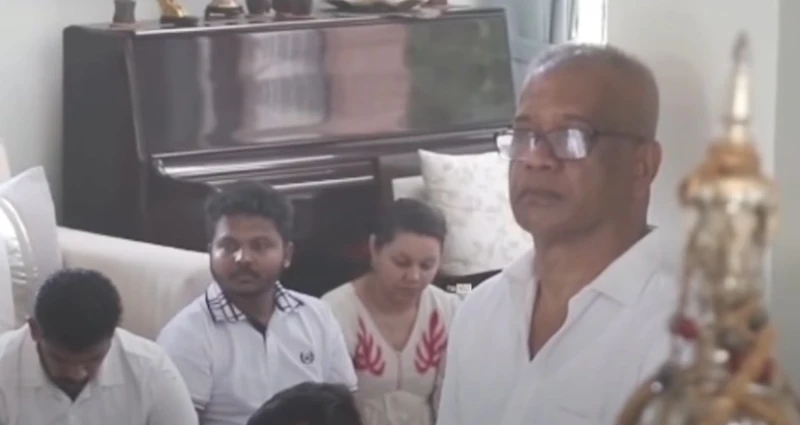
Question: Photographs published on social media showed a piano and a modern set of chairs. What is your response to the accusations that top leaders of the Janatha Vimukthi Peramuna (JVP) portray themselves as living frugal lives while leading luxurious lives behind the scenes?
Answer: My daughter has been studying music since she was little, so that piano has been in our house for about fifteen years. Having a set of chairs in a house nowadays is not a magic trick. Capitalism is not about using consumer goods; it's about owning capital and exploiting workers. In the past, we engaged in politics through difficult times. We lived in a way that suited us within the challenging environment that existed then. One cannot continue to live and dress the same way after becoming a minister. It is the natural progression for our living standards to change and advance relative to the changing society and era.
Question: Do you identify yourself as a socialist or a capitalist?
Answer: I am fundamentally a Marxist. My political foundation is built upon the philosophy of Marx and Engels. I do not accept capitalist economics or Adam Smith's economics at all. Just as philosophies like Buddhism take on different forms when integrated with the cultures of various countries, Marxism must also be adapted to the Sri Lankan land and culture. The Janatha Vimukthi Peramuna differs from other left-wing parties precisely because it has shaped its politics according to the cultural diversity of our country. Our goal is to create a society where every citizen has access to food, drink, and clothing.
Question: Speaking under the Ministry of Agriculture, aren't there accusations that farmers are not receiving adequate fertilizer and fuel?
Answer: The government is working to provide sufficient fertilizer for paddy cultivation in the upcoming Yala season. There is no shortage of urea fertilizer in the country. Sixty-five percent of the fertilizer imported by the private sector is purchased by the government based on an agreement with them, paid for, and then distributed to farmers through Agrarian Service Centers in the usual quantities. Additionally, another fertilizer shipment is expected soon. Regarding fuel, we have already established a system for agricultural machinery to easily obtain the necessary fuel through Divisional Secretaries.
Question: How will the prevailing dry weather affect agriculture? How are irrigation activities being managed?
Answer: There is sufficient water for the Yala season. However, a complex situation exists because the reservoirs associated with the Mahaweli River supply all three needs: electricity, agriculture, and drinking water. The severe dry conditions during the day and the convective rains in the evening also affect this. Prioritizing drinking water needs, efforts are being made to release water with strict management.
Question: What are the problems related to not following proper technical methods in paddy cultivation and post-harvest technology?
Answer: Farmers are still not fully utilizing the technical package recommended by the Department of Agriculture. For example, although the soil should be plowed to a depth of nine inches to enrich it, many do not do so. Additionally, due to the lack of proper methods for drying and storing paddy immediately after harvesting, farmers face a major crisis as they cannot store wet paddy. The traditional threshing floor (kamatha) and paddy storage bin (vee bissa) are not in use today. The government has currently purchased sixty-six thousand metric tons of paddy and distributed it to mills through Sathosa to provide rice to consumers. The aim here is to bring the market price of rice under some control.
Question: What is the current situation regarding maize cultivation?
Answer: Maize has become the second main crop in Sri Lanka today. It is essential for the production of Thriposha (a nutritional supplement) and animal feed. We only produce about half of the country's requirement. Therefore, we currently cannot provide maize for industries such as alcohol production in our country. Instead of increasing the land area, we should focus on increasing the yield per hectare by using proper technology. Our expectation is to gradually move towards organic farming while ensuring food security.
Question: What steps is the government taking to prevent wildlife damage to crops, especially damage caused by monkeys and elephants?
Answer: Wildlife management is a very complex subject. Various opinions from religious, cultural, and environmental groups strongly influence this. According to a preliminary census we conducted, the districts of Kandy, Kegalle, Kurunegala, and Anuradhapura have been identified as being most affected by the monkey menace. Although air rifles have been provided and various methods implemented, it is still not sufficient. Local authorities and farmer organizations must jointly develop solutions appropriate to the density in each area. A cabinet sub-committee, chaired by me, has also been appointed to formulate a national policy for this crisis.
Question: The opposition is attempting to launch a series of protests at the local level, citing rising prices of goods, including fuel, isn't that right? What is the government's response to this?
Answer: The public is well aware that the current economic situation and crises were not created by this government. People have a broad understanding that this situation arose due to the actions of previous rulers. Therefore, even if the opposition attempts to artificially create a wave of protests, the public will not rally with them. As an opposition, they should propose a positive and progressive program, staying ahead of the people, rather than merely engaging in politics by focusing only on negative aspects.