![Gossip Lanka News [English]](https://blogger.googleusercontent.com/img/a/AVvXsEhYm2aFFq-bIW1nWX-RrqnPFoIsVos6_VCVz8BpLt0QJi55GNXHXC2fugeRvL0qUStEuCfs7Sfu6ZiSlhrkldxfGuE_wzy5gitY6rMZ2KSi8VBbGvkgXLks37RwZV-4-HKbWiNLRxB8C_r1e4z3mpxFTMPDJPEADoG8E-bZteWFipeD5KNGbjvCfqEfKw=s300 "Gossip Lanka News [English]")
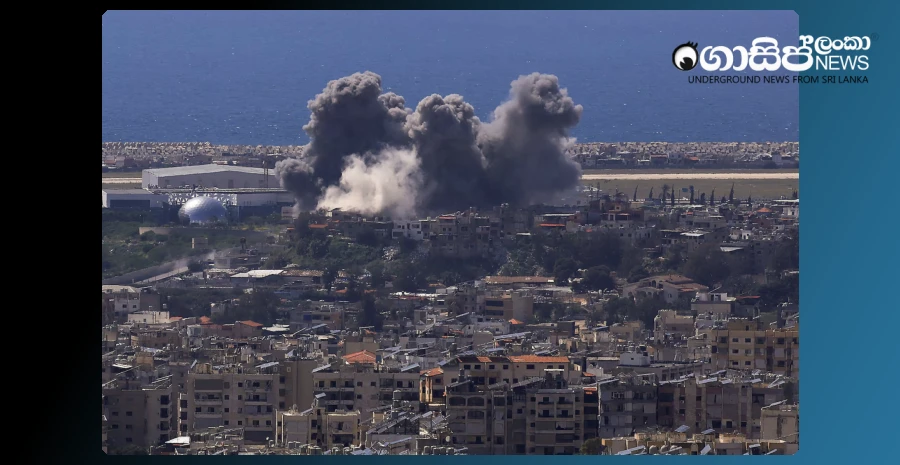
Marking a critical turning point in the Iran war, which began on February 28 with joint American and Israeli attacks, US President Donald Trump announced a ten-day ceasefire between Israel and Lebanon on April 16. This ceasefire, agreed upon during discussions in Washington and effective immediately, aimed to de-escalate the Israel-Hezbollah conflicts in Lebanon, which had claimed thousands of lives and displaced over a million people.
However, the Hezbollah organization was not directly involved in these discussions, and according to Israeli Prime Minister Benjamin Netanyahu's stance, the continued presence of Israeli forces in Southern Lebanon has raised concerns about the practical success of this agreement. Meanwhile, officials from both sides have focused on extending the current two-week ceasefire between Iran and the US to engage in deeper discussions, and President Trump further stated that there are optimistic hopes for talks with Iran from April 17-19, mediated by Pakistan. Iran's complete opening of the Strait of Hormuz has been a key precondition for these talks.Despite these diplomatic efforts, the US Central Command (CENTCOM) has confirmed that American naval sanctions targeting Iranian ports remain strictly enforced without any relaxation. As reported by Admiral Brad Cooper, 10 to 13 vessels, including those flying Iranian flags, have been diverted near Bandar Abbas port, and no ship has been allowed to pass through the area since the sanctions were imposed. US Defense Secretary Pete Hegseth stated that his forces are "locked and loaded" to attack Iran's power plants and energy centers if necessary. In response, Iranian military commanders have threatened to extend their operations to the Red Sea region. Due to this strong military stance by Israeli and American authorities, even amidst the ceasefire, Netanyahu, refusing a complete retreat, has pledged to launch "more painful" attacks if necessary. The Israeli government is also facing criticism from its public for not completely disabling Iran's missile programs.
International media has focused heavily on the tragedy of Iranian civilians directly affected by the war and the destruction of infrastructure. As reported by BBC correspondent Lyse Doucet from Iran, recent American-Israeli attacks have completely destroyed military bases, oil depots, and medical clinics, with smoke and flames still visible around facilities in Tehran. Attacks on numerous civilian sites, including a girls' school near Bandar Abbas, have resulted in the loss of many innocent lives, and the Iranian Red Crescent Society has also confirmed damage to its aid centers. Although no new fatalities have been reported in the past 24 hours, thousands of people remain displaced across the region, and Human Rights Watch has expressed serious concern about potential toxic gas leaks and environmental risks resulting from attacks on oil facilities.
This wartime situation continues to exert severe pressure on the global economy and markets. Significant increases in fuel prices are observed due to disruptions in the Strait of Hormuz and naval sanctions, with gas prices remaining particularly high. Despite short-term war shocks, market data indicates that the S&P 500 index has reached a record high due to optimistic hopes for a ceasefire. Although Trump stated that the war "could end quickly," authorities and economic analysts warn that long-term sanctions could create a global fuel crisis, and gas prices could remain high for months. The International Monetary Fund (IMF) points to a decrease in the value of treasury bonds, and shipping and food supply chains are at severe risk. The cessation of Iranian trade and the pressure of secondary sanctions are also indirectly impacting regional allied countries.