![Gossip Lanka News [English]](https://blogger.googleusercontent.com/img/a/AVvXsEhYm2aFFq-bIW1nWX-RrqnPFoIsVos6_VCVz8BpLt0QJi55GNXHXC2fugeRvL0qUStEuCfs7Sfu6ZiSlhrkldxfGuE_wzy5gitY6rMZ2KSi8VBbGvkgXLks37RwZV-4-HKbWiNLRxB8C_r1e4z3mpxFTMPDJPEADoG8E-bZteWFipeD5KNGbjvCfqEfKw=s300 "Gossip Lanka News [English]")
The US-Iran ceasefire, which came into effect in early April, is currently facing a severe crisis. Although no land or missile attacks have been reported, a tense situation has arisen between the two countries due to naval sanctions imposed by the US, centered around the Strait of Hormuz and Iranian ports.
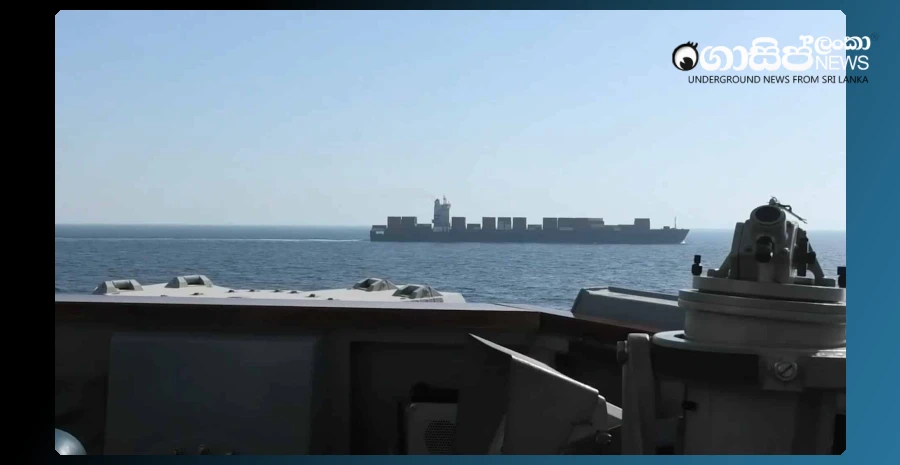
Specifically, the situation further escalated on April 19 when US forces seized a cargo ship named 'Touska' (M/V Touska) flying the Iranian flag in the vicinity of the Gulf of Oman. The US Navy warship 'USS Spruance' fired into the engine room of the vessel after several warnings, disabling it, after which a group of Marines from the 'USS Tripoli' took control. The US Central Command (CENTCOM) stated that the vessel attempted to violate sanctions. However, Iran claims that family members of the crew were also on board and that the ship offered no resistance for their safety. Nevertheless, the US side alleges that the ship contained Chinese-manufactured chemicals used for missile production.The seizure of this vessel has been strongly condemned by the Iranian military and its Ministry of Foreign Affairs, who described it as armed piracy and a violation of the ceasefire. Iran, demanding the immediate release of the ship and its crew, has also lodged an official complaint with the United Nations and the International Maritime Organization regarding this matter. Iranian Parliament Speaker Mohammad Bagher Ghalibaf posted on social media, stating that Iran is not prepared to negotiate under threats and and is preparing to take new actions on the battlefield. Due to this situation, there is significant uncertainty surrounding the second round of US-Iran peace talks, which were scheduled to be held in Islamabad, Pakistan, on April 22. The Iranian Ministry of Foreign Affairs has stated that there are currently no plans to participate in these talks. Meanwhile, US President Donald Trump has said that he is not in a hurry to extend the ceasefire, which is set to end on April 22, and that the probability of an extension is very low.
However, China has emphasized the importance of keeping the Strait of Hormuz open, and German Chancellor Friedrich Merz has also urged the parties to take steps to de-escalate the current military tensions.
Currently, commercial vessel traffic through the Strait of Hormuz has almost entirely ceased, and US forces have turned away approximately 27 ships attempting to enter and exit Iranian ports. Due to the crisis in this region, which accounts for about 20% of the world's oil supply, the price of a barrel of crude oil has exceeded the $95 mark. On April 20, Brent crude oil prices rose by about 5%, and various fluctuations were observed in the global stock market. The International Monetary Fund had previously pointed out that this situation poses a severe risk to Gulf regional economies as well as the Asian economic growth rate. Critics believe that these US sanctions are aimed at maritime trade, which accounts for 90% of Iran's revenue. Iranian authorities have confirmed that more than 3,375 people have died in Iran since this war began on February 28. Although no new battles or deaths were reported in the past 24 hours, events such as protests by American war veterans in Washington and the Hezbollah-Israel ceasefire in Lebanon are also noteworthy. With the end of the ceasefire in this war, which has transformed from land attacks to a maritime conflict, there is a serious risk of a severe military atmosphere re-emerging.