![Gossip Lanka News [English]](https://blogger.googleusercontent.com/img/a/AVvXsEhYm2aFFq-bIW1nWX-RrqnPFoIsVos6_VCVz8BpLt0QJi55GNXHXC2fugeRvL0qUStEuCfs7Sfu6ZiSlhrkldxfGuE_wzy5gitY6rMZ2KSi8VBbGvkgXLks37RwZV-4-HKbWiNLRxB8C_r1e4z3mpxFTMPDJPEADoG8E-bZteWFipeD5KNGbjvCfqEfKw=s300 "Gossip Lanka News [English]")
The US-Israeli and Iranian war, which began on February 28, has now entered its eighth week, with a highly volatile situation observed in the region on April 22-23. US President Donald Trump took steps to indefinitely extend the two-week US-Iran ceasefire on April 21-22.
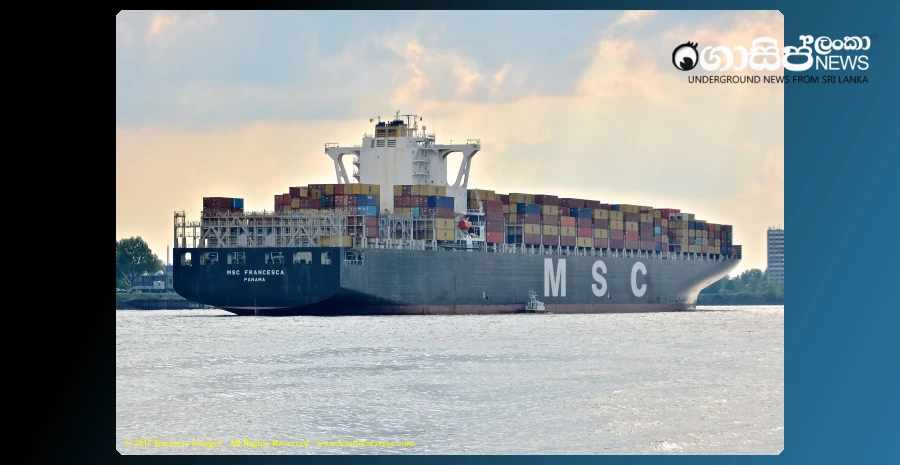
Although he emphasized that Iran should present a joint proposal for peace talks, the White House confirmed that US naval sanctions and blockades imposed on Iranian ports remain fully in effect. Since the start of operations, the Pentagon has diverted or seized 27 ships. However, Iranian authorities have rejected the ceasefire, stating that it is meaningless as long as naval sanctions obstructing their oil exports are not lifted.Hours before the announcement of the ceasefire extension, on April 22, Iranian Revolutionary Guard Corps (IRGC) gunboats attacked three commercial vessels transiting the Strait of Hormuz. Iran seized two container ships, the Liberian-flagged 'Epaminondas' and the Panamanian-flagged 'MSC Francesca', while the 'Euphoria' vessel, severely damaged in the attack, was stranded off the Iranian coast. Iranian state media reported that these attacks were in response to security violations, US-imposed naval blockades, and a previous US seizure of an Iranian oil tanker. The UK Maritime Trade Operations (UKMTO) also confirmed these attacks, noting that over 30 such incidents have been reported in this waterway, which carries about 20% of the world's oil supply, since the start of the war.
Meanwhile, on April 22, Israeli airstrikes on the city of Tayri in southern Lebanon killed five people. Among the deceased was Amal Khalil, a Lebanese journalist for Al-Akhbar newspaper, while photojournalist Zeinab Faraj was injured in the attack. Rescue operations for the journalist, who was trapped for hours in the rubble after the attacks, were hampered by continuous gunfire. This is considered the deadliest day reported since the Israel-Hezbollah ceasefire on April 16, and Lebanese authorities have strongly condemned these attacks as a violation of the ceasefire. However, Israel stated that it targeted specific threats.
Coinciding with activities in the Strait of Hormuz, Iranian hardliners organized rallies in the capital Tehran on April 22-23 to support the military. State media broadcasted messages of continuous resistance, displaying weapons such as ballistic missiles, and claiming the use of "new trump cards" on the battlefield. Statements by officials, including Parliament Speaker Mohammad Bagher Qalibaf, have also highlighted internal debates within the Iranian leadership. The head of Iran's forensic medicine has updated the number of Iranians killed due to American and Israeli attacks since February 28 to nearly 3,400. During this period, no major direct attacks have occurred on Iranian territory.
The US-Iran peace talks, scheduled to be held in Islamabad, Pakistan, have shown no progress, with both parties blaming each other. Iran has not yet confirmed its participation in future talks due to naval blockades, and President Trump stated that there is no specific timeline for negotiations. Additionally, global fuel prices are rising after the US intercepted three Iranian oil tankers in the Asian maritime region. This situation has severely impacted the aviation industry, with airlines like Lufthansa cutting their flights. Amidst a ceasefire limited to paper and active naval confrontations, analysts warn that if these sanctions continue, they will severely impact global oil supply.