![Gossip Lanka News [English]](https://blogger.googleusercontent.com/img/a/AVvXsEhYm2aFFq-bIW1nWX-RrqnPFoIsVos6_VCVz8BpLt0QJi55GNXHXC2fugeRvL0qUStEuCfs7Sfu6ZiSlhrkldxfGuE_wzy5gitY6rMZ2KSi8VBbGvkgXLks37RwZV-4-HKbWiNLRxB8C_r1e4z3mpxFTMPDJPEADoG8E-bZteWFipeD5KNGbjvCfqEfKw=s300 "Gossip Lanka News [English]")
The two-week US-Iran ceasefire, announced with Pakistan's mediation on April 7 and 8, is now under severe threat. Although no large-scale missile exchanges directly between Iran and Israel have been reported in the past 24 hours, massive Israeli attacks on Lebanon and new restrictions imposed by Iran regarding the Strait of Hormuz have brought this temporary peace agreement to the brink of collapse.
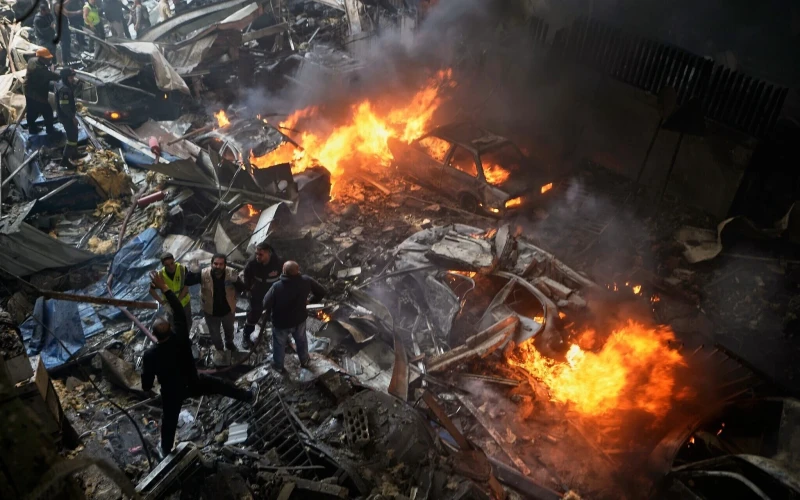
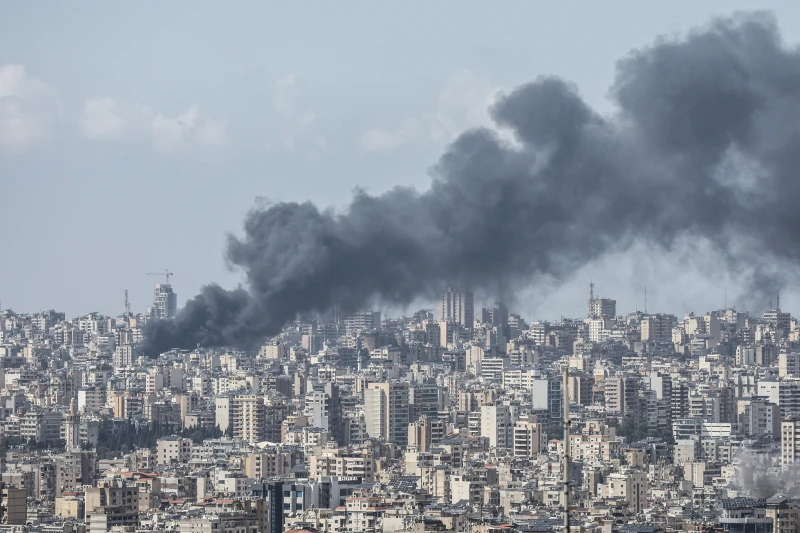
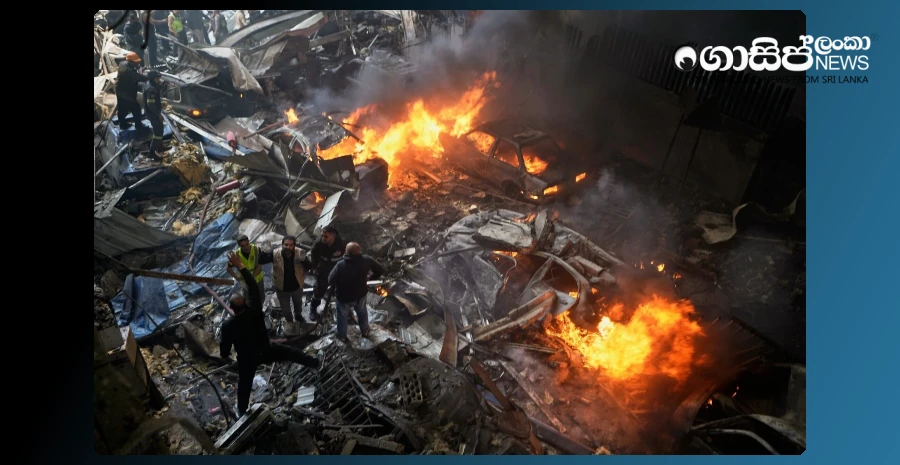
On April 9, the Israeli Defense Forces (IDF) launched over 100 airstrikes targeting Beirut, the capital of Lebanon, and southern cities within a short period of 10 minutes. While Israel stated that the operation targeted Hezbollah strongholds, the Lebanese Ministry of Health and civil defense confirm that these attacks killed between 203 and 303 people and injured over 1,150. This death toll is expected to rise as debris is cleared, with victims including civilians, women, children, healthcare workers, and four Lebanese army soldiers. Due to this tragedy, Lebanon declared April 9 a national day of mourning.
Due to this massive series of attacks, Lebanon's hospital system faces the threat of complete collapse. According to World Health Organization reports, over 50 healthcare workers have been killed or injured in recent weeks alone, and hundreds more are suspected to be trapped under rubble. Although Israel claimed to have only targeted Hezbollah objectives, United Nations officials point out that civilian-populated areas in Beirut have suffered severe damage. Lebanese civil defense teams continue rescue operations despite extreme risks.
In direct response to these attacks on Lebanon, Iran has once again imposed strict restrictions on maritime traffic through the Strait of Hormuz starting April 9. Iranian authorities state that while the waterway remains open, all vessels, including American ships, must obtain prior authorization from the naval division of the Iranian Revolutionary Guard Corps (Sepah navy). Before the war, approximately 140 vessels traversed this sea lane daily, but now only a handful do. US authorities, stating that this violates a key condition of the ceasefire—the unobstructed opening of sea lanes—have called it international piracy and warned that they will use force if necessary to open the strait.
The position of US President Donald Trump and Israeli authorities has been that operations targeting Lebanon or Hezbollah are not covered by this two-week ceasefire agreement. President Trump warned that Iran would face unprecedented consequences if it did not fully adhere to the agreement, and he has instructed Israeli Prime Minister Benjamin Netanyahu to keep Lebanese operations at a low level. However, the Iranian Foreign Minister has issued a strong warning that the US must choose between the ceasefire and the war being waged through Israel, and has hinted that Iran is reconsidering its participation in the agreement.
In light of this situation, peace talks scheduled to be held in Islamabad on April 11 have become highly uncertain. Since February 28, the number of deaths due to conflict in Lebanon alone has exceeded 1,800, and there is a high risk of this escalating into a multi-party war. It has also been confirmed that Ukraine shot down Shahed drones, produced according to Iranian designs, in the Middle East. Severe instability has also been created in the global oil market, heavily impacting world supply chains. Although no direct Iran-Israel attacks have been reported as of the morning of April 10, the region remains in an extremely volatile and fragile atmosphere.