![Gossip Lanka News [English]](https://blogger.googleusercontent.com/img/a/AVvXsEhYm2aFFq-bIW1nWX-RrqnPFoIsVos6_VCVz8BpLt0QJi55GNXHXC2fugeRvL0qUStEuCfs7Sfu6ZiSlhrkldxfGuE_wzy5gitY6rMZ2KSi8VBbGvkgXLks37RwZV-4-HKbWiNLRxB8C_r1e4z3mpxFTMPDJPEADoG8E-bZteWFipeD5KNGbjvCfqEfKw=s300 "Gossip Lanka News [English]")
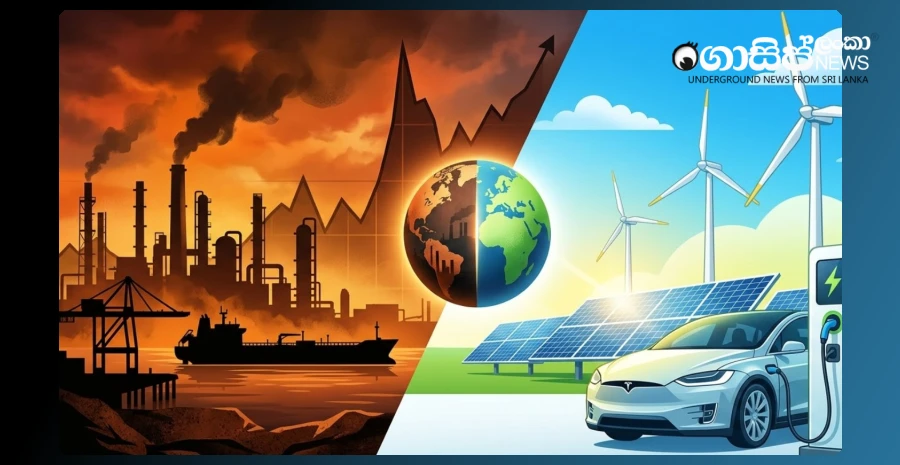
According to current global oil reserves and consumption patterns, crude oil and petroleum products will remain economically important as the world's primary energy source for several more decades. Latest data indicates that the currently confirmed global oil reserves of approximately 1.77 trillion barrels are sufficient for about another 47 years (until 2073) at the current consumption rate of approximately 37.4 billion barrels annually (102.6 million barrels per day).
Estimates from OPEC also indicate a similar timeframe of approximately 40 to 50 years. However, the International Energy Agency (IEA) expects global oil demand to peak around 2030 and then gradually decline. This will primarily be due to the increased use of electric vehicles (EVs), a shift towards renewable energy sources, and policies aimed at mitigating climate change. Therefore, in the future, oil use will not end due to the complete depletion of underground reserves, but rather because burning oil will become economically and politically unacceptable due to new climate targets and technologies.Currently, the Iran-Middle East military situation, centered in the Middle East region, has created the largest oil supply disruption recorded in history. Supplies through the Strait of Hormuz, which transports about one-fifth of the world's oil trade, or approximately 20 million barrels per day, have been almost entirely disrupted, and production in the Gulf region has had to be cut by 8 to 10 million barrels per day. In this situation, the price of a barrel of Brent crude oil has exceeded the $100 mark, creating severe uncertainty and economic risk in the market. To address this sudden shortage, member countries of the International Energy Agency have taken steps to release approximately 400 million barrels from their strategic reserves into the market. Even if surface infrastructure such as export terminals like Kharg Island, pipelines, refineries, and certain production fields are destroyed due to the war, the vast underground petroleum reserves within the Earth remain unharmed.
Contrary to what many expect, these military conflicts will not shorten the physical lifespan of global oil reserves. What actually happens is that the disruption of current production slows down the rate of depletion of underground reserves. Accordingly, once infrastructure and shipping routes are restored in the future, these oil reserves can be utilized for production again. On the other hand, the existing supply uncertainty and rising prices are further accelerating the world's shift towards alternative energy sources such as renewable energy, hydrogen technology, and electric vehicles. Oil use is expected to remain essential for sectors difficult to electrify, such as aviation, shipping, and the petrochemical industry, and the current crisis is not destroying oil reserves but rather providing an unexpected new impetus to the global process of reducing reliance on fossil fuels.