![Gossip Lanka News [English]](https://blogger.googleusercontent.com/img/a/AVvXsEhYm2aFFq-bIW1nWX-RrqnPFoIsVos6_VCVz8BpLt0QJi55GNXHXC2fugeRvL0qUStEuCfs7Sfu6ZiSlhrkldxfGuE_wzy5gitY6rMZ2KSi8VBbGvkgXLks37RwZV-4-HKbWiNLRxB8C_r1e4z3mpxFTMPDJPEADoG8E-bZteWFipeD5KNGbjvCfqEfKw=s300 "Gossip Lanka News [English]")
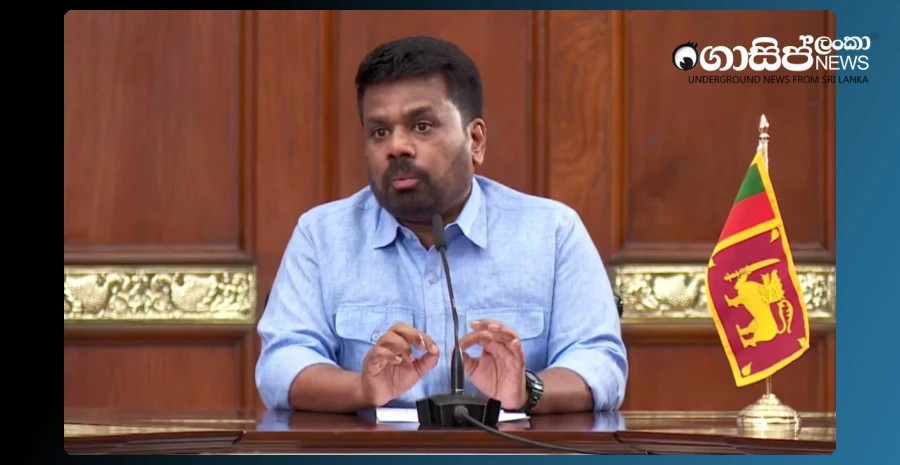
President Anura Kumara Dissanayake stated today (17) to the media that due to the prevailing war situation in the Middle East, there is a risk of an energy and economic crisis emerging in Sri Lanka, and that the government is already taking systematic measures to address it. The President emphasized that in the face of this global crisis, Sri Lanka will maintain complete neutrality without taking any side, and pointed out that this neutral policy has also been recognized internationally.
He stated that although the country's economy suffered a massive loss of approximately 4.1 billion dollars due to the climatic conditions that affected the country in late November last year, the government was able to restore it through strong financial management. Specifically, 700 million dollars have been purchased from the market through the Central Bank in January and February, and the revenue targets of the Inland Revenue, Excise, and Customs departments have also grown beyond the expected levels. Therefore, the President expressed confidence that the economy, which has already demonstrated its resilience to internal shocks, will successfully face future external global shocks.
The government has recognized that due to the Middle East conflicts severely disrupting the global energy supply chain, there is a delay in a 90,000 metric ton crude oil tanker destined for Sri Lanka and a private sector fuel tanker reaching the island on schedule. To mitigate this situation, an 'Economic Monitoring Committee' has been appointed, and discussions have begun to obtain assistance from friendly nations through diplomatic relations. Additionally, new tenders have been called for the expedited procurement of diesel, petrol, and crude oil, and a special committee with Cabinet approval has been appointed for emergency purchases. Furthermore, the government has granted permission for exporters and those involved in the tourism industry to directly import fuel using dollars, and approximately thirty institutions have already registered and commenced operations for this purpose.
The President also clarified matters regarding the supply of domestic gas and coal required for electricity generation. He stated that although the requirement for March was 33,000 metric tons, 38,000 metric tons have already been imported and stored as a precautionary measure, and another gas tanker is expected to reach the island within the next few days. Under coal supply, thirteen out of twenty-three vessels have already been received, and steps have been taken to urgently purchase five more vessels from a reliable supplier with Cabinet approval to cover the remaining deficit.
The QR code system has been reintroduced with the aim of properly managing the limited fuel reserves, and nearly five million people have registered for it so far. However, a special program is being implemented outside this system for essential services such as health, agriculture, and fisheries. Under this, arrangements have been made through the relevant ministries to maintain sufficient fuel reserves for two and a half months for the health sector, and to provide additional fuel quotas for farmers harvesting during the Yala season and for fishing boats.
An agreement has been reached with importers to maintain buffer stocks of essential food items for up to three months to prevent shortages during the festive season, and the distribution network has been strengthened through government institutions including Sathosa. Concurrently, to reduce fuel consumption in the public sector by 25 percent, Wednesday has been declared a public holiday, and a special committee headed by the Prime Minister has been appointed to ensure uninterrupted services during the ten office days. Furthermore, it is reported that a separate committee has been established under the leadership of Minister Upali Pannila to devise a relief mechanism, including loan concessions and insurance coverage, for businesses and the general public affected by this crisis.