![Gossip Lanka News [English]](https://blogger.googleusercontent.com/img/a/AVvXsEhYm2aFFq-bIW1nWX-RrqnPFoIsVos6_VCVz8BpLt0QJi55GNXHXC2fugeRvL0qUStEuCfs7Sfu6ZiSlhrkldxfGuE_wzy5gitY6rMZ2KSi8VBbGvkgXLks37RwZV-4-HKbWiNLRxB8C_r1e4z3mpxFTMPDJPEADoG8E-bZteWFipeD5KNGbjvCfqEfKw=s300 "Gossip Lanka News [English]")
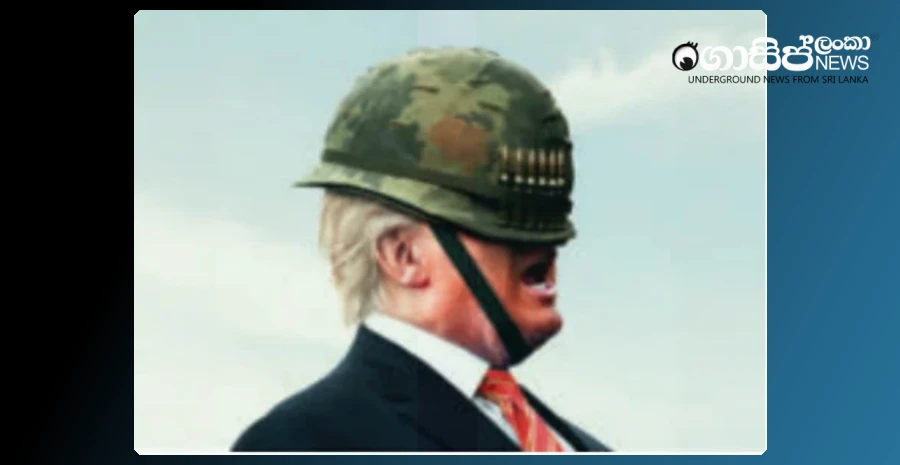
The latest issue of the international 'The Economist' magazine has published a fact-based analysis indicating that the administration of US President Donald Trump, who has started an unnecessary war, is showing signs of collapse. The following is that description.
Even after the attack on the Capitol building on January 6, 2021, Donald Trump was re-elected as the President of America in 2024 with a higher percentage of votes. However, the short-sighted military operation he has launched against Iran is severely impacting his presidency, weakening him and provoking strong anger. Even a short-term war could change the direction of his second term, and if it drags on for months, his administration could completely collapse.
Due to this crisis, three of Trump's political superpowers – the ability to impose his own views on the world, the power to manipulate others for his own benefit, and his dominance over the Republican Party – are deteriorating. Although these powers were already expected to weaken after the midterm elections, the war has accelerated this process.
The President, who has shown a unique ability to distort the truth throughout his political career, insists that he has already achieved victory in Iran. However, despite widespread destruction of infrastructure and the assassination of senior leaders, including defense chief Ali Larijani, the Iranian government still retains control. Furthermore, Iran still possesses approximately 400 kilograms of uranium, close to the level needed to build a nuclear bomb.
Knowing that it cannot win a conventional war, Iran has launched its own parallel war against the global energy industry. After Iran's missile attack on a natural gas facility in Qatar on March 18, the price of a barrel of Brent crude oil rose above $110, from which Iran will conclude that its strategy has been successful. Damage to the world economy will further increase through attacks on maritime traffic in the Strait of Hormuz and infrastructure in neighboring countries. Even if targets for aerial attacks on America and Israel and receiver batteries to destroy Iranian weapons are gradually depleted, Iran still possesses a large number of drones, so time works in Iran's favor.
Challenging Trump's ability to exert influence, leaders of other countries are now learning to oppose him. Trump warned America's allies that NATO would face a very bleak future if they did not support opening the Strait of Hormuz, but they rejected his demand. Subsequently, he quickly changed his stance, indicating that he never needed their help. On the other hand, Iran has begun to use its approach as a bargaining tool, signaling that only allied ships will be allowed to pass safely through the Strait of Hormuz. Even if Trump wants to end the war, Iran can continue to attack ships, and if this waterway is closed until late April, the price of a barrel of oil could rise to $150. Under these favorable conditions, Iran may propose conditions such as lifting sanctions, abandoning some American bases in the Middle East, or controlling Israel. If an economic recession occurs in America and the stock market begins to collapse, whether Trump will take drastic measures such as occupying Kharg Island, where Iran's export terminal is located, will depend on his power within his party.
Under Trump's administration, which came to power promising to save voters from war and inflation, 13 American military personnel have died so far, and many more will be endangered by ground operations. When Trump took office, the average price per gallon of petrol and diesel was $3.11 and $3.72 respectively, and it has now risen to $3.88 and $5.09. The strong support for the war within the Republican Party is now gradually diminishing, with prominent MAGA figures like Tucker Carlson calling it a betrayal. Many Republican representatives are privately furious, and Trump's disregard for strategy and his arrogance in believing he knows everything better than experts is evident in his ignoring warnings about the Strait of Hormuz. There is a high probability that the Republican Party will lose control of the House of Representatives in the November midterm elections, and the probability of losing control of the Senate has also increased by ten points to 50%. The more severe the defeat, the weaker the President will become, and his influence over the party's future will also diminish.
If the war drags on, oil prices rise, and the stock market collapses, Trump may try to seek a victory elsewhere, such as in Cuba, to escape this situation. Even if the war ends tomorrow, it will take four to six weeks to restore oil production, four to eight weeks to stabilize the oil market, and two months to normalize maritime traffic. The attack on the gas facility in Qatar shows that Iran still has cards to play, and prices could remain high for months. Trump's politics, which rely on victory, will make him a more dangerous person in the face of defeat, and he will seek revenge. As he has more freedom in foreign policy, he may decide to abandon support for Ukraine to punish Europe or withdraw from NATO. He may also be inclined to threaten Latin America under the guise of combating drugs and crime, demand money from Japan and South Korea for providing security, and take maximum measures regarding tariffs. This would weaken America's allied relations and bring joy to China and Russia.
Trump may also take drastic measures within his own country in response to criticism against him. He has already approved the idea of suspending broadcast licenses for media outlets that criticize the war. Although he has asked the Federal Reserve to lower interest rates, this has become difficult due to the war, leading to further conflicts with the central bank. He may target individuals he considers his enemies or send immigration officials to cities controlled by the Democratic Party. He may also threaten to interfere in the midterm elections with the aim of provoking his opponents or altering the results. It is unimaginable how Trump will emerge victorious from the Iran war, and it should be remembered that he is a person who is absolutely unwilling to accept defeat.
(Based on 'The Economist')