![Gossip Lanka News [English]](https://blogger.googleusercontent.com/img/a/AVvXsEhYm2aFFq-bIW1nWX-RrqnPFoIsVos6_VCVz8BpLt0QJi55GNXHXC2fugeRvL0qUStEuCfs7Sfu6ZiSlhrkldxfGuE_wzy5gitY6rMZ2KSi8VBbGvkgXLks37RwZV-4-HKbWiNLRxB8C_r1e4z3mpxFTMPDJPEADoG8E-bZteWFipeD5KNGbjvCfqEfKw=s300 "Gossip Lanka News [English]")
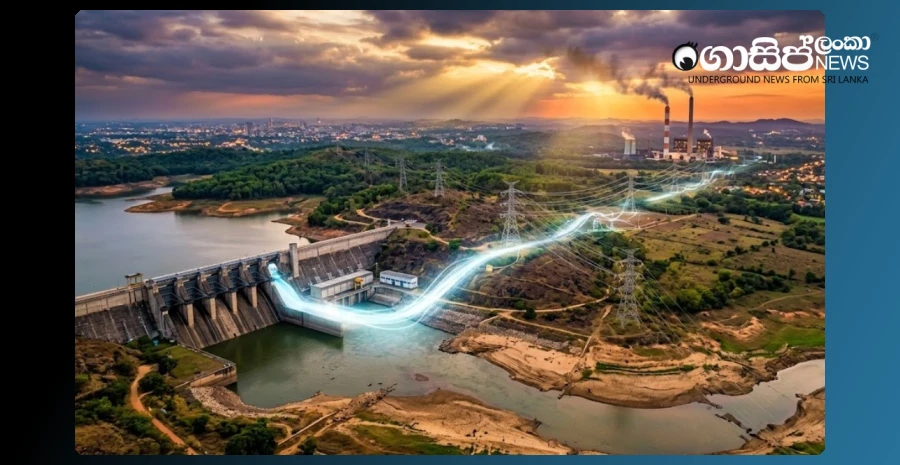
Despite the severe dry weather conditions prevailing across the island, approximately 50% of Sri Lanka's total electricity requirement is still supplied by hydropower, the National System Control Centre announced the day before yesterday (27). The centre points out that the daily electricity demand has continuously exceeded the 3000 MW limit.
Although a slight decrease in the water level of major reservoirs has been observed, the overall water capacity of electricity-generating reservoirs remains at approximately 75%, so there is currently no serious problem regarding hydropower generation, a spokesperson for the centre stated. Currently, 675 GWh of hydropower is being generated, which accounts for 51% of the total demand. However, he emphasized that the existing water reserves must be managed very carefully until the upcoming monsoon rains.
Due to the dry weather conditions prevailing from February to April, electricity consumption has significantly increased. A peak electricity demand of 3089 MW was recorded last Monday, which amounted to 60.56 GWh, the relevant spokesperson further stated. Since that day, the daily demand has continuously remained at a high level between 3000 MW and 3050 MW.
Despite this increase in demand, steps have been taken to continuously supply electricity to consumers without any power cuts, and the remaining requirement that cannot be met by hydropower is obtained using coal as well as fuels such as diesel, furnace oil, and naphtha. The National System Control Centre also states that it is working with the Ceylon Petroleum Corporation to obtain the necessary fuel for this purpose. Following the abolition of the Ceylon Electricity Board, the entire electricity generation and distribution process in the country is currently managed by a private entity called 'National System Operation'.